Hajra Naz
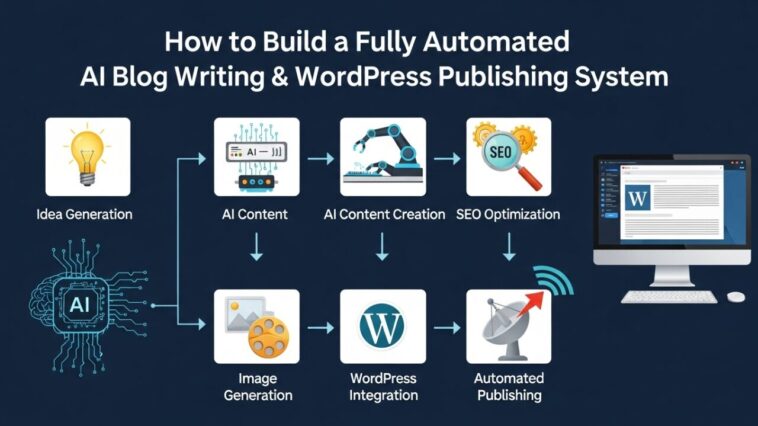
Fully automated AI blog writing and publishing systems can now handle research, drafting, editing, and posting to WordPress with minimal human input. Used carefully, they save enormous time, but they still need human oversight to protect quality and search visibility.
AI is changing the way that content is created and published. A bot can now fully automate the tasks that used to be done by a human, such as research, writing, editing, and publishing.

Now, with robust AI tools and automation platforms, it is possible to do everything on a blog from topic research all the way to SEO optimization, content generation, and publishing into WordPress, fully automated!
In this article, we will walk through building a system like that.
Step 1: Finding Trending Blog Topics

Choosing the right topics—the ones that resonate with your target audience and have strong search demand—is the bedrock for any successful blog. Manually identifying these trending topics can be time-consuming, but AI can drastically speed this up.
A few tools that can help you find trending keywords and topics include:
Google Trends: This free tool shows you what people are searching for in real-time and compares the search volume for different topics.
Ahrefs: The best all-in-one SEO tool with features for keyword research, backlink analysis, and competitive research.
Ubersuggest: A free tool that offers keyword suggestions, volume data, and difficulty scores.
AnswerThePublic: It provides a breadth of questions that people have asked on the topic you choose, which is great for finding content ideas.
ChatGPT: A tool that can generate ideas for AI-generated content in seconds based on popular search terms.
AI-powered tools can assess search data, competing content, and social trends to present highly searched-for topics relevant to that niche.
Incorporating trend analysis tools such as Google Trends can help you unearth topics that have high traffic potential, giving you a greater chance of creating content that ranks on Google.
You may also like to read: Google Trends: How to use Google Trends for SEO and Content Marketing
Step 2: Generating an SEO-Friendly Blog Outline
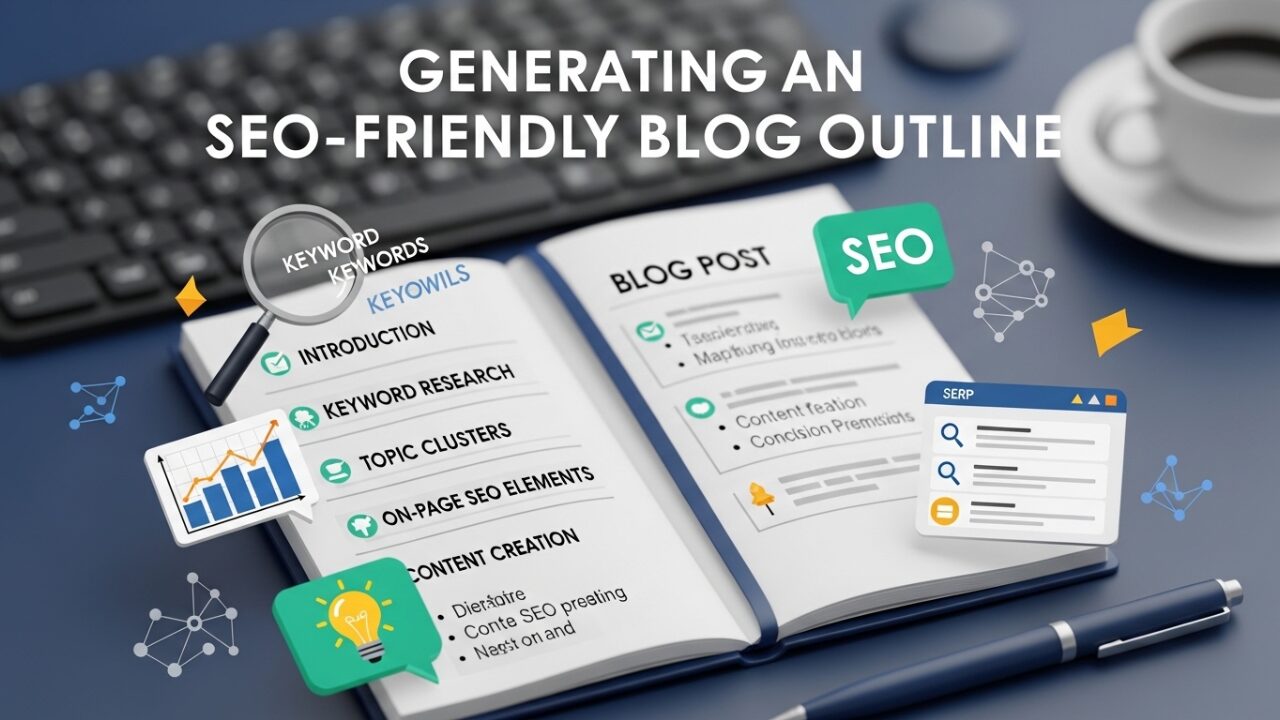
After identifying a trending topic, the next step is to build an in-depth blog outline. A proper plan not only assists in making your content readable but also facilitates search engine optimization, specifying the heading hierarchy and keyword placement.
Using AI tools like ChatGPT, Claude, and Jasper AI can help develop an SEO-friendly outline that includes
Main headings (H1): The title of the blog post.
Subheadings (H2, H3): Subsections that guide the reader through the content
Key discussion points: Key points of discussion in bullet or paragraph form
Frequently asked questions (FAQs): Answers to common questions about the topic.
Conclusion: A summary or closing thoughts.
By outlining beforehand, sufficient organization is kept throughout to build interest and even help with SEO. It is also a time-saver and good for preventing common content creation problems like structuring or omitting important things.
You may also like to read: How to Write Engaging and SEO-Friendly Blog Posts? 7 Best Practices.
Step 3: AI Writing the Blog Post

And now that you have your outline, let it be an AI that does the writing part. AI writing tools, such as ChatGPT, Claude, and Jasper AI, can write high-quality blog posts for SEO within minutes.
Such tools write comprehensive blog posts of 1,500–2,000 words, including the following:
SEO-friendly headings: Tools automatically structure headings in a way that makes it easy to target relevant keywords.
Engaging paragraphs: AI generates detailed content that resonates with readers.
Clear explanations: Each section is written to ensure the information is easy to understand.
While AI speeds up the writing process significantly, it is advisable to review the content for consistency, factual accuracy, and any needed adjustments in tone.
You may also like to read: 5 Best AI Writing Tools to Level Up Your Content Creation
Step 4: SEO Optimization

After generating the blog post, the next crucial step is SEO optimization. AI tools alone can’t ensure your content will rank highly on Google. SEO tools like SurferSEO, NeuronWriter, RankMath, and Yoast SEO can assist with on-page SEO improvements.
These tools help with:
Keyword optimization: Ensure that target keywords are included appropriately within the content.
Internal linking: Suggest relevant internal links to improve SEO.
Meta descriptions: Create optimized meta descriptions that encourage higher click-through rates (CTR).
Readability improvements: Enhance sentence structure and flow for better user experience.
Content scoring: Evaluate the content’s SEO strength, including keyword density, structure, and more.
By integrating AI-driven SEO tools into your workflow, you can ensure that each post is fully optimized for search engines, improving your chances of ranking high on Google’s SERPs.
You may also like to read: What To Do After Keyword Research – Turning Research into Ranking Content
Step 5: Generating Images Using AI

Visual content is essential for increasing engagement and improving the overall user experience. AI-powered image generation tools such as DALL·E, Midjourney, Canva AI, and Ideogram can instantly generate unique, custom images for your blog posts.
These tools can create:
Featured blog images: Eye-catching images that attract readers.
Illustrations: Custom illustrations that explain or enhance the content.
Thumbnails for social media: Optimized images for sharing on social platforms.
Adding visual elements to your blog not only improves readability but also increases the likelihood that your content will be shared across social media, boosting traffic and engagement.
You may also like to read: Is Chat GPT capable of creating images?
Step 6: Automating the Workflow
The real magic happens when you connect all the AI tools into a seamless, automated workflow. Platforms like Zapier, Make.com, and n8n allow you to build custom automation workflows that connect various tools and actions.
For example, an automated workflow might look like this:
Keyword Research → AI Article Generation → SEO Optimization → Image Generation → WordPress Publishing
Once the workflow is set up, you can trigger the process to run automatically, meaning that each step from topic selection to publishing happens without human intervention.
Step 7: Publishing Automatically to WordPress

The final step is the publishing process. By integrating your AI workflow with WordPress through its API, you can automatically upload your blog posts and images, apply SEO metadata, and schedule or publish posts directly.
Automation tools can:
Upload the article: Automatically post the content to your WordPress site.
Add SEO metadata: Apply titles, descriptions, and keyword tags to improve SEO.
Insert images: Automatically upload generated visuals to enhance the post.
Schedule posts: Set specific times for the posts to go live, ensuring consistent content delivery.
With this level of automation, you can keep your blog updated regularly without any manual effort.
Benefits of an AI-Powered Blogging System
Implementing a fully automated AI blogging system offers numerous advantages, such as:
Publish dozens of blog posts every month: Maintain a consistent publishing schedule without manual effort.
Save hundreds of hours: AI handles the time-consuming aspects of writing, SEO, and publishing.
Scale niche websites faster: With automation, you can rapidly produce content, making it easier to scale operations.
Build long-term organic traffic: Consistently publishing high-quality content can drive sustained organic traffic over time.
For bloggers, freelancers, and digital marketers, this system can dramatically increase productivity and output, enabling them to focus more on strategy and less on repetitive tasks.
You may also like to read: How to Make Money Blogging in 2025?
Final Thoughts
The world of digital content creation is undergoing a rapid transformation with AI. You can use AI tools and automation workflows to ensure that your blog runs on autopilot, from researching the topics you write about to automatically publishing them online, so you have more time for larger employment issues.
But while AI opens up incredible efficiencies, it would be best for the most successful bloggers would be best to find ways to implement AI’s abilities along with human creativity and strategy. This balance can be crucial for gaining an edge in the fast-changing landscape of digital content.
NLP writing tools + SEO optimization tools + automation platform or AI-generated images = a completely automated AI blogging stack. Enabling you to publish content that constantly engages readers and ranks well on search engines consistently, enabling your site with organic growth.
FAQ
What does an automated AI blog writing system actually do?
It chains together research, draft generation, editing, and scheduled WordPress publishing so a topic can go from idea to live post with little manual work.
Is fully automated content safe for SEO?
Not without safeguards. Thin, unreviewed AI content is exactly the kind of thing that struggles with the authority signals AI search now demands, so human review of accuracy and depth still matters.
Related reading
- Google reveals 75% of crawl problems come from two URL mistakes
- Gamma Launches AI Image-Generation Tools to Challenge Canva and Adobe
Last updated: August 2026.