Hajra Naz
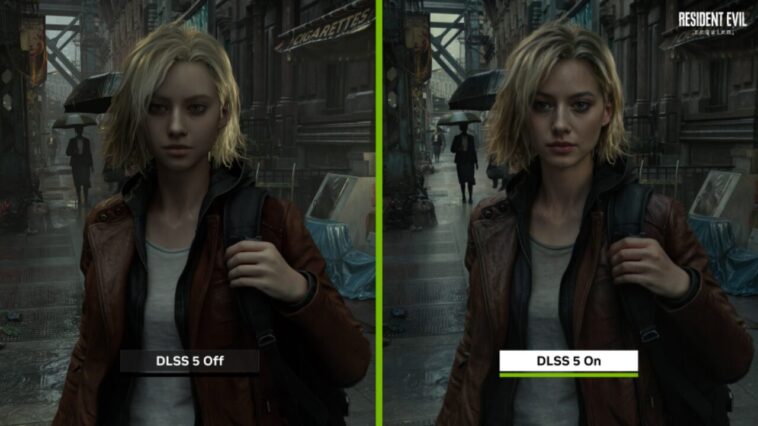
At its GTC keynote on Monday, Nvidia CEO Jensen Huang introduced DLSS 5, the latest update to the company’s AI-powered graphics tech. The goal is simple on paper: make games look more realistic—without demanding more from your hardware.
But the way Nvidia is doing it is where things get interesting.

Instead of relying only on traditional rendering, DLSS 5 mixes standard 3D graphics with generative AI. In practical terms, that means the system doesn’t have to build every part of a scene from scratch. Some of it is predicted—filled in by AI based on patterns, context, and probability.
Huang described it as a combination of two very different approaches. One is structured and precise—what he called the “ground truth” of 3D graphics. The other is more flexible and probabilistic, which is where generative AI comes in. On its own, each approach has limits. Together, they cover each other’s gaps.
The result? Graphics that look sharper and more lifelike but are also faster to produce.
Read More: Jensen Huang Says Nvidia Is Stepping Back From OpenAI and Anthropic
For developers, that balance matters a lot. It’s not just about making things look good—it’s about staying in control. According to Huang, this blend of structured data and AI allows creators to build worlds that are visually rich but still predictable and manageable behind the scenes.
And while this was announced in a gaming context, Huang made it clear that this idea goes much further.
Gaming, after all, isn’t Nvidia’s biggest business anymore. It’s still important—but the company is now deeply embedded in AI infrastructure and enterprise computing. In that sense, DLSS 5 is more like a preview of a larger shift.
Huang pointed to platforms like Snowflake, Databricks, and Google BigQuery as examples of where this thinking applies. These systems are built on structured data—clean, organized, and reliable. But on their own, they don’t “create” anything.
That’s where generative AI comes in.
The idea is that future AI systems won’t rely on just one type of data. They’ll pull from structured databases and combine that with unstructured, generative models—essentially blending logic with creativity.
Read More: 4 charts that show how Nvidia became a $5 trillion company
Huang even suggested that this combination will define how future AI “agents” work. Structured data keeps things accurate. Generative systems make them flexible. Together, they can move faster than humans and handle far more complexity.
It’s a big vision—but if DLSS 5 is any indication, NVIDIA is already building toward it.
FAQs
1. What is DLSS 5, and how is it different from previous versions?
DLSS 5 is Nvidia’s latest AI graphics technology that combines traditional rendering with generative AI. Unlike earlier versions, it can predict and generate parts of an image instead of rendering everything directly, improving performance and realism.
2. How does generative AI improve gaming visuals?
Generative AI intelligently fills in visual details, creating smoother, more lifelike images while reducing GPU workload. This allows for higher-quality graphics without sacrificing performance.
3. Does DLSS 5 require more powerful hardware?
No—DLSS 5 is designed to reduce computational demand. It actually helps GPUs deliver better visuals using fewer resources, making high-end graphics more accessible.
4. Can DLSS 5 be used outside of gaming?
Yes. NVIDIA sees this technology as part of a broader shift in computing. The same principles could be applied to enterprise data analysis, simulations, and AI-driven applications.