Hajra Naz
YouTube has updated its monetization rules. The company wants to make one thing clearer. Not every AI-generated video can earn advertising revenue.
The policy itself isn’t new. YouTube already had rules against mass-produced and repetitive content. Those rules were introduced last year as AI tools made it much easier to create large numbers of videos.

This latest update simply explains those rules in greater detail. Creators now have a clearer idea of what YouTube considers inauthentic content.
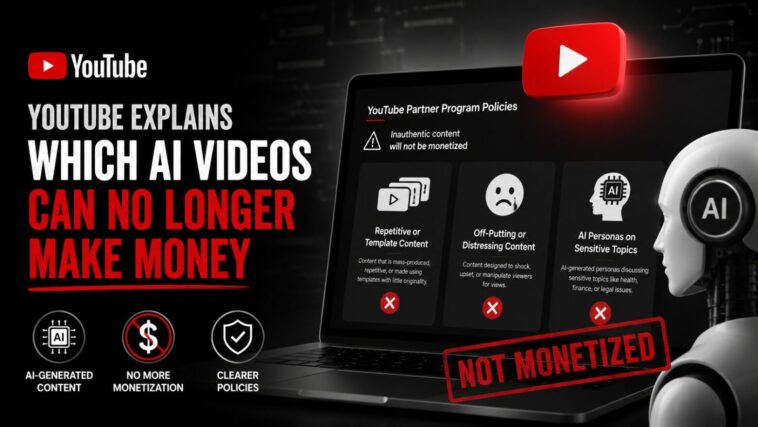
The company says there are now three main categories that could lose monetization. They include repetitive videos, distressing content, and AI-generated personalities discussing sensitive topics.
The first category targets videos that look almost identical. Many are created with AI, templates, or CGI. They may change a few images or words, but the overall content stays the same. YouTube says channels filled with these videos may no longer qualify for the YouTube Partner Program.
Even tutorial videos are not automatically safe. If they simply repeat information that already exists on the platform, they could also fall under the policy.
The second category focuses on videos designed to shock or upset viewers. These clips are often created to attract clicks rather than provide useful content.
One example is animal rescue content. Some videos show an animal in danger before someone suddenly appears to save it. YouTube says many viewers find this type of content uncomfortable instead of entertaining.
Read More: YouTube Tests AI Search With Step-by-Step Guided Answers
Matt Halprin, YouTube’s Vice President of Trust and Safety, said the company has received repeated feedback from users. Many people don’t enjoy watching this kind of content. Some avoid those channels completely.
The third category deals with AI-generated personas. These are digital versions of real people created with artificial intelligence.
YouTube doesn’t want creators using those AI personalities to discuss healthcare, finance, legal advice, or other sensitive topics. The company believes that kind of content could confuse viewers and spread misinformation.
AI itself is not the problem.
Halprin said AI can help creators work faster and produce better videos. YouTube still supports creative uses of the technology.
The problem begins when AI is used to flood the platform with nearly identical videos. Those videos often lack original ideas, storytelling, or personal creativity. YouTube considers that content farming rather than quality content.
These changes only affect monetization. They do not ban AI-generated videos from YouTube.
Channels that repeatedly publish content from these three categories could lose access to the YouTube Partner Program. The updated guidance took effect on July 16 and now applies to all creators in the program.