Hajra Naz
The hype around humanoid robots isn’t particularly new. Much of that hype traces back to Elon Musk and his Optimus robot. It also comes from countless videos of Boston Dynamics’ Atlas robot.
Behind all that hype, though, there’s real progress happening. The physical capabilities of robots keep improving. Researchers now believe something significant too. The AI techniques behind large language models could help complex robots learn nearly any task.

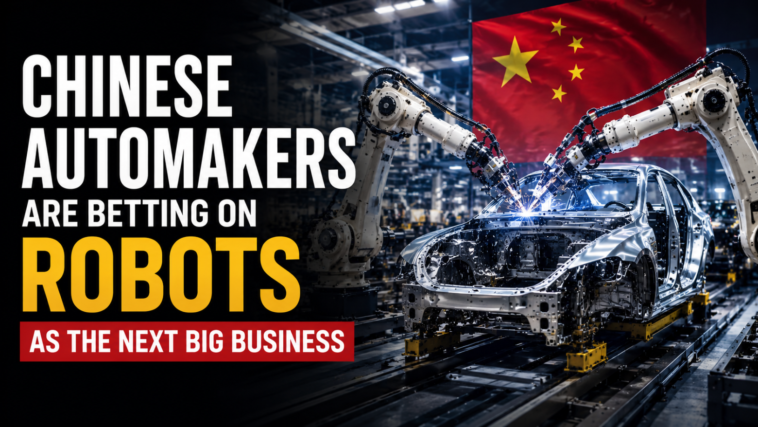
These favorable trends have attracted a new wave of companies. Many are chasing the promise of profits from humanoid robots. Interestingly, many of the newest entrants are Chinese automakers.
Earlier this week, Xpeng’s robotics unit raised more than $900 million. That funding came at a post-money valuation exceeding $6.3 billion. IDG Capital led the round. Other participants included Gaorong Ventures, Tencent, and Alibaba.
According to the company, this represents the largest single-round private financing ever recorded. That record applies specifically to China’s “embodied AI” industry. This term refers to AI systems built directly into physical machines.
This month brought more developments too. AiMOGA, the robotics unit of China’s Chery Automobile, reportedly began preparing for an IPO. Meanwhile, BYD unveiled its own humanoid robot, called Xiao Di. Several other Chinese automakers are developing humanoid robots as well. That includes Changan, GAC, Li Auto, SAIC, and Seres.
Read More: The U.S. Is Restricting Drones and Robots, While China Keeps Scaling Up
Among all these companies, one stands out for closely tracking Tesla. That’s Xpeng, according to Michael Dunne. He serves as CEO of Dunne Insights, an advisory firm based in San Diego and Singapore.
“It’s the most focused on autonomy, it’s the first to commit in a big way to humanoid robots,” Dunne said. He added that Xpeng founder He Xiaopeng is a tech billionaire known for agility and quick decision-making. “He sees razor-thin profit in cars on the near horizon. Robots look much more promising.”
Xiaopeng and Xpeng co-president Brian Gu are bullish enough to back this vision personally. Both invested their own money into the robotics unit. According to The Wall Street Journal, the pair contributed roughly $100 million to the recent fundraising round.
Xpeng’s bet centers on Iron, a humanoid robot with a realistic human shape. It’s specifically built for commercial deployment. Chinese automakers like Xpeng bring a clear manufacturing advantage to this race.
“They have all the hardware to get the job done,” Dunne said. “The question is whether they can catch Tesla on the AI side of the equation.
There are, of course, many other companies pursuing humanoid robots too. That includes Agility Robotics. It includes Apptronik. Figure is in this race as well. All of them share the same ultimate goal. They want commercial deployment at real scale.
Hyundai-owned Boston Dynamics is getting closer to achieving that goal. Hyundai plans to bring Boston Dynamics’ Atlas humanoid robot to its Georgia factory this year. Eventually, the company plans to deploy these robots for tasks like parts sequencing. That deployment is expected by 2028.
Read More: These 32 Robotics Companies are Hiring: Apply now
The Korean automaker has partnered strategically too. It’s working with Google’s AI research lab, DeepMind. That partnership aims to speed up Atlas’s development. Hyundai is also opening a new U.S. facility this year. It’s called a Robot Metaplant Application Center. This facility will teach robots how to map specific movements, like lifting and turning.
Other automotive companies are jumping into this space too. That includes supplier Mobileye. The company acquired humanoid robot startup Mentee Robotics earlier this year. That acquisition cost $900 million. Even Rivian is experimenting in this area. The company created a spinout called Mind Robotics. Still, Rivian’s robots aren’t expected to look quite like the humanoids being developed elsewhere.