Hajra Naz
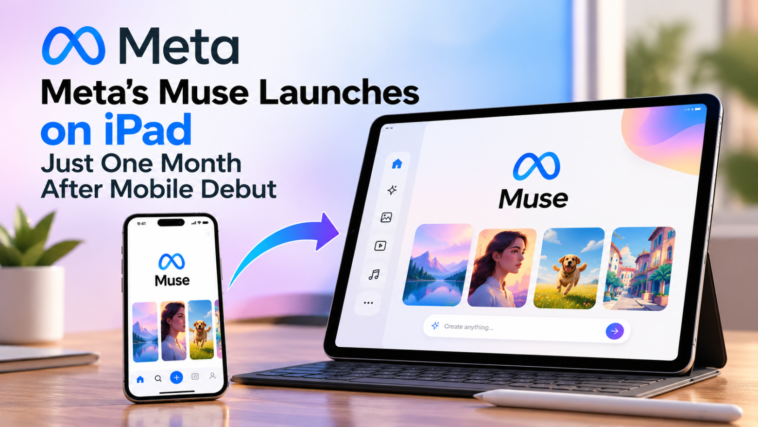
There’s one fresh signal of how seriously Meta takes AI. On Wednesday, the company announced that its Muse assistant is now available in a dedicated iPad app. That’s a milestone Instagram took about 15 years to reach. Users had demanded it constantly during that time.
Muse reached the iPad just a month after launching on iPhone.

To be fair, bringing something like a Muse to an iPad may be easier. Its interface is text-heavy. Image and video resolution matter less, and so does formatting.
Muse launched on iOS and Android on September 8. Since then, it has topped 6.6 million installs. That’s according to estimates from market intelligence firm Sensor Tower. The app is now one of dozens of consumer-facing AI agents. Users can connect their accounts to stay on top of email, meetings, and bills. They can also complete tasks through the app. That includes booking reservations, ordering groceries, and setting goals. It can make purchases too.
To make this work, Meta has been adding partners. These appear in Muse as “connectors.” Users add and sign in to them selectively. They choose based on which parts of their online life they’re comfortable handing to an AI agent.
Read More: Silicon Valley’s AI Wunderkind Launches Underdog, a New Muse Competitor
With the iPad release, Meta updated this list. It added several newer partners. That includes connectors aimed at small businesses, like Asana, Canva, Dropbox, Figma, QuickBooks, GitHub, Klaviyo, and Zoom. It also includes connectors for Meta ad accounts. Meta added Notion and Granola as well.
Meta also announced more retail partners recently. That includes Best Buy, Gap, Sephora, Walmart, and Wayfair. These let the agent shop on those retailers’ sites. It can complete transactions on users’ behalf. This technology is still new, though. These experiences can still run into problems. Websites sometimes mistake agents for bots and block their access.
On Tuesday, Meta announced a possible fix. It’s working with industry partners on an open standard. This standard would let personal AI agents identify themselves to businesses. That would help businesses tell the good bots from the bad ones.