Hajra Naz
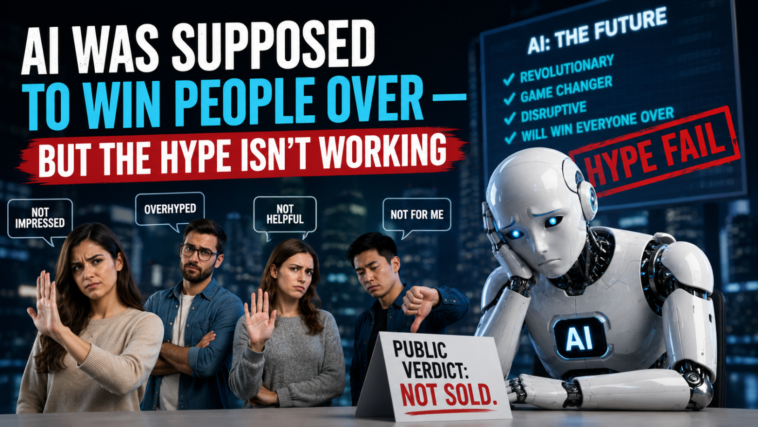
AI keeps advancing technologically. Despite that progress, its reputation in the real world is getting worse. On Wednesday, Axios reported something notable. The National Republican Senatorial Committee sent a memo to top AI companies. That memo warned about a specific concern. It said U.S. data centers are hurting the party’s chances in a key Ohio election.
Around the same time, Pew Research released a separate study. That study found growing unease among Americans about AI. According to Pew, 52% of respondents said they’re “more concerned than excited” about AI’s growing role in daily life. That figure is up sharply from 37% back in 2021.


A recent CNBC poll surveyed adults aged 18 to 34. Respondents were given the names of nine top leaders in the AI industry. A majority said something striking. They don’t trust these leaders to act responsibly when it comes to AI. A separate poll from Economist/YouGov, conducted in May, found similar results. Over 70% of Americans believe AI is advancing too quickly. Similar findings keep piling up across other surveys too.
This growing discontent is now affecting real business outcomes. The Wall Street Journal reported this week on a specific consequence. Tech companies are facing a genuine public relations crisis. This centers on their plans to build AI data centers across the U.S.

Read More: The AI Clause Your Freelance Contract Probably Does Not Have Yet
In response, many companies have started sweetening their deals. That includes offering job guarantees. It includes clean water investments. It includes various other local perks too. In one notable case, a Louisiana parish saw something specific. Teachers there received $50,000 bonuses, tied to a major metadata center deal.
A common thread runs through all these stories. Consumers don’t see how AI is actually improving their lives. Yet they’re still being asked to absorb its costs. This matters for an industry built on massive promises. AI companies have raised hundreds of billions of dollars. Much of that funding rested on AI’s supposed inevitability. Now, souring public sentiment is becoming something more serious. It’s turning into a real business problem, not just a PR issue. Even the industry’s own leaders are starting to notice this shift.
Many consumers today think about AI in fairly narrow terms. That includes AI chatbots. It includes AI-powered search experiences, like the now AI-transformed Google. People increasingly notice AI features showing up everywhere. That includes email. It includes TVs. Often, these features arrive whether users want them or not.
Many consumers also view AI as a tool enabling cheating in school. That concern extends to the college level too, raising real questions about degree value. There’s also concern about how AI models get trained. Many worry these models rely on intellectual property taken from others. That includes art, videos, music, and writing — work that has historically come from human creators.
Read More: Cognition CEO denies claims that SpaceX attempted to acquire the startup
Given all this, it’s not surprising that AI faces significant consumer backlash. In fact, that backlash appears stronger than what earlier transformative technologies faced. That includes the iPhone. It includes the personal computer. It even includes the internet itself, at similar points in their own adoption curves.
Still, some people remain genuinely surprised by this reaction. Many assumed AI adoption would naturally lead to acceptance. They expected its growing presence to eventually generate positive feelings. That expectation assumed AI would simply become part of most tech products and services over time.
Instead, consumer trends are moving in the opposite direction. Young people, in particular, are showing real interest in retro technology. That includes dumbphones. It includes point-and-shoot cameras. It includes tape decks and CD players too. Classic iPods, free of AI and algorithms, are now selling for high prices on eBay. So-called “grandma hobbies” are suddenly everywhere too. That includes quilting, knitting, jigsaw puzzles, and card games. Games like Mahjong have seen a real resurgence. In-person meetups and activities are also gaining ground. That includes run clubs, which are increasingly winning out over online dating.
Some people in Silicon Valley view this as a messaging problem. They believe executives simply need to explain AI better to consumers. The thinking goes that people would embrace AI more fully if they understood its benefits.
The reality may be quite different, though. Consumers may already understand AI well enough. They just don’t think the trade-offs are worth it. The promised upside isn’t materializing in the way people expected. Instead of automated jobs paired with higher pay and shorter workweeks, many face the threat of job loss instead. That threat gets paired with AI features many consumers don’t find particularly compelling. Think summarized web pages or chatty televisions. Together, these factors are hardening public skepticism.
Airbnb CEO Brian Chesky addressed this trend on a recent podcast. He acknowledged that the AI backlash is real. He tied it largely to a specific issue. The industry isn’t shipping products that “regular people” actually like.
Read More: OpenAI introduces new customer privacy protections to compete Anthropic
“I think part of it’s a narrative issue that we’re not talking about AI correctly,” Chesky said. “But part of it is we need to actually be developing more products that just regular people can use and say, ‘I love AI because AI allows me to have a doctor on demand, and I can’t have that. I can’t afford that. ‘ And so I think we need more regular things.”
Even Anthropic CEO Dario Amodei weighed in on this issue recently. He’s one of the industry’s most prominent leaders. In a post on X this week, he made a notable admission. He said negative public perception of AI represents a “big problem.” He described it as fundamentally a “crisis of trust.” According to Amodei, people don’t trust companies, governments, or the broader tech industry. He said people suspect these institutions are “cooking up some new way to screw them over.”
Amodei offered a specific solution to this problem. He said AI companies need to actually deliver on their promises. That includes ambitious goals like curing cancer.
“I think by far the most accurate criticism of AI companies, including Anthropic, is that we haven’t yet delivered on our big promises to benefit the world. That is totally on us,” he noted.