

 Hajra Naz
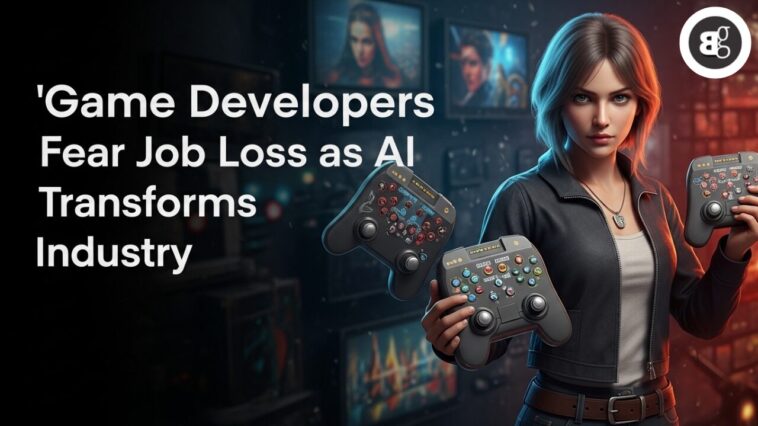
AI is absorbing repetitive production work in games such as asset variations, placeholder art, localisation and basic QA, which is where junior roles used to start. Senior creative direction, systems design and original art direction are far harder to automate. The practical response for creators is to move up the value chain and own the parts of the pipeline that require judgment.
The rise of artificial intelligence in gaming is moving fast — and not everyone is celebrating. Game creators are increasingly worried as AI begins creating characters, storylines, and virtual worlds for next-generation games.

Mike Cook, a game designer and lecturer at King’s College London, said generative AI in gaming is already more common than most realize. “It’s used in small ways,” he said, pointing to AI in dubbing, illustrations, and coding support. These uses often go unnoticed by players enjoying the final product.
A report by Totally Human Media, a U.S. startup, revealed that nearly 20% of games on Steam in 2025 used generative AI during development. That represents thousands of titles, including big hits like Call of Duty: Black Ops 6 and Inzoi, a popular life simulation game.
AI Boosts Efficiency—But Raises Job Fears
AI tools are changing how studios operate. According to consultant Davy Chadwick, these tools could merge several job roles into one, boosting developer productivity by 30–40%.
New AI-powered tools now create 3D models or game assets from just a text prompt—instantly. “In the past, building a 3D model took two weeks and cost $1,000,” said Ethan Hu, founder of Meshy.ai, a California-based AI startup. “Now it takes a minute and $2.”
That kind of progress sounds great for studios, but terrifying for artists and developers already facing mass layoffs in gaming.
Big Tech Bets Big on Generative AI
Major gaming giants are all diving in. Electronic Arts has partnered with Stability AI, while Microsoft is building its own AI model, called Muse.
The global gaming industry, valued at nearly $190 billion in 2025 (Newzoo data), stands to gain massive cost savings and faster development cycles.
However, not everyone is optimistic. One developer at a French studio said there’s “a lot of distrust and fear.” Many worry that tools meant to increase efficiency will actually lead to job losses in gaming.
He added that AI-generated 3D objects are often too chaotic for use. “It takes as much time to fix them as to make them from scratch,” he said.
Developers Divided Over AI’s Future
Some studios are quietly adopting AI, while others resist it. Microsoft, EA, Ubisoft, and Quantic Dream declined to comment when asked about their AI plans.
Meanwhile, Felix Balmonet, co-founder of Chat3D, believes AI won’t replace human creativity. “It speeds up the creative process,” he said, explaining that his company works with two of the world’s biggest studios.
But others see no choice. One French studio head admitted, “If we don’t use AI, we’ll fall behind,” despite being personally against it.
Gamers Still Value Human Creativity
Even players are weighing in. When Poland’s 11-bit Studios released The Alters in June, gamers noticed AI-generated text that wasn’t disclosed. The studio said it was placeholder copy, but fans were frustrated.
The backlash shows how much players still value human creativity in game design, even as AI in gaming development becomes standard.
As AI continues to blur the line between innovation and automation, the question remains—can technology enhance creativity without replacing it?
FAQs
1. How is AI used in game development today?
AI helps with 3D modeling, coding, voice dubbing, and content creation, allowing studios to save time and reduce production costs.
2. Are developers losing jobs because of AI in gaming?
Many developers fear layoffs as AI tools automate creative and technical tasks, consolidating multiple roles into a single one.
3. Which gaming companies are investing in AI?
Major players, such as Microsoft, Electronic Arts, and Ubisoft, are developing or partnering with AI startups to expand their capabilities.
4. Can AI fully replace human creativity in gaming?
Not yet. While AI speeds up workflows, human creativity and storytelling remain vital for emotional and artistic game design.
5. What are the most popular AI tools in game development?
Trending tools include Meshy.ai, Chat3D, Midjourney, and OpenAI-based models that assist with 3D design and dialogue generation.
Which game jobs are most exposed to AI?
Entry level asset production, background art variations, routine localisation and scripted QA passes. Roles built on taste, systems thinking and player psychology are much safer.
What should game creators learn now?
Direction rather than execution: art direction, prompt and pipeline design, and tool building. Many creators are also diversifying income by taking client work on the side, which is easier once you know where clients actually hire beyond the big two marketplaces.
Will AI make games cheaper to build?
Cheaper in production, not in design. Studios still compete on ideas, and the cost saved on assets tends to move into iteration and polish.
Related reading
Last updated: August 2026.