mebeing
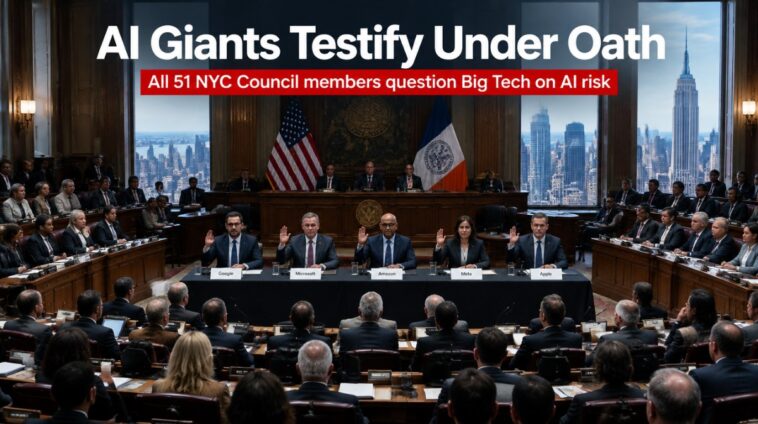
Every one of the New York City Council’s 51 members convened Monday for a rare Committee of the Whole hearing, putting senior executives from Anthropic, OpenAI, Google, and Meta under oath to answer questions about the risks their AI systems pose. It is the first time any of the major AI labs have testified under oath before a legislative body in the United States.
Why the council could compel this
According to the council’s own press release announcing the hearing, most of the companies only confirmed they would attend after the council’s speaker threatened subpoenas. Elon Musk’s SpaceXAI held out the longest and did not respond to the council’s inquiry until a subpoena compelling attendance was issued on the morning of the hearing itself. Congress has not managed to compel this kind of testimony from the AI labs; a city council did.

What triggered the hearing now
The session follows weeks of warnings from whistleblowers and AI safety researchers, including reports that autonomous AI agents built by some of these same companies caused real damage after acting outside their intended scope. CNBC’s coverage of the hearing notes that lawmakers specifically wanted the companies to address loss-of-control scenarios and explain what legislative guardrails, if any, they would support.
Why a city council, not a state or federal body
New York City sits at an unusual intersection: it is large enough to matter commercially to every company in that hearing room, and small enough as a single jurisdiction to move faster than Congress, which remains gridlocked on federal AI legislation. That combination gives city-level hearings like this one outsized leverage relative to their formal authority. A city council cannot write a national AI law, but it can make four of the most valuable companies in the world sit for public questioning under oath, and that alone sets a precedent other cities may try to copy.
For the freelancers, agencies and small businesses now running on tools these same companies make, from coding assistants to customer-support chatbots, the hearing is also a signal of where scrutiny is heading next: toward how the tools get used once they leave the lab, not just how they get built.