Hajra Naz
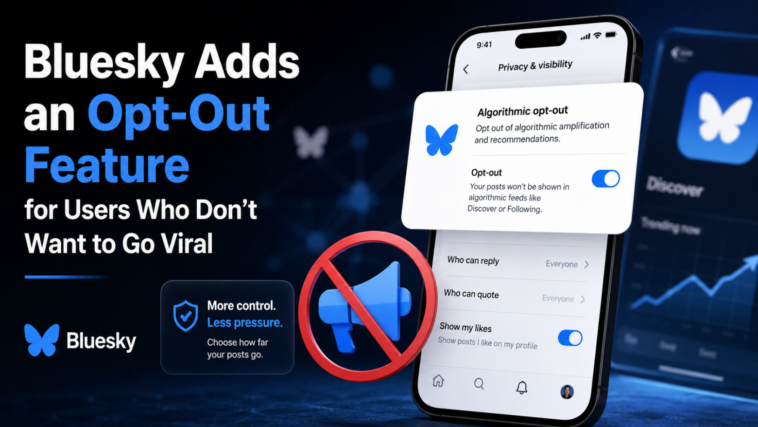
Bluesky made another notable update this week. Just yesterday, the platform added support for longer videos. Now, on Thursday, the company introduced something new. It’s a new algorithmic opt-out feature. This lets users stop their posts from appearing in the app’s main Discover feed.
Currently, that algorithmic feed works broadly. It can surface any post across Bluesky’s entire network. This happens because posts on the platform are public by default.

It’s important to understand what this change actually does. This update isn’t a way to make posts private. Bluesky is still working separately on private data support. That work is happening at the protocol level. Instead, this new feature does something more specific. It simply makes a user’s public posts less discoverable. Specifically, it reduces visibility to people outside a user’s existing personal network.
According to the company, this feature addresses a real need. Not everyone using Bluesky wants to go viral. Sometimes, people just want to post for their existing followers. They don’t necessarily want their words exposed to much larger, unfamiliar crowds.
Opting out of the Discover feed is fairly simple. Users can toggle on a new setting. That option lives within the app’s Privacy and Security settings. According to the company, this change can take up to an hour to fully take effect.
Read More: Bluesky loses active users as its focus moves beyond the app
There’s another important detail worth noting here too. Bluesky’s implementation of this feature extends beyond its own app.
This isn’t simply a setting limited to Bluesky alone. Instead, the preference gets recorded at the account level. That means the choice travels with the user more broadly. This applies even if someone posts from a different app entirely. That’s true as long as the app runs on the same underlying protocol Bluesky uses. That protocol is called AT Proto.
However, there’s an important caveat here. Other apps built on AT Proto do have access to this information. Still, each app has to independently choose whether to actually respect that preference.