Madiha Yaqoob
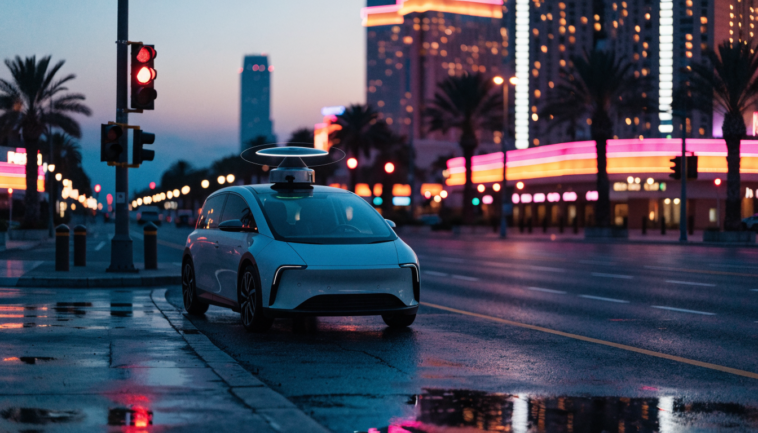
The Nevada Transportation Authority voted unanimously on Thursday to approve Autonomous Vehicle Network Company permits for Tesla, Waymo and Uber, clearing all three to run paid driverless ride-hailing in Clark County, which includes Las Vegas. Together the permits allow up to 8,000 robotaxis on Clark County roads over the next 12 months. Tesla was approved for as many as 5,000 vehicles, with Waymo and Uber cleared for 1,000 each.
What the three permits actually allow
An Autonomous Vehicle Network Company permit is the licence Nevada requires before a business can connect a paying passenger to a fully autonomous vehicle. The category is defined in Chapter 706B of the Nevada Revised Statutes, which sets out the state framework for these companies, and the Transportation Authority is the body that issues and enforces the permits through the AVNC application process published on its own site.

Uber will not be building its 1,000 vehicles. It plans to run them through partnerships with Motional, the Hyundai subsidiary, and with Zoox, which already holds a Nevada AVNC permit of its own covering 100 robotaxis, according to the certificate filed with the Authority.
For Tesla, the vote is a large jump from where it stood a week earlier. An interim order had capped the company at a maximum fleet of 10 fully autonomous vehicles on a limited stretch of the Las Vegas Strip, as Electrek reported on 17 August. Tesla had asked for 5,000.
The companies are not promising to hit those numbers
An approval ceiling and an actual deployment are different things, and the operators said so at the hearing themselves. Eric Early, Tesla’s Cybercab chief engineer, told the Authority that “The 5,000 has always been a ceiling for us,” and said he did not expect Tesla to be in a position to put 5,000 vehicles on the road within a year, adding that reaching roughly 2,500 would leave the company satisfied, according to TechCrunch’s account of the four-hour session.
Even at half the authorised totals, Clark County becomes the densest robotaxi competition in the United States, with Tesla, Waymo and Uber’s partners chasing the same riders in the same city at the same time.
Taxi operators pushed back at the hearing
The Livery Operators Association and local taxi companies opposed the applications. Kimberly Maxson-Rushton, a lawyer representing the association, raised two objections: oversaturation of Nevada’s commercial transportation industry, and overcrowding on the roads around the Golden Triangle, the area between the airport and Las Vegas Boulevard where most autonomous vehicle testing has taken place so far.
Uber pitched a middle path, arguing for a hybrid network in which robotaxis and human drivers share one platform and cities add driverless capacity gradually to cover peak demand rather than flooding the market at once. That position also protects Uber if its own autonomous programme ends up trailing Tesla’s or Waymo’s.
Who does the work once the driver is gone?
This is the part of the decision worth sitting with if any of your income comes from a platform. Driving for a ride-hailing app is one of the most accessible forms of gig work in Pakistan and across the Gulf, because the entry requirement is a licence and a vehicle rather than a degree, a portfolio or a client list. Clark County is now the clearest live test of what happens to that category of work when a regulator authorises driverless supply at scale inside a single metro area.
The optimistic case is that the fleets create replacement work in charging, cleaning, depot maintenance, remote monitoring and dispatch. The pessimistic case is that a few thousand vehicles absorb demand that used to be shared among thousands of drivers, and the replacement roles are fewer and concentrated in fewer hands. Neither case has been settled by evidence, which is precisely why the next year in Las Vegas is worth following.
A version of this question keeps surfacing in adjacent markets. We looked at it for online work in what the 2026 data actually shows about AI and freelancers, where the pattern was that automation reshaped the work well before it removed the worker. Driving may not follow that pattern, because a driverless car removes the task entirely rather than assisting with it.
The next 12 months
The permits run for a year, which makes Thursday a checkpoint rather than a final answer. Whether Clark County ends up with 8,000 robotaxis, or a figure closer to the one Tesla’s own engineer predicted, will say far more about how quickly driverless ride-hailing scales than any number approved in the hearing room. Drivers, regulators and platform workers in every other market watching Las Vegas will get that answer in public, and reasonably soon.