Hassan Khan
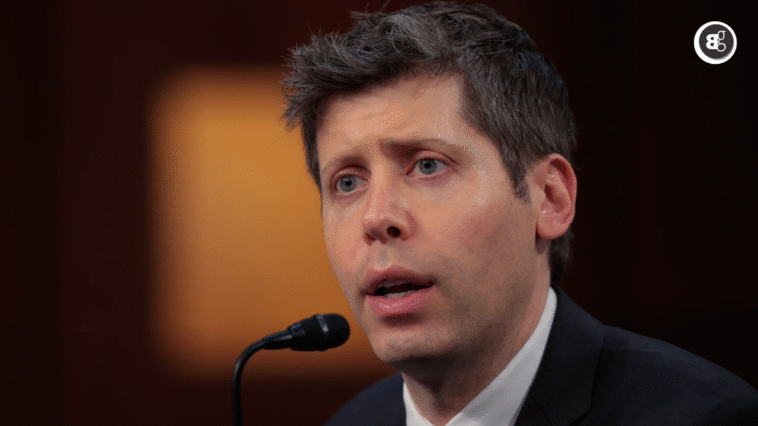
Sam Altman has argued that online conversation now reads as if people are imitating chatbots rather than the other way round, which makes even genuine posts feel synthetic. He raised the point on X, pointing at the flattened, oddly uniform tone that has spread across social feeds. It is the mirror image of his earlier complaint that social media feels fake because of bots and astroturfing.
Sam Altman has argued that online conversation now reads as if people are imitating chatbots rather than the other way round, which makes even genuine posts feel synthetic. He raised the point on X, pointing at the flattened, oddly uniform tone that has spread across social feeds. It is the mirror image of his earlier complaint that social media feels fake because of bots and astroturfing.

OpenAI CEO Sam Altman has raised fresh concerns about the changing nature of online conversations, suggesting that social media today feels less authentic than it did just a few years ago. Sharing his thoughts on X, Altman described a “Strangest Experience” while scrolling through posts about Codex, OpenAI’s developer tool. Despite knowing the product’s growth is real, he admitted the discussions felt oddly manufactured.
Altman pointed out that part of the reason may be how people have unconsciously adopted “LLM speak” the phrasing and quirks of large language models in their own posts. He added that highly active online communities often move in the same direction, creating writing styles that look strikingly similar. The hype cycle around new AI products also fuels extremes, swinging from “it’s so over” to “We’re so back” in a matter of days.
Read More: OpenAI to Launch AI-Powered Jobs Platform to Challenge LinkedIn by 2026
He further suggested that the way social platforms optimize for engagement, combined with monetization incentives for creators, might be driving this shift in tone. As a result, Altman feels platforms like AI Twitter and AI Reddit seem far less genuine today compared to even two years ago.
See More: OpenAI’s GPT-5 Could Spark a Global AI Price War, Reshaping the Cost of Intelligence
Paul Graham, cofounder of Y Combinator, echoed Altman’s concerns, noting that the problem is not just large-scale fake accounts but also individuals hoping to gain influence with AI generated posts. Substack CEO Chris Best has also warned of “AI slop” low effort, AI made content designed purely to attract clicks saturating online spaces.
These voices highlight a growing unease about the future of digital conversations. As AI tools become more accessible, the line between authentic human interaction and machine generated chatter is becoming increasingly blurred.
Questions this raises
Why would humans start writing like AI?
Exposure and incentive. People read model written text all day, and platforms reward the polished, hedged, list shaped style that models default to, so the habit spreads without anyone deciding to adopt it.
Does this make AI detection tools less reliable?
It makes them worse, not better. Detectors look for the statistical fingerprints of generated text, and those fingerprints stop being a useful signal once human writing converges on the same patterns.
Questions this raises
Why would humans start writing like AI?
Exposure and incentive. People read model written text all day, and platforms reward the polished, hedged, list shaped style that models default to, so the habit spreads without anyone deciding to adopt it.
Does this make AI detection tools less reliable?
It makes them worse, not better. Detectors look for the statistical fingerprints of generated text, and those fingerprints stop being a useful signal once human writing converges on the same patterns.