Hajra Naz
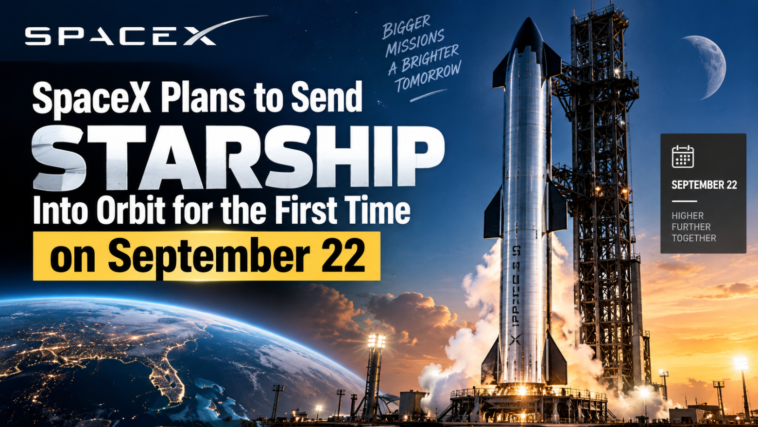
SpaceX is preparing for the 14th test flight of its Starship mega-rocket. This time, the company will finally attempt something new. It will try to put the upper stage into Earth’s orbit for the first time. SpaceX announced this news on Tuesday.
The test launch is scheduled for September 22. A 75-minute launch window opens at 7:15 a.m. CT. During this test flight, SpaceX plans something significant. The company will deploy the first batch of third-generation Starlink satellites. These join SpaceX’s broader network of 10,000 internet satellites. SpaceX expects to launch 26 V3 satellites into orbit during this flight.

If successful, this launch would mark a first for the company. It would be the first Starship launch to generate revenue for SpaceX’s launch division. Notably, that revenue would come from another division within the company itself.
This will be the second Starship test launch since a major milestone. SpaceX became a publicly traded company in June. That IPO was the largest in history. The first test launch since going public happened in July. During that flight, SpaceX successfully deployed V3 Starlink satellites for the first time. Still, those satellites only served a testing purpose. They were meant to test Starship’s deployment capability. They burned up in Earth’s atmosphere after roughly 20 minutes.
Read More: OpenAI Cuts Cursor Off From Its Models After SpaceX Buys the Company
Successfully placing Starship’s upper stage into Earth orbit would represent a major milestone. SpaceX has invested billions of dollars into this program. The company now wants to retire its Falcon 9 and Falcon Heavy rockets. It plans to replace them with Starship going forward. Founder and CEO Elon Musk has explained the timeline for this transition. He said it will happen once Starship flies “reliably several times per week.” This shift would help save “scarce SpaceX engineering and production resources.”
SpaceX needs Starship to achieve several things reliably. That includes reaching orbit successfully. It includes returning safely to Earth. It also includes getting reused quickly afterward. This reliability is necessary to fulfill massive launch cadence promises. SpaceX made these promises during its IPO process.
Starship’s 14th test flight will only address part of that equation, though. Musk recently walked back earlier claims about this specific flight. He had previously suggested SpaceX might try catching the Starship upper stage. This would use the company’s launch tower during this mission. Now, Musk says an explosion would represent too big a setback for the company right now.
Read More: Trump purchased SpaceX shares just two weeks after its blockbuster IPO
SpaceX also won’t attempt to catch the Super Heavy booster this time around. The company has struggled with this booster during recent test flights. It has made multiple changes trying to prevent failures. Still, the booster struggled again recently. It had trouble properly relighting its engines. This happened after separating from the Starship upper stage during Flight 13 in July.
For this upcoming mission, SpaceX shared new details on Tuesday. The company made another round of “several modifications.” These changes target the booster’s hardware and software. The goal is to address issues seen during the previous flight.
SpaceX had considerably more success with Starship’s upper stage during Flight 13. While it didn’t reach orbit that time, the flight went smoothly overall. It completed a simulated landing in the Indian Ocean. Notably, the upper stage didn’t explode when it tipped over into the water. This allowed SpaceX to spend the following months capturing it. The company slowly towed it back to its Texas headquarters afterwards.
SpaceX confirmed additional changes on Tuesday too. The company made updates to Starship’s heat shield. These changes came directly from studying the recovered upper stage from Flight 13.