Ahmed Shaami
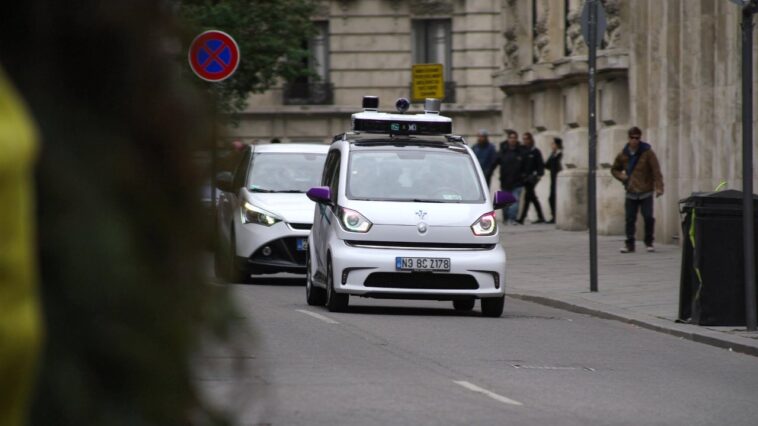
Uber and Chinese autonomous driving company Pony.ai announced on August 14, 2026 that they will expand their partnership to deploy more than 2,000 robotaxis across Europe. The vehicles will be bookable through the Uber app, with Pony.ai supplying the self-driving technology and local partners handling fleet operations. The two companies said the rollout will reach four additional European cities beyond Zagreb, where they launched a commercial robotaxi service earlier this year.
What the Partnership Covers
Under the expanded agreement, Pony.ai provides the autonomous vehicle stack while Uber contributes demand through its ride-hailing platform. Day to day fleet management, including maintenance, cleaning and charging, can be handled by a local operator in each market, and the vehicles themselves may be owned by different partners depending on the country. That structure keeps Uber asset light and lets it scale without buying the cars.

The companies did not name the four new cities or give a deployment timeline, saying details would be released in phases. They also said the partnership will extend into the Middle East. The announcement was published on the Uber investor relations site and covered by TechCrunch.
Building on the Zagreb Launch
The two companies started a commercial robotaxi service in Zagreb, Croatia in late March 2026, which they described as the first of its kind in Europe. That deployment served as the proving ground for the regulatory, insurance and operational work that a larger European rollout requires.
Pony.ai already runs fully driverless paid robotaxi services in four Chinese cities. The company has said it has reached city-wide breakeven unit economics in multiple markets there, which matters because profitability per vehicle has been the main open question hanging over the entire robotaxi sector. Moving from a single European city to more than 2,000 vehicles across five is a significant step up in scale.
The Competitive and Regulatory Picture
Europe has been slower to open up to autonomous vehicles than the United States or China, with approvals handled country by country rather than through a single continental framework. That fragmentation is one reason the companies are staging the rollout and declining to commit to firm dates. Each market brings its own permitting process, insurance requirements and safety reporting rules.
There is also a geopolitical dimension. Pony.ai is a Chinese company deploying vehicles that collect detailed mapping and sensor data across European streets. Similar arrangements in other sectors have drawn scrutiny from European regulators, and it is reasonable to expect questions about data handling and local storage as the programme expands.
Why It Matters
For the wider technology industry, this is one of the clearest signals yet that robotaxis are moving out of pilot mode. A commitment to more than 2,000 vehicles is an operational programme, not a demonstration. It also shows the shape the market is settling into, where the platform company, the autonomy company and the fleet owner are three separate businesses rather than one vertically integrated operator.
For professionals and business owners, the near term effect is less about riding in one and more about the supply chain forming around it. Fleet operations, remote vehicle monitoring, data annotation, mapping, insurance modelling and city-level compliance work all become billable services as these deployments scale. Those are the roles that tend to open up first, well before autonomous vehicles become a normal part of city transport.
It is worth being precise about what has actually been announced. This is a stated deployment target with no published timeline and no named cities. Robotaxi rollouts have slipped before, and the practical test will be how many of those 2,000 vehicles are carrying paying passengers a year from now.