Fahad Manzur
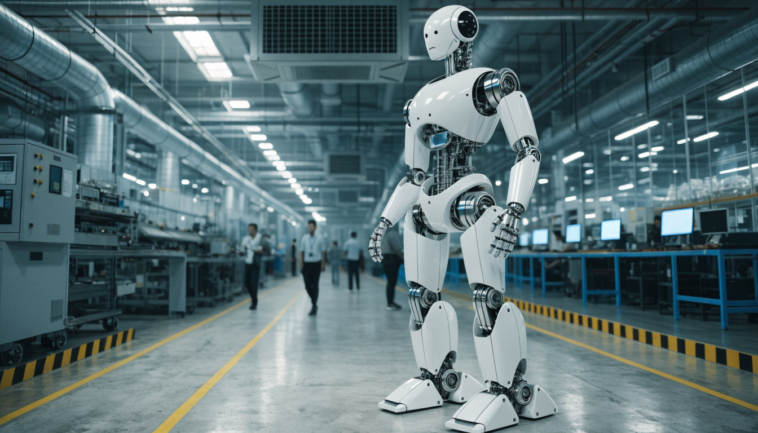
Chinese robotics company Unitree is scheduled to begin trading on Shanghai’s STAR Market on August 19, 2026, becoming mainland China’s first publicly listed general-purpose robotics maker. The Hangzhou-based firm priced its offering at 150.80 yuan per share, raising roughly 6.1 billion yuan, or about $904 million, at a valuation near $9 billion. Reuters reported that the retail portion of the offering was more than 8,000 times oversubscribed, a record for the technology-focused STAR Market.
The Numbers Behind the Listing
Unitree sold about 40.4 million shares, representing roughly 10 percent of its enlarged share capital. According to the company’s prospectus, revenue more than quadrupled to 1.7 billion yuan in 2025, and humanoid robot sales reached 867.8 million yuan, overtaking the quadruped robots that first made the company well known. Unitree shipped more than 5,000 humanoid units in 2025.

The oversubscription figure is the detail worth pausing on. An allocation rate reported at around 0.018 percent means the overwhelming majority of retail applicants received nothing. That is a measure of appetite rather than a measure of the business, and it is the kind of demand that can produce a volatile first few sessions.
Why Robotics Is Suddenly a Public Market Story
Most of the capital in artificial intelligence over the past three years has gone into software: models, data centres, and the infrastructure connecting them. What is changing now is the push toward what the industry calls physical AI, meaning machine learning systems that control hardware operating in factories, warehouses, and eventually homes and public spaces.
China has made robotics an explicit industrial priority, and Unitree benefits from a domestic manufacturing supply chain that can drive hardware costs down faster than most Western competitors can manage. The company has drawn international attention with machines capable of running, dancing, and handling complex movement, which has helped its brand well beyond its actual revenue base.
Unitree is not the only robotics company approaching public markets. We covered a different approach to the same question when Agility Robotics moved toward going public with a deliberately narrow focus on warehouse work rather than general-purpose promises.
What the Listing Actually Tests
Private robotics valuations have been set by venture investors comfortable with long timelines. A public listing puts the business in front of a different audience, one that will read quarterly results and ask about gross margins, unit economics, service costs, and whether humanoid robots are being bought for production work or for research and demonstration.
That distinction matters. A robot sold to a university lab is a different business from a robot deployed on a factory line and expected to pay for itself. Investors will get a much clearer view of that mix once the company reports as a listed entity.
Why It Matters for Readers Here
For business owners and technology professionals outside China, the useful signal is about cost curves. If humanoid hardware follows the pattern of drones and consumer electronics, prices fall sharply once volume manufacturing takes hold. That would move robotics from a research budget line into an operations budget line for warehousing, logistics, inspection, and eventually retail and hospitality.
For freelancers and skilled workers, this is a reminder that the automation conversation is no longer only about desk work. The skills that hold value in that environment are the ones involving judgement, client relationships, and physical or contextual work that is expensive to specify precisely enough for a machine.
Sources: CNBC and Robotics and Automation News.