mebeing
Buildings age differently from one another. A heavily used warehouse may experience significant wear within its first decade, while a well-maintained office could reach 30 years old with many original elements still performing effectively.
Even so, certain stages in a building’s life tend to bring different priorities. Understanding them can help facilities teams move away from simply reacting to faults and towards planning what the property is likely to need next.

At 10 Years: Look Beyond the New-Building Feeling
At around ten years old, a commercial building may still appear relatively modern. However, a decade of daily use is enough for smaller problems to begin emerging.
Doors, flooring and heavily used fixtures may show wear. Sealants and external finishes deserve attention, while heating, ventilation and cooling equipment may require increasingly significant servicing.
The roof is another important area to review. Drainage outlets, membranes, rooflights and access arrangements may have experienced ten winters of exposure.
The key question at this stage is whether the building still operates as originally intended. Early intervention can prevent relatively minor deterioration from developing into more disruptive problems.
At 20 Years: Has the Building Changed With the Business?
By the second decade, the organization occupying a building may look very different from the one it was designed for.
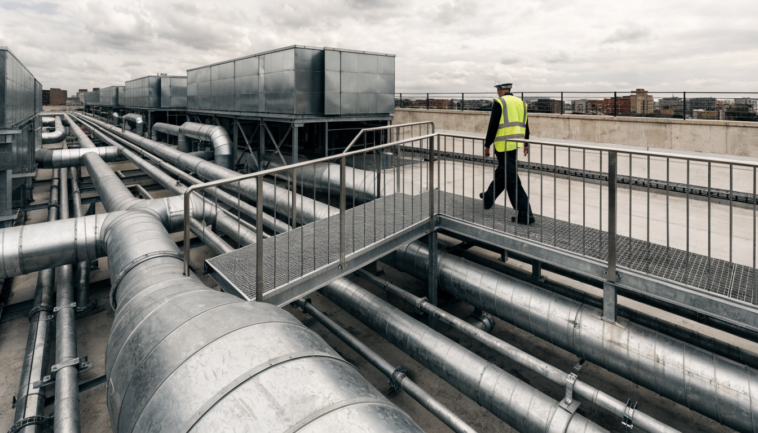
Teams grow, technology changes, and new equipment is introduced. Warehouses gain additional systems, while commercial rooftops can gradually fill with HVAC equipment, cables, solar installations and pipework.
These additions can affect maintenance access. A previously clear walking route might eventually cross several generations of building services.
Where permanent obstructions cannot reasonably be removed, step over platforms can provide defined access over features such as pipework, ducting and plant equipment. Kee Safety’s systems can also be configured around different rooftop layouts and changes in level.
This is a useful example of how older buildings often need adaptation rather than straightforward replacement.
At 30 Years: Think in Systems, Not Repairs
Once a commercial property reaches 30 years old, maintenance can become more strategic. Instead of asking whether an individual component can survive another year, facilities teams may need to consider whether entire systems remain appropriate for the building.
Heating equipment may be significantly less efficient than modern alternatives. Electrical infrastructure may have been designed before today’s technological demands, while roofs, windows and external materials may be approaching major refurbishment points.
This does not mean everything automatically needs replacing at 30. Condition should drive decisions rather than age alone.
However, it can make sense to coordinate projects. If major rooftop plant is being replaced, for example, it may be an opportunity to reassess access routes, roof condition and drainage at the same time.
Maintenance Routes Age Too
One easily overlooked consideration is that the route to equipment can change just as much as the equipment itself. Commercial rooftops commonly contain ducts, cables, drains, vents and pipework, all of which can complicate movement for maintenance teams.
A route designed when the building opened may no longer make sense after 20 or 30 years of alterations.
Facilities teams should therefore periodically walk the routes used by contractors and engineers. Where are people actually travelling? What obstacles have appeared? Have new pieces of equipment unintentionally pushed workers towards awkward areas?
Those questions can reveal problems that will never appear on the building’s original plans.
Keep Records of What Changes
Good building management becomes considerably easier when there is a clear history. Records of inspections, repairs, equipment replacements, and alterations can help identify patterns. If the same section of roof repeatedly requires attention, for instance, continually repairing the immediate problem may no longer be the most economical approach.
Documentation also becomes increasingly important as original staff, contractors, and facilities managers move on. Thirty years is a long time for a building, but it is even longer in organizational terms.
Treat Age as a Prompt, Not a Deadline
There is no universal checklist stating that every commercial building must replace the same components after exactly 10, 20, or 30 years. Those milestones are more useful as opportunities to change the questions being asked.
At ten years, the focus may be on identifying early deterioration. At twenty, adaptation becomes increasingly important as the building accumulates new technology and changing operational requirements. By thirty, larger refurbishment and replacement decisions may need to be considered strategically.
A building that receives this kind of attention can continue serving an organization long beyond its original expectations. The objective is not to fight ageing, but to recognize that what a property needs will naturally change throughout its working life.