Huma Siraj
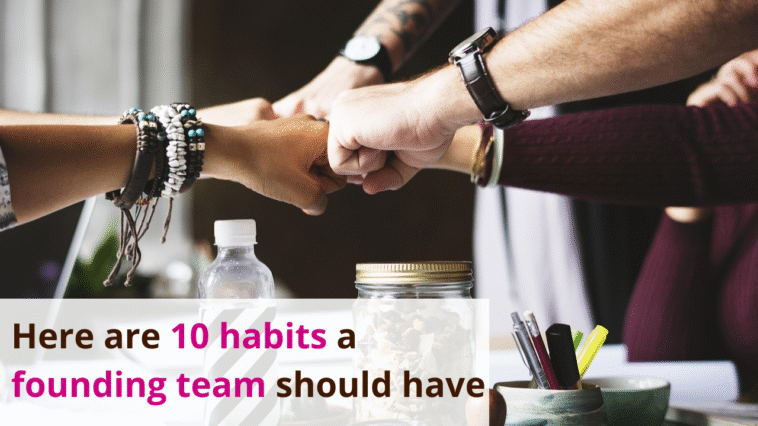
The habits that decide whether an early stage startup holds together are mostly small and repeatable: agreeing on weekly priorities, writing things down before debating them, closing loops, showing work instead of describing it, and protecting focus time. None of them need funding or headcount. They need a founding team willing to repeat them when nobody is watching. The ten below are the ones that keep showing up in teams that survive their first year, and they sit comfortably alongside the habits that make remote work sustainable.
Early stage startup success frequently boils down to a few crucial behaviors. Not vision. not financing. Not a product. are the recurring practices that a team develops throughout the initial months. These minor trends influence how choices are made, disagreements are settled, and momentum is generated or stagnated.

These ten behaviors frequently go unnoticed yet have a significant impact.
1. Establish quick priorities at the beginning of each week.
Verify that high-performing teams frequently align. Drift can be prevented with a 10-minute Monday standup (live or async) that is entirely focused on the week’s most important issues. This isn’t a status report. It’s a tool for coordination. Clarifying who is pushing what forward can be accomplished with only one weekly shared Google Doc or Slack thread.
2. Before debating anything, put it in writing.
When everyone writes down their thoughts beforehand, discussions proceed more quickly and thoroughly. For important decisions, Stripe famously relied on written memos, which helped to decrease groupthink and explain reasoning. This tendency stops dominating speakers in small groups from directing discussions without question.
3. Always Close the Loop
Closing the loop on a bug report, a sales follow-up, or a customer communication may seem simple, but it fosters trust. Early teams are more operationally tight when this becomes second nature. Colleagues and users begin to believe that words are followed by action. That simplifies everything else.
4. By default, show rather than tell
Show a spreadsheet, a short Loom video, or a mockup in place of thirty minutes of discussion about a problem. A rough explanation is preferable to an unclear one. The founders of Figma and Superhuman established this practice early on because they felt that their teams worked more quickly and that feedback loops were shortened by visible, tangible communication.
5. Conclude Every Week With A Minimalist Retro
Even a quick 15 minute end of week review is beneficial for early teams. What was effective? What didn’t work? What didn’t feel right? You don’t require sophisticated equipment. Simply write down a few bullet points and one enhancement to attempt the following week. Little victories build up faster than you would think.
6. Talk About Your Communication Style, Not Just Your Content
Most teams don’t discuss their communication style until tension is high. However, small discrepancies in communication style cause conflict at an early stage. Do you make choices using email or Slack? Are async responses anticipated in a matter of hours or days? If these tendencies are not addressed right once, they can subtly undermine trust. For a little more in-depth information on the significance of excellent team and external communication, see our Startup Communication & Negotiation Guide.
7. Identify the Difficult Things Aloud
It’s easy to avoid pointing out hard realities, such as a failing strategy or a swaying cofounder dynamic. On the other hand, high-trust teams normalize early surface conflict. It does not imply excessive sharing. It just entails speaking the silent part aloud before it turns into animosity.
8. Maintain the Calendar’s Sacredness
In the beginning, teams frequently schedule too many meetings or, on the other end of the spectrum, only convene during a fire. Establishing a rhythm is facilitated by a regular cadence, such as a retro every two weeks or a product review every Friday. Bureaucracy is not what rituals are. They serve as a safeguard against mayhem.
9. Restrict Who Can Touch What
There are too many founders who try to “co-own” everything. The best teams, however, make explicit demands about ownership. Marketing copy belongs to whom? Who makes decisions about design changes? Clarity is produced by ownership. Having clarity lowers churn. It just implies someone makes the decision; it doesn’t mean people cease working together.
10. Publicly Celebrate Any Progress, No Matter How Small
Momentum is brittle. especially throughout the initial year of a startup. Morale is raised by teams that make it a practice to share victories, no matter how minor. Bonuses and parties are not necessary for this. Everyone can be reminded that progress is being made with a weekly internal email or a straightforward Slack thread.
Questions founders ask about these habits
How do we start without adding more meetings?
Most of these habits replace meetings rather than adding them. The Monday priority check can live in a shared document, the retro can be three written lines each, and the written-first rule exists precisely so fewer conversations need a call. Start with the two that remove the most back and forth for your team, and leave the rest until those stick.
Do these work for a fully remote founding team?
They work better remotely, because remote teams cannot rely on overhearing each other. Writing before debating, closing loops and showing work are all substitutes for the ambient awareness an office gives you for free. The one that needs the most deliberate effort remotely is celebrating progress, since nobody sees the win unless someone posts it.
What if a co-founder ignores them?
Treat it as a disagreement about the habit rather than about the person, and raise it in the retro instead of privately after the fact. Habits that only some of the team follow create more friction than no habit at all, so it is worth either getting agreement or dropping the habit outright.