

 Hassan Khan
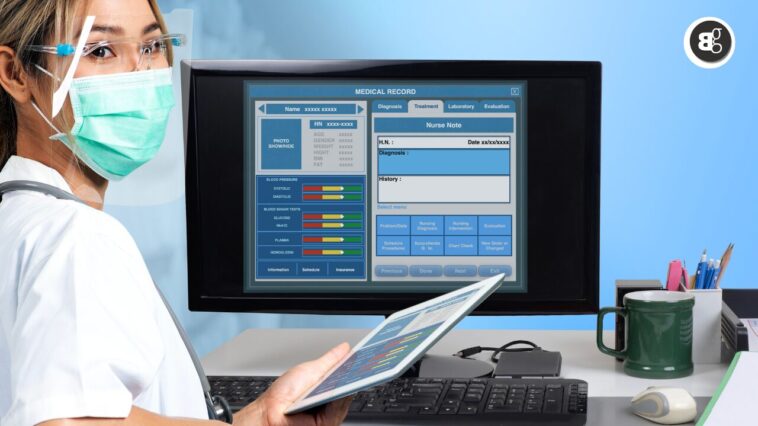
AI diagnostic coding reads clinical documentation and maps it to standardised codes such as ICD, replacing manual chart review. Accuracy gains come from consistency rather than intelligence: the model applies the same rules to every note. Human coders remain essential for ambiguous cases, audits and compliance, so the realistic outcome is faster throughput with a smaller review team.
A new study from researchers at the Mount Sinai Health System suggests that Artificial Intelligence, with just a small adjustment, could become a powerful ally in the fight against medical paperwork. The findings, published September 25 in NEJM AI, reveal that a “lookup before coding” method allows AI to assign medical diagnostic codes with higher accuracy than physicians in many cases.

The Challenge of Medical Coding
For doctors, coding is a necessary but time consuming task. Each patient visit requires assigning ICD codes the alphanumeric strings that describe medical conditions ranging from minor injuries to life threatening diseases. These codes are vital for billing and record-keeping, but the process is complex and often frustrating.
Traditional AI tools, including large language models, have shown promise in speeding up the process but frequently stumble, producing inaccurate or even nonsensical codes. That’s where Mount Sinai’s new approach steps in.
See More: How to Become a Machine Learning Engineer Step-by-Step Guide for Beginners in 2025
The “Lookup Before Coding” Approach
Instead of asking AI to directly guess the code, researchers introduced a two-step process. First, the model generates a plain language description of the diagnosis. Then, it reviews a set of similar cases pulled from a database of more than one million real world hospital records. With that extra context, the AI selects the most accurate code.
This simple change delivered big results. Across 500 emergency department cases, models that used the retrieval step consistently outperformed those that didn’t. In fact, in many cases, the AI matched or even beat physician accuracy. Surprisingly, smaller open-source models performed especially well when given the chance to “look back” at prior examples.
More Than Just Automation
The researchers are quick to point out that this isn’t about replacing doctors. Instead, the goal is to ease administrative burdens, reduce billing errors, and improve the quality of patient records.
“If we can cut the time physicians spend on coding and improve the accuracy of our data, that’s a win for everyone patients, providers, and health systems,” said Dr. Girish N. Nadkarni, Chief AI Officer at Mount Sinai.
Read More: The Rise of Vibe Coding: Why Speed Still Needs Human Hands
Looking Ahead
The team has already started integrating this method into Mount Sinai’s electronic health record system for pilot testing. While it hasn’t yet been approved for billing, the researchers believe it could soon help flag errors, suggest codes, and eventually expand to secondary and procedural coding.
For hospitals struggling with physician burnout and rising administrative demands, this kind of AI support could be transformative. As Dr. David Reich, Chief Clinical Officer of Mount Sinai, put it:
“When technology takes on paperwork, physicians can spend more time where it matters most caring for patients.”
Frequently asked questions
Does AI replace medical coders?
It replaces the routine volume, not the role. Coders shift toward exception handling, auditing and compliance work.
Is there an opportunity here for offshore talent?
Yes. Coding review, quality assurance and documentation cleanup are commonly outsourced, and Pakistani professionals already compete in this space, which connects to the broader freelancing revolution reshaping Pakistan.
What limits accuracy?
Poor source documentation. AI cannot code what the clinician did not write down clearly.
Related reading
Last updated: August 2026.


