Hajra Naz
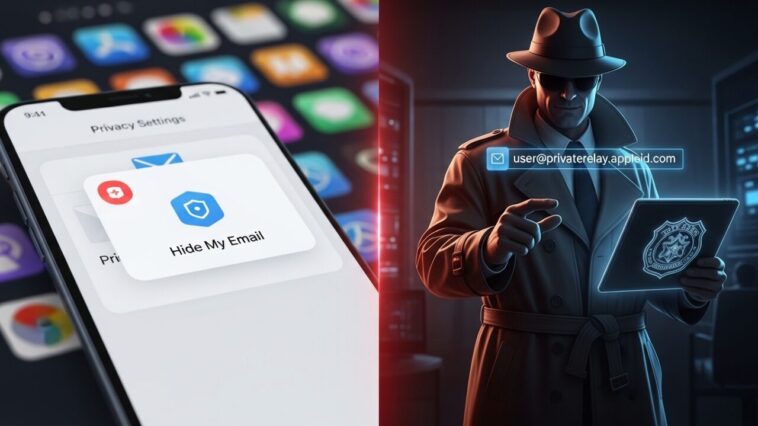
Apple has recently disclosed the real identities of at least two customers to federal authorities, despite these users relying on the company’s privacy feature designed to mask their email addresses.
The feature, called “Hide My Email,” allows iCloud+ subscribers to generate anonymous email addresses that forward messages to their personal inbox. Apple maintains that it does not read forwarded messages. However, court documents reveal that this privacy tool does not prevent law enforcement from linking an anonymized address back to the account holder.

Read More: Apple Announces June Dates for WWDC 2026 With AI Advancements
Court filings show that the FBI requested information from Apple earlier this year during an investigation into an allegedly threatening email sent to Alexis Wilkins, the reported girlfriend of FBI director Kash Patel.
According to the affidavit, Apple provided investigators with the actual name and email address associated with the anonymized Hide My Email account, along with records for 134 other anonymized addresses tied to that account.
In another case, Apple complied with a separate search warrant from Homeland Security Investigations (HSI), part of ICE, concerning an alleged identity fraud operation. The warrant indicated that the suspect had used multiple anonymized emails created through Hide My Email across several Apple accounts.
Read More: Apple Launches Global Age-Verification Tools to Meet Child Safety Laws
While Apple markets much of iCloud as end-to-end encrypted, meaning only the user can access their own data, not all information is beyond law enforcement’s reach. Apple retains personal details such as names, billing info, and addresses, which can be turned over in legal investigations. Similarly, unencrypted emails can be accessed since most email communication worldwide is not end-to-end encrypted.
These limitations have fueled demand for fully encrypted messaging apps, like Signal, which offer stronger protection against surveillance and hacking attempts, giving users more control over their private communications.