Hassan Khan
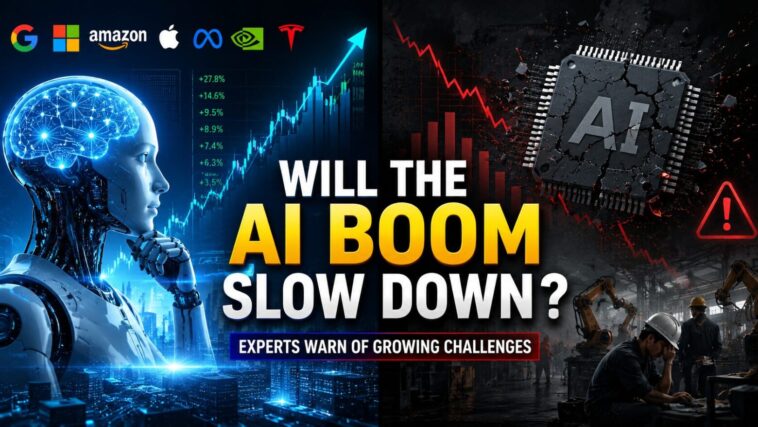
Artificial Intelligence (AI) is a technology that has become part of everyday life. Only a few people knew about it a few years ago.
Today, it is used in internet searches, mobile apps, and online chat services. Many firms also use these digital technologies to save time, boost productivity, and make daily job easier.

Because of its growing popularity, billions of dollars have been invested in this technology. Companies such as Google, Microsoft, Amazon, Apple, Meta, Nvidia, and Tesla are spending heavily to develop new products and services.
As confidence in the technology has grown, the value of these companies has also increased.
However, not everyone agrees that the growth will continue.
Some experts believe people expect too much from this technology. They say it is useful, but it also has clear limitations.
One of those experts is investor Jeremy Grantham. He believes the technology is an important invention, but many people are investing too much money in it. In his opinion, companies that use it in smart and practical ways will have a better chance of success than those that simply follow the trend.
Read More: Skills That May Disappear After the AI Revolution: What You Need to Learn to Stay Ahead
Many companies have already discovered that the technology has limits. It works well for simple and repeated tasks, but it still struggles with situations that require human experience, careful thinking, and quick decision-making.
This is especially true in factories. Modern software can inspect products, monitor machines, and predict repairs.
However, factories also face late deliveries, machine breakdowns, and changing customer orders. These problems often require experienced workers to make the right decisions.
Reports also show that not every project succeeds.
According to an S&P Global survey, 42% of companies abandoned most of these projects in 2025, compared with 17% in 2024. Another report from RAND found that more than 80% of factory projects fail because of poor-quality data, complex work processes, and changing working conditions.
Ford also faced problems after introducing the technology into some of its engineering work. The company found that its systems did not always produce good results because they lacked real-world information. Ford has since brought back hundreds of experienced engineers to improve its systems.
For now, businesses are taking a more careful approach. Many are keeping their experienced workers while using the technology only where it delivers real benefits.