Hajra Naz
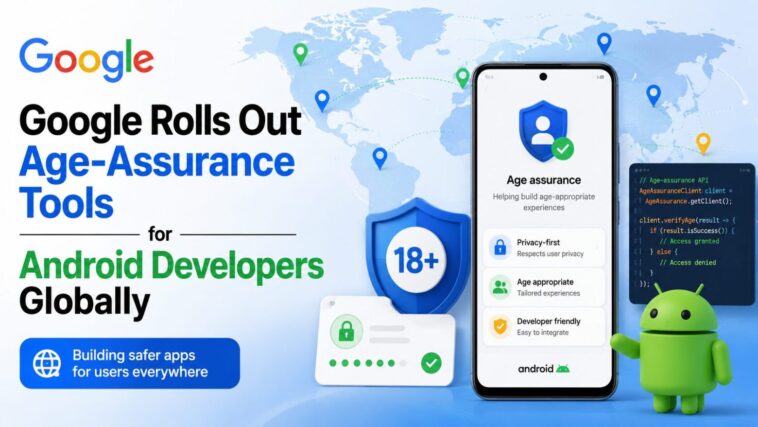
Google just made a big move. It’s expanding its age-assurance tools. This is a direct answer to Apple’s own system. The news dropped Wednesday.
Here’s the plan. Google Play’s Signal API will reach users worldwide by the end of 2026. This tech already works in Brazil. It helps Android developers spot younger users. The goal? Safer, age-appropriate app experiences for kids online.

The rollout starts fast. Australia and Canada get access by mid-August. Then it goes global. Every market gets it by year’s end.
Why now? Child safety is a hot-button issue. Lawmakers worldwide are cracking down. Regulators want stronger minor protections on app stores. Apple already made its move. Back in February, it rolled out age-verification tools globally. That move addressed growing digital child-safety laws across multiple countries.

Google’s system works differently, though similarly to Apple’s. Developers get a user’s age range. They don’t need private data like a birthdate. Parents share their child’s age range directly. Simple as that. Adults can share their age too when apps ask. This unlocks customized digital experiences for everyone.
Here’s the best part. Parents won’t repeat this process endlessly. No more app-by-app setup. Google centralized everything. It’s all inside Family Link, the company’s parental-controls dashboard. Enter the info once. Any participating developer can then access that age signal. They’ll adjust their app accordingly.
But there’s a catch. Nothing shares automatically. Parental consent is required. Parents must actively opt in. They enter the information themselves. No default sharing happens without that step.
This isn’t Google’s only safety feature. Google Play already offers other protective tools. Developers can restrict app discoverability for children. That’s already in place. Meanwhile, Family Link does more too. Parents set screen-time limits through it. They approve app downloads before kids install anything. PIN-based content filters are available too, app by app.
The bigger picture matters here. Big Tech faces mounting pressure. Online child safety is now a global priority. Companies like Google and Apple are racing to comply. New child-safety legislation keeps emerging worldwide. Age-verification technology is becoming standard, not optional.
For parents, this means more control. For developers, it means new compliance tools. For regulators, it’s a win toward safer digital spaces for kids. As AI-powered apps and social platforms grow, expect more age-assurance systems like this one. The trend toward protecting young users online isn’t slowing down anytime soon.