Hajra Naz
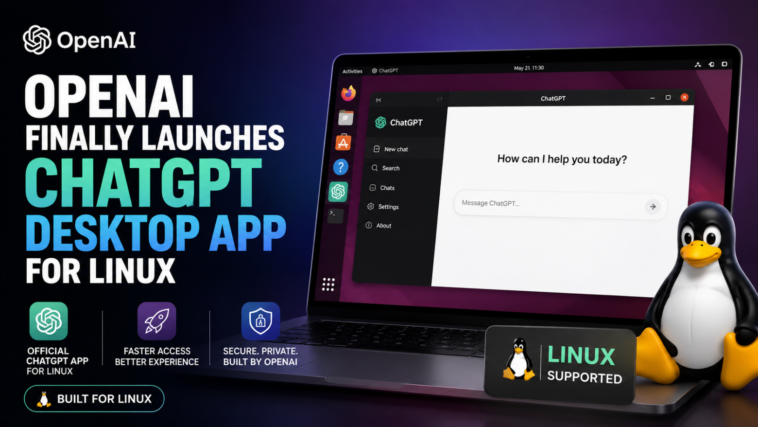
ChatGPT has been available on desktops across the world for a while now. But there’s been one notable gap. The Linux community has been left out until now. Certain corners of the open source developer community have been pushing hard for this. They’ve been asking OpenAI to bring its chatbot officially to their platform.
As of this week, OpenAI has finally addressed that gap. The company launched a dedicated ChatGPT app for Linux. The announcement came directly from OpenAI’s official channels.

OpenAI explained the reasoning behind this release. The company said Tuesday that Linux has been one of the most-requested platforms for its desktop app. According to OpenAI, this launch extends both ChatGPT and Codex across every major desktop operating system.
The new app is currently available in preview. It gives Linux users access to three separate tools. That includes standard ChatGPT. It includes ChatGPT work. It also includes Codex, OpenAI’s coding-focused tool. The app supports a range of different Linux distributions. The rollout is global, with availability starting Tuesday worldwide.
OpenAI specified exactly which distributions are supported. That includes desktop variants of Ubuntu 24.04 and 26.04 LTS. It also includes Debian 13. Fedora 43 and 44 round out the list.
Read More: Anthropic is adding watermarks to content generated by its AI models
It’s worth putting this list in context. The broader Linux ecosystem includes hundreds of different distributions in total. However, the specific distros OpenAI chose here aren’t random. They serve as the foundation for many “downstream” desktop distributions, often called “flavors.” Because of that shared foundation, those derivative distros should also work with OpenAI’s new apps, even without official support listed for each one individually.
This move puts OpenAI in a familiar position: playing catch-up. The company is trailing Anthropic on this particular front. Anthropic released its own Claude desktop app for Linux about a month earlier. Anthropic’s app supports Ubuntu 22.04 or later. It also supports Debian 12 or later, giving it a slightly broader range of compatible systems at launch compared to OpenAI’s initial offering.
The timing here reflects a broader pattern across the AI industry. Major labs have spent the past year racing to expand platform support, add new integrations, and meet developers wherever they already work. Linux, long treated as a lower priority compared to Windows and macOS, is increasingly becoming part of that competitive push.
Read More: OpenAI unlocks unlimited text chats for free ChatGPT users
Developers who rely on Linux as their primary operating system have historically had to rely on browser-based access or unofficial workarounds to use tools like ChatGPT and Claude. Native desktop apps change that experience meaningfully, offering tighter system integration, better performance, and features like local file access that browser-based tools typically can’t match.
Whether OpenAI expands its supported distribution list beyond the initial four remains to be seen. For now, though, Linux users on Ubuntu, Debian, and Fedora finally have an official, native way to run ChatGPT and Codex directly on their machines.