Hajra Naz
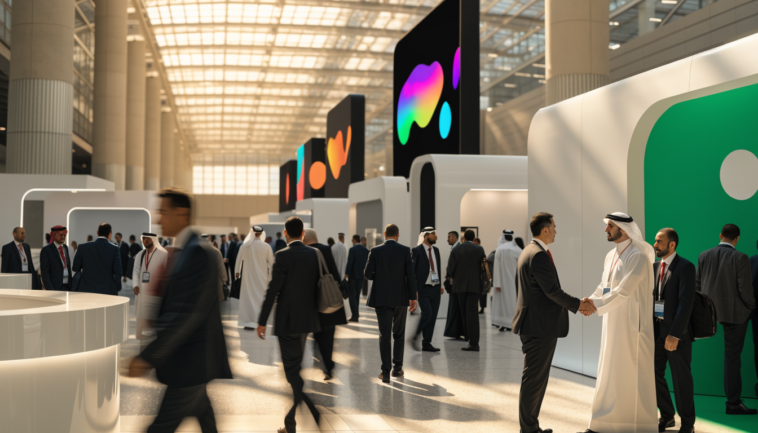
Pakistan opened its national technology pavilion at LEAP 2026 in Riyadh this week with what the Pakistan Software Export Board describes as the largest delegation the country has ever sent to the Saudi event. PSEB says close to 1,000 delegates and exhibiting staff travelled to the show, which runs from 31 August to 3 September at RECC Malham. Federal Minister for IT and Telecommunication Shaza Fatima Khawaja inaugurated the Tech Destination Pakistan pavilion and delivered a keynote titled “How We Built a Digital Nation” on September 1.
Who is actually on the floor
Eighteen companies are exhibiting under the PSEB-led Pakistan Pavilion, spanning fintech, enterprise AI, cybersecurity, engineering talent and smart-city technology, according to PSEB’s own statement on the delegation. Ten startups are exhibiting through Ignite, Pakistan’s national technology fund, and more than ten additional Pakistani companies have taken independent stalls. The delegation also carries 18 representatives from PMTF and 25 from the Pakistan Software Houses Association. Established names including Systems Limited, 10Pearls and Abacus are on the show floor alongside the younger companies.

Counts of the pavilion itself differ by outlet. Arab News reported 20 companies exhibiting through PSEB and the Trade Development Authority of Pakistan, while Pakistan Times reported a pavilion featuring 25 startups and 50 technology companies. The discrepancy comes from what each source is counting, since the pavilion, the Ignite startup block and the independent stalls are three separate groups.
The event around them is big. Arab News put LEAP 2026 at more than 1,800 technology companies, 600 startups, 1,900 investors and over 1,000 speakers, with Saudi Arabia pushing investment into technology under its Vision 2030 plan.
Last year set a measurable benchmark
Pakistan’s 2025 showing was its biggest until now, with more than 100 companies and over 1,500 delegates. PSEB’s annual report put the business generated at $9.74 million from 78 leads, as reported by Arab News. That is a rare case of a country actually publishing a return figure for a trade show, and it gives this year’s delegation something concrete to beat.
Some of it turned into permanent presence rather than one-off deals. Khizer Ahmed Siddiqui, founding member and director at KAACIB, told Arab News that the 2025 edition opened the way for his company to establish an office in Riyadh. Abdul Muqsit Abbasi, CEO of Karachi-based ByteCorp Technologies, is attending his fourth LEAP and described the value as understanding how the market operates rather than closing deals on the stand.
The pitch has shifted from cheap hours to localised product
The more useful signal for anyone selling digital services from Pakistan is what these firms are showing. Rajiv Pardhan, co-founder and CEO of FifthThought, told Arab News his ERP platform Stellisys is presenting a Saudi version of the product with invoicing compliant with the Kingdom’s Zakat, Tax and Customs Authority, an AI layer, and migration tooling that moves a business off its old system without losing legacy data. That is regulatory and localisation work. It is not staff augmentation.
PSEB CEO Faisal Jeddy connected the delegation directly to freelancers in his statement: “Over the past five to six years, Pakistan has built a strong network of freelance tech professionals delivering solutions for global clients. Connecting this talent and our broader tech ecosystem with Saudi Arabia’s digital transformation creates a strong, mutually beneficial opportunity for both markets.” PSEB also put Pakistan’s ICT exports at $4.6 billion in FY2025-26.
For an independent developer, designer or agency owner reading this from Lahore or Dubai, the practical takeaway sits in the details rather than the headline. Gulf enterprise buyers are asking for ZATCA-compliant invoicing, Arabic-language interfaces, a local entity or partner, and data handling that satisfies regional rules. Those are learnable, billable specifics, and they are the difference between competing on hourly rate and competing on fit. The same pressure is visible in how Gulf states are building their own data corridors to keep AI workloads inside the region.
What happens once the stands come down
LEAP closes on 3 September. The number that will say whether this delegation worked is not the delegate count but the follow-up figure PSEB publishes afterwards, the way it published $9.74 million for 2025. Watch also for how many of these 40-odd companies register a Saudi entity within the next year, because that, more than booth traffic, is what turns a trade show into an export channel.