Hajra Naz
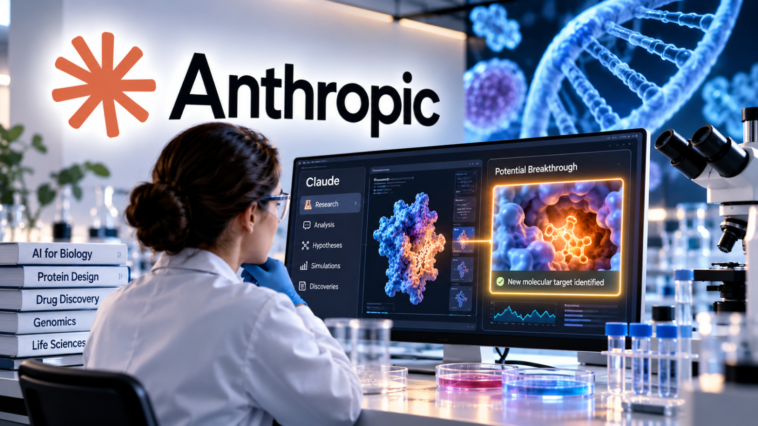
Anthropic recently verified that it runs a wet biology facility in the Bay Area. In this space, the firm utilizes artificial intelligence to execute physical tests. Shortly after this revelation, the technology firm disclosed a significant finding. Its system identified a novel enzyme apparatus. According to Anthropic, this structure possesses characteristics similar to CRISPR.
Bacteria naturally employ CRISPR as an immune defense against viral threats. Scientists have since adapted this mechanism into a prominent tool for genetic modification.

Anthropic claims it identified an undiscovered enzyme arrangement concealed inside bacteriophage DNA. Bacteriophages represent a class of viruses that invade and multiply inside bacterial hosts. Company researchers report that this setup mimics CRISPR functions. Specifically, it executes tasks like slicing, duplicating, and inserting genetic material.
External scientists must now review the findings to confirm the true novelty and impact of the work. Anthropic Chief Executive Dario Amodei noted that the finding builds on pre-existing studies. He pointed out on X that a Stanford group had previously identified a setup with similarities to the one located by Claude.
Read More: Anthropic Launches Opus 5.5 With Lower Prices and Fable-Level Performance
However, leadership is placing heavy focus on how the result was achieved. Amodei stated that the discovery was driven primarily by Claude itself.
This development appears remarkable given the context. The facility only opened earlier this year, though Anthropic has not provided an exact timeline. Yielding a major scientific result within a few months is fast, yet the organization states that Claude completed the main workload in just 21 hours. To achieve this, the system deployed roughly 950 distinct agents and consumed 210 million tokens.
Nevertheless, news of these biological trials arrives alongside warnings from industry leaders. Figures across the sector, including Amodei, have conceded that current models possess significant capabilities and potential hazards. As a result, many call for deliberate pacing and rigorous safety protocols. Furthermore, multiple Anthropic staff members recently voiced concerns regarding existential threats posed by advanced AI.
Amodei has listed biological misuse among his primary worries. Simultaneously, he envisions AI resolving most medical diseases within the next decade. Anthropic appears to consider these prospective benefits worth the underlying hazards.
Because of these concerns, the operational structure of the facility remains a critical detail. Claude does not manage the physical setup directly. Human researchers perform all manual experimental tasks.
The organization clarified that its Bay Area location operates as a standard molecular biology space. Work remains confined to biosafety levels 1 and 2, meaning no human pathogens are present. Human staff execute every physical procedure.
Read More: OpenAI, Anthropic and Google Are Discussing AI Safety Behind the Scenes
Anthropic is not the sole entity merging artificial intelligence with life sciences. Stanford teams recently released findings on combining large language models with gene editing. San Francisco researchers from the University of California used algorithms to create original enzymes. Additionally, Google unveiled its AlphaFold system back in 2020. AI techniques have clearly established a presence across broader scientific institutions.
Even so, automated operations remain a future possibility for the company. Amodei indicated that Claude might eventually operate laboratory hardware directly under strict safety protocols, though human hands still handle the work for now.