

 Hajra Naz
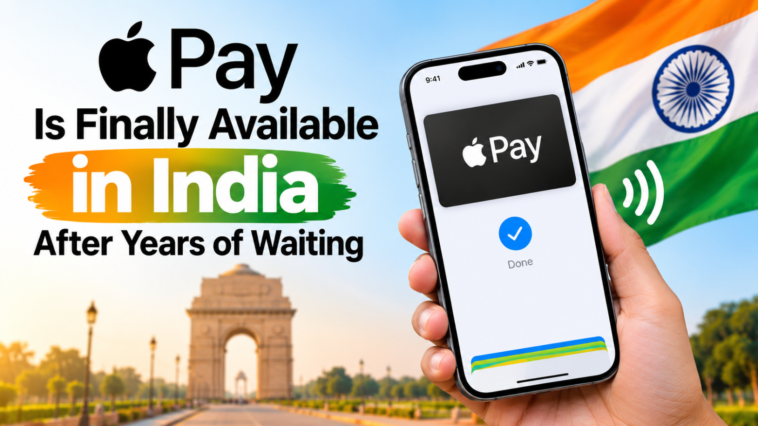
Apple began rolling out Apple Pay in India on Tuesday. Its first banking partner is Axis Bank. That’s the country’s third-largest private-sector lender. This move brings Apple’s payments service to the world’s most populous country. It arrives after years of delays. India’s payments market remains dominated by the state-backed United Payments Interface (UPI).
This initial rollout comes with real limitations. Apple Pay supports eligible Axis Bank cards on Visa and Mastercard. It doesn’t support India’s homegrown RuPay network, though. Acceptance will also be restricted. Only merchants and payment terminals enabled for this service can accept it.

Apple said the service would be accepted by “millions of merchants” across India. That includes Blinkit, Croma, Ixigo, Reliance brands, Tata 1mg, and Zomato. Apple has worked with several payment service providers to enable this acceptance. That includes Cashfree, JusPay, Mswipe, Paytm, PayU, Pine Labs, Razorpay, and Worldline.
Apple Pay works differently than India’s ubiquitous UPI system. UPI lets consumers make instant bank-to-bank payments without relying on cards at all. Apple Pay, by contrast, remains card-based. It requires individual issuers and payment infrastructure providers to integrate with the service directly.
This makes a broad rollout considerably more complex. Apple’s commercial terms have also become a sticking point. This applies specifically to some of India’s largest banks, according to sources.
Read More: Freelancers in Pakistan to Benefit from Apple Pay and Google Pay Integration via Sadapay
Apple is reportedly seeking a fee of about 20 basis points (0.2%) on transactions. That represents a significant bite out of the typical margin in the payments layer. That margin usually ranges from 40 to 50 basis points (0.4% to 0.5%).
This fee structure broadly matches Apple Pay’s commercial model in other markets, according to sources. HDFC Bank, ICICI Bank, and SBI Card aren’t supporting Apple Pay at launch. Negotiations over commercial terms reportedly continue with these institutions.
Apple, Axis Bank, HDFC Bank, ICICI Bank, and SBI Card did not respond to requests for comment on this launch. Earlier this month, Reuters reported that Apple was preparing to launch Apple Pay in India in October. That rollout would start with Axis Bank credit cards specifically.
Apple Pay enters a payments market that looks markedly different from the U.S. and other card-heavy economies. India’s digital payments boom has been driven largely by UPI. This state-backed system lets consumers move money directly between bank accounts.
UPI handles the bulk of digital payments across India today. Scanning a QR code to pay directly from a bank account has become commonplace there. Apple Pay, by contrast, initially addresses a much smaller card payments market.
Still, Apple Pay could genuinely appeal to India’s growing base of iPhone users. These users tend to be more affluent overall. They’re also more likely to use premium credit cards regularly. These customers could make the service hard for banks to ignore entirely, despite UPI’s continued dominance.
Even if Apple Pay remains a niche service in India, the economics could still matter for Apple. The transaction fee Apple would charge gives it another way to monetize its growing iPhone user base in the country, according to sources.
At launch, eligible Axis Bank customers can take specific actions. They can add their credit cards to Apple Wallet. They can then use Apple Pay for online purchases. Contactless payments work too, at supported terminals, according to sources.
Read More: Amazon Adds ‘Get Book’ Button to Kindle iOS App After Apple Payments Ruling
Uneven acceptance is a real possibility during this rollout. An Apple Pay transaction could work at one terminal operated by an enabled payments provider. That same transaction could fail at another terminal, if its acquiring bank hasn’t enabled the service. This could create inconsistent acceptance, even for customers holding supported cards.
This launch adds another piece to Apple’s growing business in India. The company has been expanding iPhone sales there. It’s also growing local manufacturing and its retail footprint. Apple accounted for 28% of India’s smartphone market by value in 2025. That’s up from 23% a year earlier, according to an earlier report from Counterpoint Research.
India already accounts for about a quarter of global iPhone production. That share could rise significantly over the next five years. According to the Indian daily Business Standard, it could reach 30% to 35%. That report cited an Indian government official last month.