Alveena Ahmad
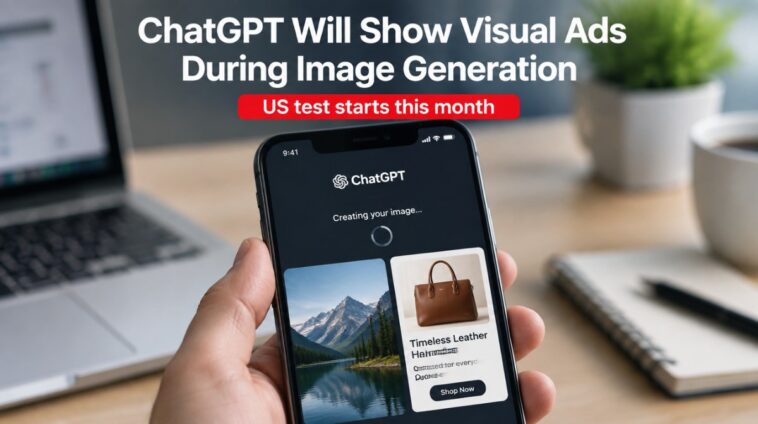
OpenAI announced on October 5, 2026 that it will test a new visual ad format inside ChatGPT, starting with image generation. The test begins later this month, is limited to the United States and a select group of advertisers, and the ads are labeled and kept separate from the image a user asked for.
ChatGPT now reaches 1.2 billion weekly users, according to OpenAI’s announcement on its new ads format and measurement, and image generation is one of its most used features. Putting ads there turns a creative tool into a media channel.

What OpenAI actually announced
The new format pairs product imagery with a “Learn more” button. OpenAI says the ads stay clearly labeled and separate from generated content, and that “ChatGPT’s answers stay independent, conversations stay private, and users remain in control.” Advertisers can sign up through a self-serve page at ads.openai.com, though the initial test is restricted to a chosen group.
OpenAI also published early advertiser results from its existing ads product. WeightWatchers reported a 15.3% lower cost per acquisition than its blended paid-search benchmark. The wellness brand Dose said 67% of its incremental purchases came from net-new customers. Portland Leather said 93% of visitors arriving from ChatGPT Ads were new. These are advertiser-reported figures published by OpenAI, not independent measurements.
On measurement, OpenAI named a long list of partners: attribution tools including AppsFlyer, Adjust, Branch, Kochava and Triple Whale, data connections through Hightouch, Tealium and LiveRamp, and brand-safety pilots with DoubleVerify and Integral Ad Science. Pricing for the new format and the list of launch advertisers were not disclosed in the announcement. Yahoo Finance’s coverage adds that ChatGPT ads already run in 38 countries, including India since August 2026.
The measurement list is the real signal
Most of the announcement is about proving results, not about the ad unit. Naming ten-plus attribution vendors tells advertisers that OpenAI expects to be judged on cost per acquisition against search and social, the same way Google and Meta are. The advertiser quotes all lean on new-customer share, which is the metric performance marketers care about most when a channel is new.
For anyone selling ad management or e-commerce growth services, that matters. A channel that reports 93% new visitors for one brand, even as a single self-reported case, will get tested by agencies and store owners. Those clients will start asking freelancers whether ChatGPT is worth a budget line next to Facebook and Google.
What it means if you work from Pakistan or the Gulf
The test is US only, so nothing changes for a Karachi or Dubai advertiser this month. OpenAI has not said when this format reaches other markets, and we could not confirm from the announcement whether Pakistani or Gulf advertisers can buy ChatGPT ads at all today. Treat any agency pitching “ChatGPT ads in Pakistan” right now with caution until you see the account interface yourself.
The practical step is small. Read the self-serve page, learn how its attribution and conversion tracking connect to tools you already use, and keep a short comparison note of cost per acquisition across channels for your clients. Freelancers who can explain the difference between a conversational ad slot and a search ad will have an advantage when budgets move.
Will free users accept ads in an image tool?
The open question is user reaction. The ads appear to free-tier users while an image is being generated, which is a moment of waiting rather than reading. If people ignore or resent them, the click-through numbers will show it within weeks of the October test. If they work, expect the format to spread to other ChatGPT features, and expect rivals that offer free image generation to weigh the same trade.