Hajra Naz
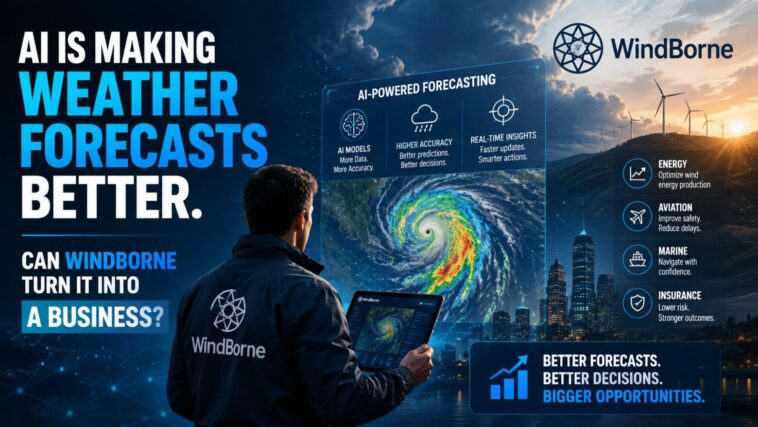
New deep learning techniques have changed more than chatbots. They’ve also transformed weather forecasting. Simulations that once required supercomputers can now run on a laptop. That shift is reshaping meteorology. But there’s an even bigger challenge ahead. The real opportunity may be making these forecasts easier for people and businesses to actually use.
WindBorne Systems is tackling that problem. The startup collects data using the world’s longest-flying weather balloons. That data feeds into a powerful forecasting model. WindBorne just raised a $37 million Series B round. CEO John Dean shared the news directly.

The round was co-led by Khosla Ventures and Galvanize. Additional investors included Translink Capital, Lux Capital, and several returning backers. This new funding values the company at $250 million.
WindBorne was founded in 2019. The original plan was simple. The company wanted to gather a new kind of weather data. It built low-cost sensors and long-endurance balloons to do it. Over the past four years, AI weather models have opened new doors. WindBorne can now generate its own forecasts. That used to be out of reach for most private companies. Simulating the atmosphere required expensive supercomputers that few businesses could afford.
Today, WindBorne operates 20 launch sites worldwide. At any given moment, about 600 balloons are in the air. These balloons collect data from places that are otherwise hard to reach. That includes extreme locations, like inside the eye of a typhoon. The company is also expanding its approach. It’s beginning to deploy aerial sensor packages. These can fall into the ocean and keep collecting data as floating buoys.
Dean calls this system a “planetary nervous system.” The proprietary data it generates gives WindBorne a real edge. That data also blends with information from government weather agencies worldwide. Together, it strengthens the company’s forecasting model and creates a competitive advantage that’s hard to replicate.
Read More: Ex-Apple Engineers Introduce Acme Weather, A New Spin on Forecasting
Dean explained the impact of this data. He said adding balloon data noticeably improves forecast accuracy. He also said each data point from a balloon delivers more value than one from a satellite. On top of that, the company has grown its revenue while proving this out. That growth helped ease investor concerns about long-term demand.
Right now, WindBorne’s main customers are government agencies. The U.S. National Weather Service buys the company’s data directly. The U.S. Air Force and U.S. Navy are also paying customers through research partnerships. One project focuses on building forecasting models that can run onboard ships. That matters especially when ships have limited or spotty connectivity.
The company’s next big push is into the commercial sector. Right now, that mostly means investment funds. These funds use weather data to help predict commodity prices and other business outcomes. This new funding round will support several priorities. That includes more computing power and a plan to replace satellite communications with a mesh radio network. It will also help WindBorne build out its go-to-market team to expand further into private industry.
That expansion won’t be simple. Over the past decade, many startups have tried to scale similar sensing businesses. Earth-observing satellite networks are one example. Many struggled to break into the private sector. Turning raw data into real business value takes experience and established workflows. As a result, many of these companies end up relying on government agencies instead, since those agencies already know how to use this kind of data.
Private weather forecasting companies do exist today. But most make their money in narrower ways. Many repackage or refine government forecasts for media outlets. Others serve specialized needs, like aircraft de-icing or ship routing. Some cater to financial speculators looking for a trading edge. That landscape may be shifting, though, as AI tools make it faster and cheaper to process complex weather data.
Saloni Multani, a partner at Galvanize, helped lead this funding round. She explained why the private weather market has stayed so limited. She said integrating weather forecasts into everyday business decisions has traditionally been expensive and complicated. She believes AI is changing that. Better forecasts make the investment worthwhile. And AI makes it far easier to connect those forecasts directly to the decisions businesses actually need to make.