Hajra Naz
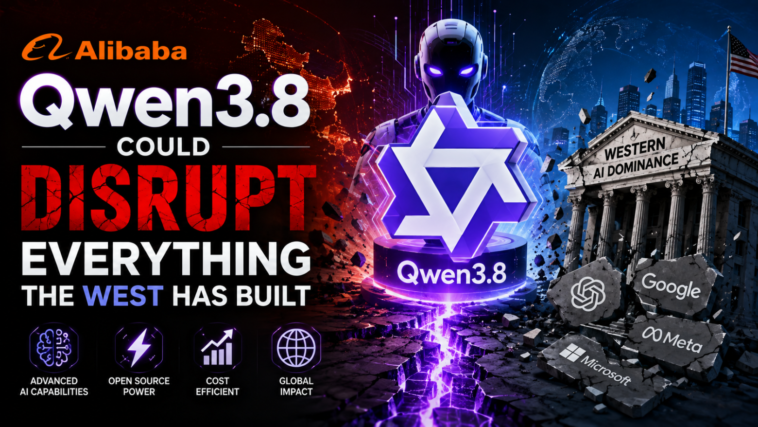
Alibaba released Qwen3.8-2.4T-A95B. This is a text-only, open-weight checkpoint. It powers the company’s managed Qwen3.8-Max service.
The checkpoint is now publicly available on Hugging Face. This marks something significant for the Qwen family of models. It represents the first open release of a Max-class model in that lineup. There’s an important distinction to note, though. The downloadable checkpoint is text-only. It also always runs in thinking mode. The managed Qwen3.8-Max service offers more capability by comparison. That includes vision input support. It includes non-thinking mode as an option. It also includes built-in tools that the open version simply doesn’t have.

Model Architecture and Design
The model contains 2.4 trillion total parameters. However, it only activates 95 billion parameters for each operation. This efficiency comes from a specific design. The model uses a sparse mixture-of-experts architecture. It also relies on a hybrid attention mechanism. Together, these reduce computing requirements. They also reduce latency, compared with similarly sized dense models.
The layer structure follows a repeating pattern. There are 23 blocks total. Each block contains a specific sequence. That includes three units of Gated DeltaNet, followed by MoE. It also includes one unit of Gated Attention, followed by MoE again. This mixes linear attention with standard gated attention throughout the model.
The official model card lists key technical specs. Native context length sits at 262,144 tokens. That can be extended up to 1,010,000 tokens. The model also exposes two specific controls. That includes reasoning_effort. It also includes preserve_thinking.
Read More: Alibaba Introduces Qwen3.8-Max, Its Most Powerful AI Model
Why the Efficiency Advantage Matters
This efficiency advantage carries real economic weight. The mixture-of-experts design activates only about 95 billion of the model’s 2.4 trillion total parameters per request. That efficiency lets Alibaba do something significant. The company can credibly undercut U.S. frontier pricing. This goes beyond simply matching capability on paper.
Chinese labs are producing increasingly competitive models. Many perform well on benchmarks. They do this using a fraction of the parameters that larger models require. By extension, these models also use a fraction of the compute and chip access available to U.S. labs.
Benchmark Performance
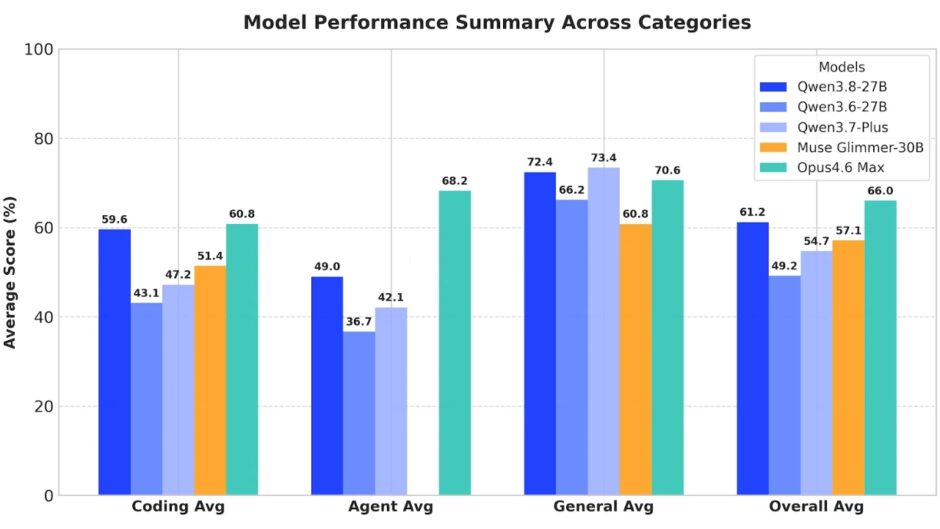
Performance benchmarks show a strong competitive position for this model. It ranks second on Vision Arena. It ranks fifth on Text Arena. The only model ahead of it in overall performance is Anthropic’s Claude Fable 5.
Hardware Requirements
NVIDIA has specified what’s needed to run this model properly. Multinode, data-center-scale accelerated systems are required. Performance figures back this up. The model can generate more than 4,000 tokens per second per GPU. It can also deliver more than 350 tokens per second per user. These numbers come without additional model tuning. This runs on a GB300 NVL72 system, using FP8 precision.
Remaining Technical Constraints
Several constraints remain significant despite the model’s efficiency. That’s true even though only 4% of parameters activate per token. Storage remains a real factor. So does loading time. Expert placement matters too. Interconnect bandwidth and quantization also play a role. Organizations planning hosted services should take these seriously. They should review licensing terms carefully. That review should happen against their specific product design. It should also account for their revenue profile before committing deployment resources.
Licensing and Commercial Boundaries
The custom license here creates clear commercial boundaries. The checkpoint uses the Qwen3.8-Max License. This differs from the standard Apache 2.0 license used elsewhere. Under this license, prominent model-name display becomes mandatory. That requirement applies to covered commercial products or services. Specifically, it applies once a product exceeds 100 million monthly active users. It also applies once monthly revenue exceeds $20 million.
There’s an additional requirement too. A separate Qwen license becomes necessary under certain conditions. That happens when aggregate revenue exceeds $50 million during any consecutive 12-month period. Because of this structure, technical access and commercial permission function as separate decisions entirely.
What This Means for Developers
These open weights enable real, independent testing. Developers can evaluate long-context reasoning capabilities directly. They can also test coding performance on their own systems. Still, teams building hosted services need to proceed carefully. They must verify full licensing compliance. This step matters before scaling any deployment into production.