Hisham Sarwar
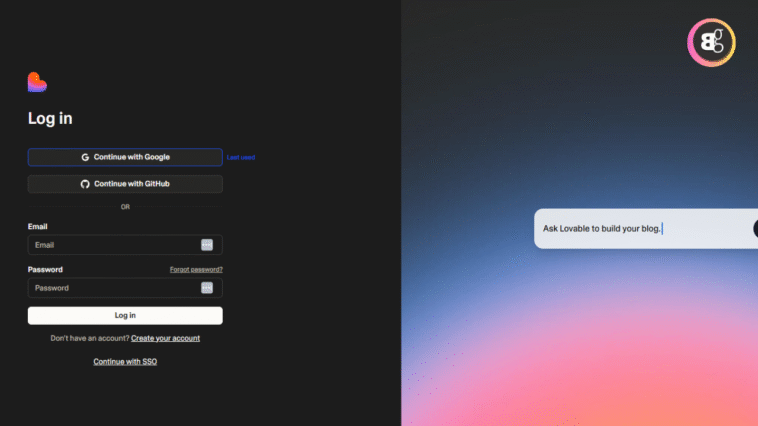
Lovable, the AI-powered no-code app builder that lets anyone create web apps through simple text or voice prompts, has taken its platform mobile, launching dedicated apps for both iOS and Android. The move marks a significant milestone for the rapidly growing startup and signals a broader maturation of the so-called “vibe coding” movement, the practice of building functional software through conversational AI rather than traditional hand-written code.
The launch arrives at a particularly charged moment for the AI development tools space. Funding is flowing, competition is intensifying, and platform gatekeepers like Apple are beginning to flex their regulatory muscles over what kinds of AI coding experiences are permitted on their storefronts. Lovable has managed to navigate all of that turbulence, and it now puts a full-featured app-building studio directly into users’ pockets.

Build Apps from Your Pocket
The core promise of Lovable’s mobile experience is deceptively simple: open the app, describe what you want to build, and watch a functional web application take shape in real time. Whether you’re typing out a prompt or dictating one through voice input while commuting, the mobile client connects to Lovable’s cloud-based AI engine and begins scaffolding everything from database schemas to front-end UI components on your behalf.
The mobile app is not a stripped-down companion tool or a mere project viewer. According to the company, it offers near-feature parity with the browser-based experience that has already attracted hundreds of thousands of users since Lovable’s public launch. Users can initiate brand-new projects, iterate on existing ones, preview rendered web apps directly inside the mobile interface, and push changes live, all without ever touching a line of code.
“We kept hearing from our users that inspiration doesn’t wait until you’re back at your desk,” the company noted in its announcement. “The ability to act on an idea the moment it strikes, whether you’re on a train, at a coffee shop, or lying on your couch, is exactly what the mobile app unlocks.”
The voice input feature deserves particular attention. Rather than requiring users to type out lengthy, detailed prompts on a small keyboard, Lovable’s mobile interface lets builders speak naturally about what they want. The underlying AI interprets spoken intent and translates it into precise engineering instructions, handling everything from responsive layout design to back-end logic integration. For non-technical founders or product managers who want to prototype quickly, this represents a genuinely low-friction entry point into software creation.
The Android version of the app is available via the Google Play Store, while the iOS version can be downloaded through Apple’s App Store. Both apps are free to download, with Lovable’s existing subscription tiers governing how many AI-generated tokens users can spend per month on builds and iterations.
Navigating Apple’s App Store Rules
Getting onto Apple’s App Store was not as simple as submitting a build and waiting for approval. Earlier in 2024, Apple began scrutinizing, and in some cases rejecting, AI-powered “vibe coding” applications, citing concerns under App Store Review Guidelines that prohibit apps whose primary purpose is to distribute code execution environments or enable users to run arbitrary code on the device.
Apple’s rules, originally designed to prevent developers from sidestepping the App Store review process by shipping dynamic code bundles, created an awkward gray area for AI coding tools. After all, apps like Lovable are fundamentally in the business of generating and deploying code just through a conversational interface rather than a traditional IDE.
Lovable reportedly worked closely with Apple’s review team over several weeks to make clear the architectural distinction that ultimately secured its approval: the app itself does not execute generated code locally on the device. All code generation, compilation, and deployment happen on Lovable’s cloud infrastructure. The iOS app is effectively a rich interface for communicating with that cloud backend and previewing the resulting web applications through a standard WebView component, a pattern Apple has long accepted.
This architectural choice also has practical benefits for users. Because processing happens server-side, the mobile app remains lightweight and does not drain device battery or require high-end hardware. Even someone on an older iPhone with modest processing power can build and iterate on sophisticated web applications.
The episode illustrates a wider tension that AI developer tool companies will continue to face as their products mature. Platform policies written for a pre-AI era don’t always map cleanly onto products that blur the line between consumer app and development environment. Lovable’s successful navigation of that tension could serve as a template for competitors attempting similar launches.
What Users Can Build
One of the most compelling aspects of the Lovable platform, and a key reason the mobile launch is generating genuine excitement, is the breadth of what its AI is capable of producing. This is not a tool limited to static landing pages or simple form builders. Users have leveraged the platform to ship remarkably complete applications across a wide range of categories.
Internal Business Tools: Small business owners have used Lovable to build custom CRM dashboards, inventory management interfaces, employee scheduling portals, and client-facing booking systems. Traditionally, these kinds of bespoke internal tools require either expensive custom development or a compromise-laden off-the-shelf solution. Lovable collapses that trade off.
SaaS Prototypes: Early-stage founders are using the platform to go from idea to clickable, functional demo in a matter of hours rather than weeks. Several companies have reportedly gone to investor meetings with working software built entirely through Lovable, something that would have been unthinkable with no technical co-founder just a few years ago.
Marketplaces and Directories: Community directories, local marketplaces, niche job boards, and event listing platforms are among the most frequently cited use cases. These projects typically involve database-backed listings, search and filter functionality, and user authentication, features that Lovable can wire together automatically from a plain-language description.
Educational Tools and Utilities: Teachers have built custom quiz platforms, interactive learning modules, and classroom management tools. Individual hobbyists have created personal finance trackers, habit logging apps, and recipe organizers. The common thread is that none of these builders needed to know what a React component or a SQL query looks like.
Consumer Mobile-Ready Web Apps: Thanks to Lovable’s responsive output, many of the web apps built on the platform work seamlessly on mobile browsers, effectively giving non-technical creators a path to a mobile-accessible product even before today’s native app launch.
The mobile app makes all of these use cases even more accessible by meeting builders at moments of spontaneous motivation, the flash of an idea that often dissipates by the time one gets back to a laptop.
Vibe Coding Market Context
Lovable’s mobile launch arrives as the vibe coding market enters what could generously be described as a gold rush phase. Venture capital has poured into the space with remarkable enthusiasm, with several key players attracting massive funding rounds in a compressed period.
Lovable itself raised a reported $150 million at a valuation of approximately $1.7 billion earlier in 2025, a staggering figure for a company that only emerged from its predecessor form (formerly known as GPT Engineer) relatively recently. The round was led by prominent Silicon Valley investors and validated the market’s belief that AI-generated software is not a novelty but a structural shift in how applications get made.
Replit, perhaps the most direct competitor in the browser-based AI coding space, has pursued a similar all-in strategy on AI-assisted development. The company has repositioned itself aggressively around its Replit Agent product, which can autonomously build and deploy applications from natural language prompts. Replit benefits from an existing community of millions of developers and learners, giving it a distribution advantage that pure-play newcomers have to work to overcome.
Bolt.new, a product from StackBlitz, has also garnered significant traction, particularly among developers who want a faster, more frictionless path to a working prototype than traditional toolchains allow. Bolt’s approach emphasizes speed above all else; the time from prompt to deployed URL is measured in seconds for simple applications.
Cursor, while more squarely aimed at professional developers than the no-code segment, has become the dominant AI code editor for people who do write code. Its success signals that even experienced engineers want AI deeply integrated into their workflow, not just as an autocomplete afterthought but as a genuine collaborative partner.
The presence of so many well-funded competitors raises natural questions about differentiation. Lovable’s answer, at least in part, seems to be accessibility and polish. Where some competing tools still feel like developer products with a conversational veneer, Lovable has invested heavily in making the experience feel approachable for a non-technical audience, a design philosophy that the mobile app extends and reinforces.
The broader vibe coding market is also beginning to attract scrutiny alongside the enthusiasm. Questions about code quality, security vulnerabilities in AI-generated applications, and the long-term maintainability of software built without human engineers who understand the underlying systems are all live debates in technical communities. As more AI-built applications go to production, the industry will accumulate real-world evidence about where these tools excel and where they fall short.
For now, though, the momentum is undeniable. A 2025 report from a16z identified AI-assisted development tools as one of the fastest-growing categories in enterprise software spending. GitHub data suggests that a meaningful and growing percentage of code committed to repositories globally is now AI-assisted in some form. The question is no longer whether AI will transform software development; it’s how fast, and who will own the most important surfaces of that transformation.
What’s Next for Lovable
The company has not published a detailed product roadmap, but reading between the lines of the mobile launch announcement offers clues about the direction of travel. Deeper voice integration seems likely, particularly as voice AI models continue to improve in their ability to handle complex, multi-step instructions. Tighter integration with mobile device hardware, camera, GPS, and notifications could allow Lovable-built web apps to behave more like native applications over time.
There is also an obvious opportunity in team collaboration. The current mobile experience is largely optimized for individual builders. Adding real-time collaborative editing, comment threads, and role-based access controls to the mobile interface would make Lovable more competitive as a tool for small teams shipping products together, not just solo founders prototyping alone.
Distribution partnerships are another plausible frontier. Imagine Lovable integrations baked into business productivity suites, e-commerce platforms, or communications tools, letting users spin up custom micro-applications directly from within software they already use every day. The mobile app, as a standalone product, establishes Lovable’s presence in a new context. But the larger strategic game may be about making Lovable’s AI engine available everywhere users have ideas, not just within a dedicated app.
For the millions of people who have long had software product ideas but lacked the technical skills to execute on them, that vision is more than a product roadmap; it’s a meaningful promise about who gets to be a builder.
Lovable’s iOS and Android apps are available to download now. Existing subscribers can log in with their current credentials, and new users can sign up directly through the mobile apps to access the platform’s free tier before committing to a paid plan.