Alveena Ahmad
Updated May 2026 · 4 min read

OpenAI is reportedly developing a smartphone where AI agents replace apps entirely. With Qualcomm, MediaTek, and Luxshare confirmed as supply chain partners, mass production is targeted for 2028. Here is everything we know.
Target mass production
Projected annual shipments
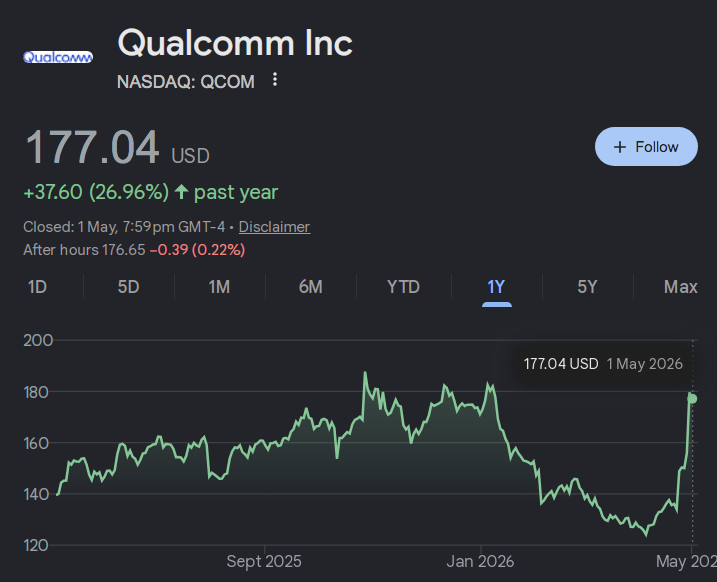
Qualcomm stock surge on the news
What is the OpenAI smartphone?
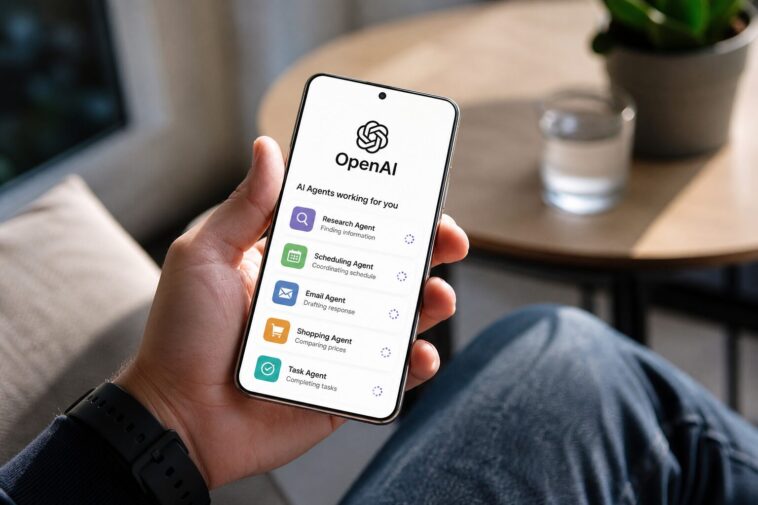
According to analyst Ming-Chi Kuo, OpenAI is developing a smartphone built around AI agents rather than traditional apps. The device would use a custom processor jointly developed by Qualcomm and MediaTek, with Luxshare handling co-design and manufacturing. Instead of a home screen full of app icons, the interface would be driven entirely by an AI agent that completes tasks on the user’s behalf through natural conversation.
None of the companies involved have confirmed the partnership publicly. OpenAI did not respond to press requests. However, Kuo’s supply chain intelligence has a strong track record on Apple hardware calls, and the companies named already manufacture some of the world’s most recognisable consumer devices.
Why does OpenAI want to build a phone?
The core argument is control. Right now, OpenAI’s products live inside Apple’s iOS and Google’s Android, both of which restrict what AI features can access at the system level. By owning its own hardware and operating system, OpenAI could deliver a comprehensive AI agent service with no platform restrictions. The phone would also give OpenAI continuous access to user context in real time, something an app running inside a rival’s ecosystem simply cannot do.
Analyst Kuo frames it plainly: “Only by fully controlling both the operating system and hardware can OpenAI deliver a comprehensive AI agent service.” The phone would run a mix of on-device AI models and cloud inference, with the device tracking user context continuously rather than treating each interaction as a fresh session.
Who is building it?
Qualcomm and MediaTek are reportedly co-developing the custom chip. This is not speculative. Qualcomm already powers 75% of Samsung Galaxy S26 devices, and last year OpenAI’s gpt-oss-20b reasoning model was demonstrated running on Qualcomm’s Snapdragon processors. MediaTek brings cost efficiency and strong performance at the mid-range price points. Luxshare, which assembles AirPods and an increasing share of iPhones for Apple, is named as the exclusive manufacturing partner. Specifications are expected to be finalised by late 2026 or early 2027.
Is this OpenAI’s only hardware project?
No. OpenAI acquired Jony Ive’s design studio io Products for $6.4 billion in equity last year. That collaboration is focused on a separate category of AI devices described as complementing phones and laptops rather than replacing them. OpenAI’s Chief Global Affairs Officer has also confirmed the company is on track to announce its first hardware product in the second half of 2026, which reports suggest will be a pair of AI-powered earbuds. The smartphone is a second, separate hardware track.
Will it actually succeed?
History is not encouraging. The Humane AI Pin was discontinued. The Rabbit R1 received damaging reviews. Neither product validated the idea that users will swap their existing smartphone for a purpose-built AI device at any meaningful scale. OpenAI faces a different challenge: it needs to convince hundreds of millions of people to replace their iPhone or Android with a device from a company that has never shipped consumer hardware before. The 300 to 400 million annual shipment projection would put the device ahead of iPhone volumes, which suggests Kuo is projecting long-term replacement demand rather than near-term sales.
Frequently Asked Questions
Is OpenAI really building a smartphone? +
According to analyst Ming-Chi Kuo, yes. The report names Qualcomm, MediaTek, and Luxshare as supply chain partners, with mass production targeted for 2028. OpenAI, Qualcomm, and MediaTek have not officially confirmed the project.
What makes the OpenAI phone different from an iPhone or Android? +
Rather than a grid of apps, the interface would be driven by an AI agent that completes tasks through natural conversation. The device would also track user context continuously, combining on-device AI models with cloud inference to respond to requests in real time without the restrictions Apple and Google impose on third-party apps.
When will the OpenAI smartphone launch? +
Mass production is targeted for 2028. Hardware specifications and the final supplier list are expected to be confirmed by late 2026 or early 2027. There is no confirmed release date, retail price, or official announcement from OpenAI.
Who is making the chip for the OpenAI phone? +
Qualcomm and MediaTek are reportedly co-developing the custom AI-native processor. The chip is designed to run on-device AI inference rather than relying entirely on cloud processing, similar to how Apple’s own silicon is optimised for Apple software.
Does this threaten Apple and Google? +
Potentially yes, but not immediately. If OpenAI controls its own hardware and OS, it bypasses the app store restrictions both companies use to limit AI features. However, OpenAI has never shipped consumer hardware, and previous AI-first devices like the Humane Pin and Rabbit R1 both failed to gain traction.
What other hardware is OpenAI working on? +
OpenAI acquired Jony Ive’s studio io Products for $6.4 billion to develop a separate category of AI devices. The first product from that collaboration is expected to be announced in the second half of 2026 and is believed to be AI-powered earbuds. The smartphone is a different, parallel hardware project.