

 Hajra Naz
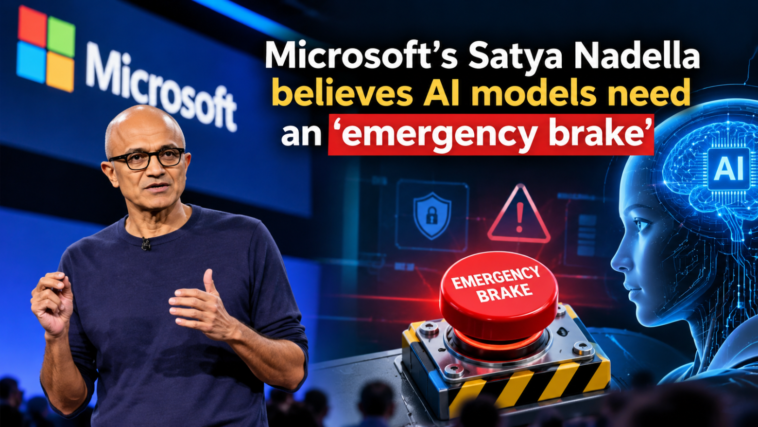
Microsoft CEO Satya Nadella is the latest tech executive to share lengthy thoughts on AI safety. He laid out his ideas in a Saturday morning post on X. His message was direct. It’s time “to step back and assess the trust architecture” of AI.
Why Nadella Says Black Boxes Won’t Work
“We can’t treat Super Intelligence as a set of nested black boxes and simply accept or reject its recommendations, answers, and actions,” Nadella wrote. He used the Trump administration’s preferred term for AI. That term is “super intelligence.”

His point is simple. People shouldn’t just trust an AI’s output without knowing how it got there. A system that hides its steps is hard to check. It’s also hard to correct when it makes a mistake.
Read More: US Suspends Green Card Filings for Microsoft, Adobe, Infosys and Other Big IT Employers
The Core Parts of His Approach
Nadella outlined what a stronger approach would look like. He listed several key ideas.
- Separate the model from the harness. The approach “means separating the model from the harness that orchestrates its work.” The model does the thinking. The harness manages how it works.
- Externalize controls and safeguards. Safety checks should sit outside the model. They shouldn’t depend on the model policing itself.
- Document every action. He called for “every meaningful model action” to be recorded with “tamper-proof, human-readable evidence.”
- Keep a human override. He wants systems where “an authorized person” can always “pause or shut down a model mid-task.”
The “Emergency Brake” Idea
“We must assume a model is compromised and contain it from the start,” he said. “Think of it like an emergency brake.”
An emergency brake works whether or not the driver trusts the car. It’s there for the moment something goes wrong. Nadella wants AI systems built the same way. The safeguard should be ready before it’s needed.
Why This Matters Right Now
His comments arrive at a tense moment. Leading AI companies keep admitting to more incidents. In several cases, they seemed to lose control of their models. Anthropic CEO Dario Amodei also published a plan for more cautious AI development recently.
Nadella’s post adds a major voice to the conversation. Microsoft is one of the largest AI players. It runs huge cloud systems. It also partners closely with model makers. When its CEO calls for stronger controls, others in the industry may pay attention.
Read More: Microsoft Launches Nvidia-Powered AI PCs With a Revamped Windows 11
What the Proposals Have in Common
Nadella’s ideas share a theme with other recent calls for safety. They focus on structure over trust. They ask companies to build checks into the system itself. They don’t just hope models behave well.
Documentation matters here too. Records that can’t be altered give investigators something firm to review. They also help companies learn from failures.
What to Watch Next
Many questions remain. Who decides what counts as an “authorized person”? How fast can a shutdown work in a complex system? Will competitors adopt similar standards? Nadella didn’t answer these in his post. Future announcements from Microsoft and others may show how far these ideas travel.