Hajra Naz
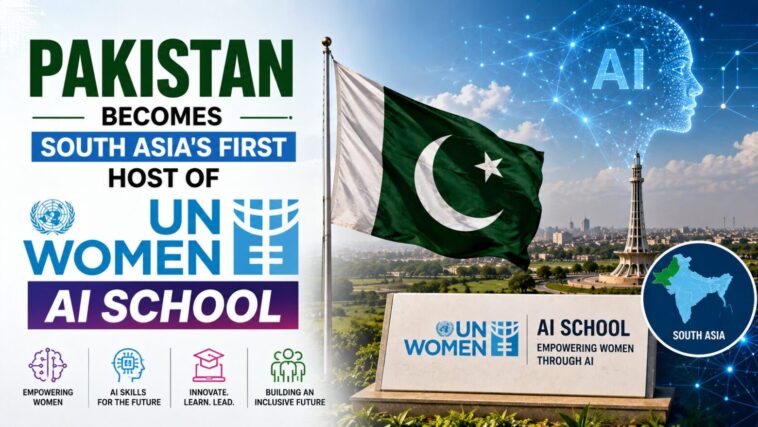
Pakistan just made history. The country launched the UN Women Gender-Responsive AI School Pakistan. This makes Pakistan the first country in South Asia to host this program.
The goal is simple. Help people use AI fairly. Help them use it ethically. Help them use it inclusively.

The program targets a wide audience. Policymakers are included. So are government institutions, educators, businesses, and civil society groups. If you’re curious about how artificial intelligence is reshaping industries, this initiative fits right into that bigger conversation.
Who’s Behind This Program
The Ministry of Information Technology and Telecommunication (MoITT) leads the effort. They’re partnering with UN Women Pakistan. The Korea International Cooperation Agency (KOICA) provides support too.
There’s a bigger mission here. Pakistan wants women and girls to play a bigger role in its digital economy. This program is one piece of that puzzle.
What Participants Actually Learn
The AI School isn’t just theory. It mixes classroom learning with hands-on training.
Topics covered include AI basics and prompt engineering. Students also learn about AI agents and ethical AI. Gender-responsive AI gets special attention too. So do governance, public administration, and inclusive development.
Who can join? The list is long. Policymakers and parliamentarians qualify. Government departments can participate. So can UN agencies, universities, civil society groups, businesses, and community leaders.
Training didn’t wait for the official launch, either. Sessions already started for government officials. Parliamentarians attended too. So did UN staff, academics, and civil society representatives. These early sessions built a stronger foundation. They created a wider community focused on responsible AI practices.
The regional program covers more ground beyond Pakistan. It tackles privacy concerns. It addresses bias in AI systems. Digital safety is a major focus. So is responsible use of generative AI. Pakistan also ran Training of Trainers sessions earlier in July. These sessions prepared local experts to lead future training.
Pakistan Sets a Regional Record
Here’s something notable. Pakistan became the first country in South Asia to finish the complete national Training of Trainers track.
The numbers behind this program are impressive. Since 2024, the regional initiative has trained more than 5,000 people. That includes policymakers, UN staff, civil society members, and young innovators across Asia and the Pacific.
Jamshed M. Kazi, UN Women Pakistan’s Country Representative, highlighted another first. Pakistan is the first country in the region with national training pathways covering three government branches. That means the executive, legislative, and judicial branches all participate. Civil society organizations and the private sector are included as well.
Closing the Gender Gap in AI Policy
This program addresses a real problem. Gender representation in AI policymaking remains weak globally.
UN Women’s own research backs this up. Out of nearly 140 national AI policies worldwide, only around two dozen mention gender at all. That’s a small fraction.
The AI School wants to change that pattern. It aims to weave gender equality into AI policy, governance, and development work. Women and girls should actively shape Pakistan’s digital transformation journey, not just watch from the sidelines.
Pakistan’s National AI Policy supports this same goal. It calls for stronger gender perspectives in AI development. It also pushes for specialized AI skills programs. These programs would target marginalized women. They’d also support persons with disabilities.
A Formal Partnership Takes Shape
The launch ceremony included a major step. MoITT and UN Women Pakistan signed a Memorandum of Understanding. This formally establishes the AI School within Pakistan.
The initiative was then symbolically handed to the ministry. This move supports long-term planning. Pakistan wants national ownership over this program going forward, much like other government-led tech initiatives aiming for sustainability.
Federal IT Minister Shaza Fatima Khawaja spoke at the event. She said artificial intelligence is reshaping every industry sector. She emphasized that Pakistan wants women and girls involved. Not just involved, but leading, too, within the country’s digital economy.
KOICA Pakistan’s Deputy Country Director, Sodam Baek, echoed similar sentiments. She said the program would strengthen digital skills nationwide. It would also promote responsible AI use. More opportunities for women and girls would follow naturally from this work.
Real Results Already Showing
The event wasn’t just speeches and signatures. Organizers also presented actual outcomes from the Training of Trainers program.
Participants showcased practical AI applications already in use. Some focused on governance work. Others tackled parliamentary research tasks. Education applications were highlighted too. Community engagement projects rounded out the presentations.
This isn’t just a symbolic launch, in other words. Real people are already applying these skills in real settings, whether in emerging tech education programs or government offices across the country.
Why This Matters Going Forward
Pakistan’s move sets a precedent for the region. Other South Asian countries may follow this model. The combination of gender-responsive policy and hands-on AI training feels genuinely new.
For now, Pakistan holds a unique position. It’s leading South Asia in structured, inclusive AI education. Whether other nations replicate this approach remains to be seen. But the foundation is already built, and the early results suggest it’s working.