Hajra Naz
Freelancing in Pakistan is growing faster in momentum — a young digital workforce, competitive pricing, and rising government support for IT exports — while India remains the larger, more established market with bigger enterprise demand. Both are strong places to build a freelance career in 2026.
Freelancing is booming in South Asia. Pakistan and India are leading the charge. Both countries have very different histories. But both are now magnets for global remote work.

Two Neighbors, Two Freelancing Giants
Pakistan and India are outsourcing hubs now. Companies hire from both. They want software developers. They want designers. They want AI specialists. They want marketers, editors, assistants, and writers too.
The skill lists look almost the same. The real difference is scale. It’s also specialization. And it’s the direction each market is heading.
People like to ask, “Who’s better?” That’s the wrong question. A better one: what can each side learn from the other? This matters more for freelancers. It helps them grow. It doesn’t matter which side of the border they’re on.
Quick Comparison at a Glance
| Category | Pakistan | India |
|---|---|---|
| Number of Freelancers | Hundreds of thousands, growing fast and strong among students & young professionals | One of the world’s largest freelance workforces, millions active |
| Average Earnings | Rising steadily | Generally higher, driven by enterprise clients |
| Digital Exports | Growing year over year, expanding startup ecosystem | Mature IT outsourcing industry, large multinational tech companies |
| Top Skills | WordPress, Graphic Design, Video Editing, Digital Marketing, Virtual Assistance, AI Content Creation | Software Dev, Cloud Computing, AI & ML, Cybersecurity, Data Science |
| Growth Trend | Rapid, youth-driven, rising government support | Large & stable, backed by mature enterprise demand |
| Key Advantage | Competitive pricing, young digital workforce | Global reputation, enterprise access, startup funding |
Market Size: Scale vs Momentum
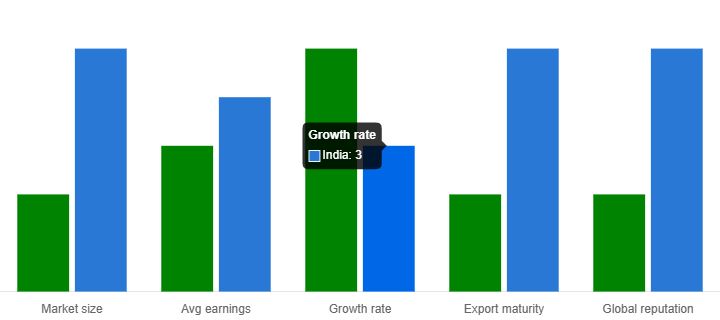
When it comes to sheer numbers, India is hard to beat. It has one of the largest freelance workforces on the planet, with millions of active freelancers and a strong presence across technology and creative services. That kind of scale didn’t happen overnight—India’s IT industry has had decades to mature.
Pakistan is one of the fastest-growing freelance communities in the world. It has hundreds of thousands of active freelancers, and a huge chunk of that growth is coming from students and young professionals who are diving into freelancing earlier than previous generations did.
Takeaway: India leads in scale. Pakistan is growing rapidly.
Freelance Earnings: Why Your Passport Isn’t the Deciding Factor
Indian freelancers tend to have higher average income potential, and there are clear reasons why: more enterprise clients, larger agencies, premium software projects, and longer-term contracts that provide steady income.
Pakistani freelancers’ income continues to rise too, driven by a different set of factors—growing international demand, better digital skills, more AI adoption, and increasing remote opportunities.
Takeaway: Your skills matter more than your passport. A freelancer with strong, in-demand skills can out-earn plenty of people in “bigger” markets, regardless of where they’re based.
IT & Freelance Exports
Freelancing doesn’t just affect individual incomes — it’s a real contributor to national digital economies. India has a mature IT outsourcing industry, large multinational technology companies, and a strong enterprise services sector.
Pakistan’s IT exports continue to grow year after year, its startup ecosystem is expanding, and freelancing is becoming a major contributor to the country’s digital exports.
Takeaway: Both countries are strengthening their digital economies, though at different scales.
Most Popular Skills: What Clients Actually Hire For
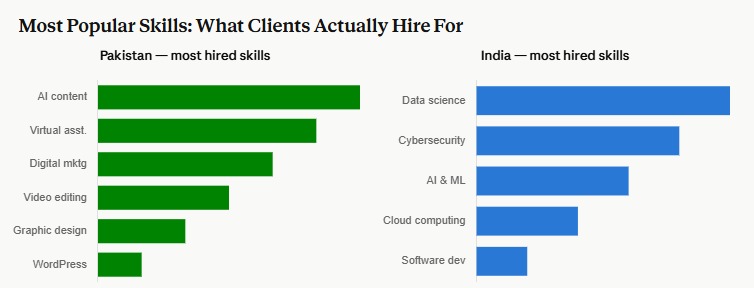
In India, clients hire heavily for technical skills—software development, cloud computing, AI and machine learning, cybersecurity, and data science. These are skills that typically require years of technical training and tend to command premium rates.
In Pakistan, the most popular skills are a bit more varied — WordPress development, graphic design, video editing, digital marketing, virtual assistance, and increasingly, AI-powered content creation.
Opportunity: AI skills are creating new demand in both markets.
Read More: Top 10 Freelance Skills in Demand
Growth Trends: Who’s Growing Faster?
India’s advantage is its large, mature ecosystem backed by stable enterprise demand that isn’t going anywhere anytime soon. That stability is valuable for freelancers who want predictable, long-term work.
Pakistan’s advantage is momentum—the market is growing rapidly, more young freelancers are entering it every year, the government has been putting more support behind IT exports, and Pakistan is gaining more recognition internationally.
Key Insight: India is larger. Pakistan is accelerating.
Advantages of Each Market
India:
- Bigger global reputation
- More multinational clients
- Larger outsourcing industry
- More startup funding
Pakistan:
- Competitive pricing
- Young digital workforce
- Fast-growing IT sector
- Increasing international demand
What Pakistani Freelancers Can Learn From India
This is probably the most practical part of the whole comparison. Pakistan doesn’t need to copy India’s entire playbook, but there are a few lessons worth borrowing:
- Build agencies, not just solo careers
- Target higher-value clients instead of competing purely on price
- Develop premium technical skills
- Invest in personal branding
- Focus on long-term client relationships instead of chasing one-off gigs
Pakistan doesn’t need to become a copy of India — it can build on its own strengths while learning from proven strategies.
Final Takeaway: It’s Not a Competition Between Countries
Freelancing isn’t a competition between countries — it’s a competition between skills, professionalism, and consistency. Whether someone is freelancing from Pakistan, India, or anywhere else, clients care about the same core things:
- Quality
- Communication
- Reliability
- Results
The future belongs to freelancers who keep learning — and that’s equally true on both sides of the border. So here’s a question worth sitting with: which skill do you think will dominate freelancing over the next five years? If this breakdown was useful, it’s worth saving and sharing with a fellow freelancer.
Frequently Asked Questions
Is freelancing in Pakistan growing?
Yes — freelancing in Pakistan is one of the fastest-growing freelance markets in the world, driven by a young workforce, rising IT exports, and increasing international recognition.
Is it easier to freelance from Pakistan or India?
Both have strong freelance ecosystems. India has a larger, more mature market with more enterprise clients; Pakistan offers competitive pricing and fast-growing demand, making it easier for new freelancers to get started and gain momentum.
What can Pakistani freelancers learn from India’s market?
Building a stronger reputation for reliability and long-term client relationships, investing in specialization over generalist skills, and positioning for larger, enterprise-level projects rather than only smaller gigs.
Related reading
- Online Earning in Pakistan: A Complete Guide
- The 7 Rangi Formula: Win More Freelance Proposals
- 7 AI Prompts That Save You Hours Every Week
Last updated: August 2026.