

 Fahad Manzur
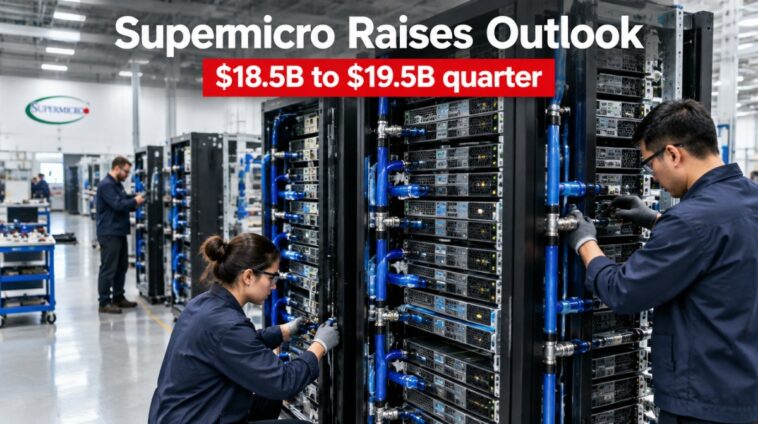
Super Micro Computer raised its preliminary revenue estimate for the fiscal first quarter of 2027, which ended September 30, to between $18.5 billion and $19.5 billion. That compares with prior guidance of $14.5 billion to $15.5 billion, and the company attributes the increase to higher demand for AI platforms.
The update was issued on October 20 in a Supermicro investor relations release and also appeared in the TechStartups daily digest.

The numbers
Gross margin is now expected at 12.0 percent to 12.5 percent, up from prior guidance of 10.4 percent to 10.8 percent. Supermicro cites customer and product mix as the reason. The release does not provide earnings per share. Full results and an earnings call are scheduled for Tuesday, November 3, 2026 at 5:00 p.m. Eastern.
The low end of the new range is $3 billion above the high end of the old one, so this is a revision of the whole range, not a nudge. Margin moved up by roughly 1.6 to 1.7 points at both ends.
The caveat that matters
The figures are unaudited and preliminary, built from management estimates. The company says they may change during the financial close and that its independent auditor has not reviewed them. The release also lists familiar risks: quarter-to-quarter swings, greater customer concentration as Supermicro targets larger customers, lower margins on larger deals, possible declines in average selling prices and tariffs.
That concentration point is worth reading carefully. A jump in revenue that rests on fewer, larger buyers can reverse quickly if one of them pauses orders. The company points readers to its fiscal 2026 Form 10-K for more detail on these risks.
Why a server maker tells you about AI demand
Supermicro builds the servers that hold AI accelerators, so its sales are a useful read on how much capacity cloud and enterprise buyers are still installing. A raise of this size says that, at least through September, orders for AI systems were running well ahead of what the company had told investors a few weeks earlier.
For freelancers and small teams who rent that capacity through APIs and cloud GPUs, the link is indirect. Strong demand for hardware tends to keep compute scarce, and scarce compute tends to hold prices up. That is a general pattern, not something this release says, so do not budget around it. What you can do is track your own inference costs month to month, so you can see for yourself whether prices are moving.
The November 3 call should show how much of the quarter came from a few large customers and whether the margin improvement holds up in the audited numbers.