mebeing
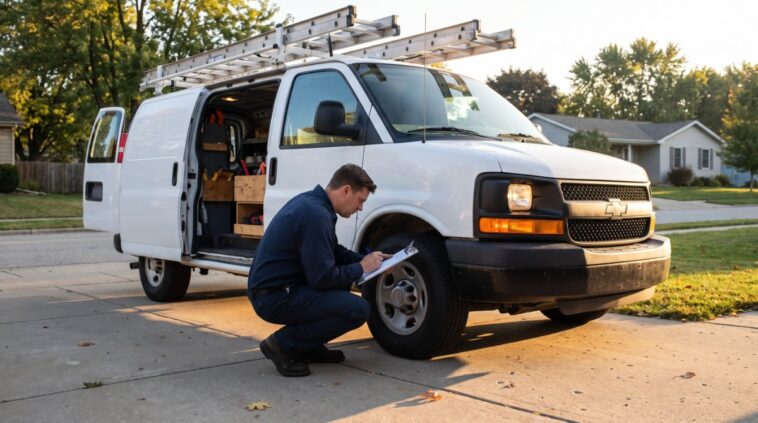
Most mobile business owners can tell a story about the day the truck let them down. Maybe it was a dead battery in a customer’s driveway, with the customer watching from the window. Maybe it was a flat tire on the highway and a 9 a.m. appointment slipping away. Either way, the lesson sticks. The vehicle isn’t just how you get to work. It’s the office and the warehouse, and every road it drives works as an ad. A checklist won’t make it bulletproof, but it catches small problems before they get expensive.
Start With a Walk-Around
Walk around the outside every morning, before the engine even starts. It takes two minutes. Look at the tires for low pressure and for bulges, then glance at the lights and the mirrors. Pay attention to cracked window glass, even a chip no bigger than a dime. Caught early, that’s a quick and cheap repair. Wait a few weeks, let the sun and a couple of potholes get to work, and the chip becomes a full windshield job that costs far more. A crack in the driver’s line of sight can also fail an inspection. Customers notice it too. Selling a premium service is hard from a truck that looks like it lost a fight with a gravel road.

Under the Hood and Inside the Cab
Once a week, give the engine bay five minutes. Check the oil and the coolant. Then do the brake fluid and the washer fluid. Leaks don’t complain until it’s late, and a spot on the driveway can turn into a tow truck call within a couple of weeks. Inside the cab, try the wipers and the heater. Honk the horn once and give the seat belt a tug. Toss the old coffee cups while you’re in there. Nothing says “trust me with your wiring” like a dashboard full of fast-food wrappers.
Paperwork and Safety Gear
Paperwork is the dull part, which is exactly why it gets skipped. Put the registration and the insurance card in one folder and leave it in the glove box, along with copies of any permits the trade needs. An expired document is a hassle at best and a fine at worst, sometimes bigger than a new tire. The safety kit needs a look too: first aid supplies, a fire extinguisher, reflective triangles, and a flashlight. Extinguishers have gauges and bandages have dates, so set a reminder twice a year. Finding out the first aid kit expired in 2019 is a lousy moment to start reading labels.
Tools and Stock
Then there’s the back of the vehicle. Anything loose will fly in a hard stop, and ladders hurt. Strap down the big stuff. Sort small parts into labeled bins so finding a fitting doesn’t turn into a treasure hunt on the customer’s time. Before leaving the yard, match what’s on board with what the day’s jobs need, because a mid-job trip to the hardware store can eat an hour. And keep the tank at least half full. Running on fumes makes a great story afterward. In the moment, it mostly wrecks the schedule.
Make It a Habit
None of this matters if the list lives in a drawer. Tape a copy inside the driver’s door, or keep it on a phone, wherever it’s most likely to get read. Tick the boxes and write the date. Jot down mileage and repairs while you’re at it. After a few months, patterns show up, like the van that eats a set of brakes every spring. Book service by the calendar instead of waiting for a new and exciting noise. If a driver keeps skipping the checklist, ask why. Usually it takes too long, and the fix is a shorter list. Give the vehicle the attention a client gets, and it will keep showing up on time. It won’t ask for a raise. It might ask for new tires.