Hajra Naz
Job seekers in nearly every field will soon notice a major shift in how hiring works. More initial interviews and pre-screening calls are coming their way. While that might sound like good news, it doesn’t mean there will suddenly be more job openings.
Instead, the hiring process itself is changing. Recruiters, often overwhelmed with resumes and repetitive screening tasks, are now turning to AI-powered recruiters to handle the first step. These tools check background details, salary expectations, work eligibility, and availability — before a human recruiter ever gets involved.

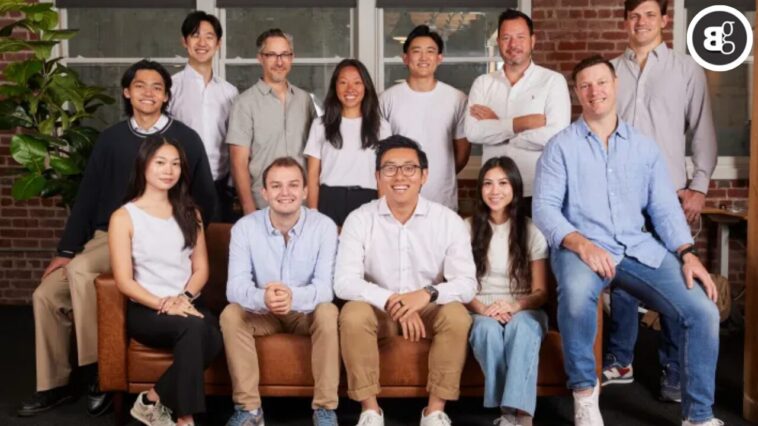
One of the fastest-growing startups in this space is Alex, an AI recruiting company already helping Fortune 100 companies, financial institutions, nationwide restaurant chains, and even Big 4 accounting firms streamline their hiring pipelines.
How Alex’s AI Recruiter Works
Founded just 18 months ago by Aaron Wang, a former Facebook employee and hedge fund quant, Alex has built a voice AI tool capable of running autonomous interviews.
Here’s how it works: As soon as a candidate applies for a job, the AI recruiter can schedule and conduct a phone or video interview — often within hours. The system then asks structured questions about work history, career goals, salary needs, and even availability.
Wang says:
“Our AI recruiter does thousands of interviews a day and helps people get hired at some of the biggest companies in the world.”
While Alex hasn’t publicly revealed its client list, insiders confirm that it already works with several Fortune 100 brands.
Investors See AI Recruiting as the Future of Work
The shift to AI-driven hiring is attracting big investment. Alex just closed a $17 million Series A round, led by Peak XV Partners. The round also included Y Combinator, Uncorrelated Ventures, and several Fortune 500 CHROs.
This follows the startup’s $3 million seed round in 2023, led by 1984 Ventures.
The growing investor interest highlights a clear trend: AI recruiters aren’t just a passing experiment. They’re rapidly becoming an essential part of HR tech.
Rising Competition in AI Hiring
Alex isn’t alone in this race. Other AI hiring startups like HeyMilo, ConverzAI, and Ribbon are also building platforms to automate early-stage interviews.
Even Mercor, a data labeling unicorn now chasing a $10 billion valuation, originally started as an AI recruiting company before pivoting into a broader AI services model.
This wave of competition shows how valuable AI is in solving the time-intensive problem of hiring. Recruiters save hours of repetitive work, while candidates often get faster responses after applying.
The Long-Term Vision: Beyond LinkedIn
Alex’s ambitions go beyond simply conducting interviews. Wang believes the platform could build a global professional profile system that surpasses LinkedIn.
He argues that:
“A 10-minute conversation tells me a whole lot more about you than your LinkedIn profile does.”
If successful, Alex could collect millions of voice-based interview insights to create richer candidate data, giving recruiters, hiring managers, and even AI-driven job boards a deeper understanding of every applicant.
Why AI Recruitment Is Growing Fast
The rise of AI in recruitment is tied to larger workplace trends:
Efficiency: Companies want to cut costs and speed up hiring.
Scalability: AI can process thousands of candidates daily.
Bias Reduction (in theory): AI interviews can be structured to remove certain hiring biases.
Data Insights: AI tools gather more structured candidate data than resumes alone.
But it’s not without challenges. Critics warn about algorithmic bias, lack of human empathy, and risks of reducing candidates to data points. Despite these concerns, the AI in the hiring market is projected to grow rapidly, especially as companies adopt generative AI tools for HR automation.
Conclusion
AI recruiters like Alex are reshaping the job search experience. For candidates, this means more initial interviews and faster responses. For companies, it means better efficiency and data-driven hiring decisions.
As the future of work moves toward AI-powered HR tech, the balance between automation and human judgment will remain the key debate.
FAQs
1. What is an AI recruiter?
An AI recruiter is software that automates parts of the hiring process. It can conduct interviews, ask screening questions, and evaluate candidates based on responses.
2. Does AI recruiting mean fewer human jobs in HR?
Not necessarily. AI handles repetitive screening, while human recruiters focus on relationship-building, negotiations, and final hiring decisions.
3. How do candidates interact with AI recruiters?
Candidates typically receive a call or video link from an AI system. They answer questions as they would in a normal interview, but the AI records and evaluates their responses.
4. Is AI recruiting biased?
AI recruiting tools can reduce bias by standardizing questions, but bias can still exist if training data isn’t diverse. Many companies are working to improve fairness in AI hiring.
5. What companies are using AI recruiters today?
Startups like Alex, HeyMilo, and ConverzAI are working with Fortune 100 companies, financial institutions, restaurant chains, and accounting firms to automate hiring.