Huma Siraj
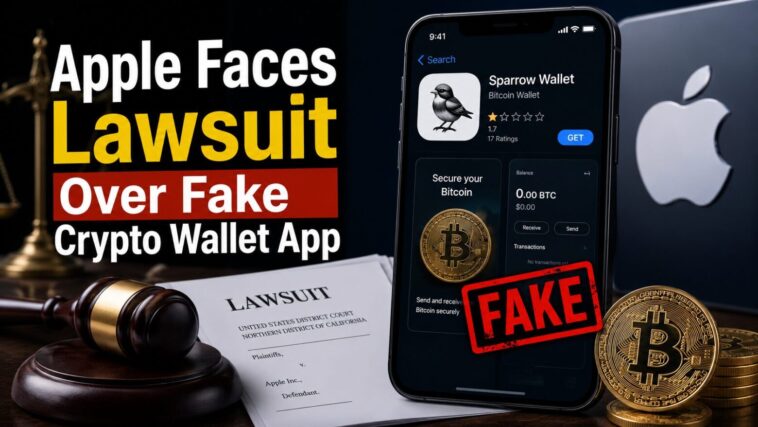
Three iPhone users filed a complaint against Apple in the US, saying they lost over $1.8 million in a cryptocurrency fraud connected to a phony program on the App Store. The complaint raises new questions about whether Apple’s app approval procedure is robust enough to prevent people from downloading counterfeit apps.
Fake Crypto Wallet Fooled Users
The Northern District of California U.S. District Court examined the case. Three people downloaded what they thought was the reliable Bitcoin wallet Sparrow Wallet, according to the lawsuit.

However, the Sparrow Wallet has never had an iPhone app. As to the lawsuit, customers were tricked into thinking the program was authentic when a phony version surfaced on Apple’s App Store.
The victims placed their Bitcoin into the wallet after installing it. They then discovered that their cryptocurrency had vanished and the program was bogus.
Millions of Dollars Lost
Due to the lawsuit, Jalen Delgado lost about $120,000, Christopher Ellis lost about $840,000, and James Ramirez lost about $875,000. The three claim to have lost almost $1.8 million together.
They contend that the fake app should never have been permitted on Apple’s App Store.
Apple’s Security Promises Questioned
The App Store has long been marketed by Apple as a secure location to obtain programs. Every app is evaluated before it is made available to users, according to the corporation.
The plaintiffs claim that when they installed the wallet, they trusted Apple’s security guarantees. They contend that by permitting a fake program that imitated a well-known bitcoin wallet, Apple broke its commitments.
The lawsuit also emphasizes Apple’s ongoing assertion that, due to its strict control over the App Store, iPhones are safer than systems that permit sideloading or third-party software stores.
Earlier Warnings Mentioned in the Complaint
The case also mentions Craig Raw, the creator of the real Sparrow Wallet.
According to the filing, Raw had previously spoken out about fake Sparrow Wallet apps appearing on Apple’s App Store. The plaintiffs believe those warnings should have led to quicker action to remove copycat apps before more people became victims.
What the Plaintiffs Want
The three users are seeking compensation for the money they lost, along with additional damages.
They also want Apple to introduce clearer warnings about the risks of cryptocurrency apps and improve the way financial apps are reviewed before they are approved.
Apple Stands by Its App Review System
Apple has not commented directly on the lawsuit.
In a statement, Apple said apps that impersonate other developers are not allowed under its App Store guidelines and are removed as soon as they are detected. The company also confirmed that there are currently no fake Sparrow Wallet apps available on the App Store.
According to the company’s most recent App Store review data, over 371,000 app entries were rejected in 2025 because they attempted to trick customers, copy existing apps, or contain spam.
According to Apple, these figures demonstrate the company’s ongoing substantial investments in maintaining the security of the App Store.
Crypto Scams Remain a Serious Problem
In recent years, fraud using cryptocurrency apps has risen in frequency.
Apple said apps that impersonate legitimate developers violate its App Store guidelines and are removed as soon as they are identified. The company also said there are currently no fake Sparrow Wallet apps available on the App Store
Experts advise downloading wallet apps only from reputable sources, confirming the developer’s identity, and checking an app’s official support on the company website before transferring any digital assets.
The outcome of this lawsuit could have wider consequences for Apple and the mobile app industry.
If the court rules against Apple, the company could face increased pressure to strengthen its app review process, particularly for financial and cryptocurrency-related applications.
The case also adds to the ongoing debate over how much responsibility app store operators should bear when fraudulent apps slip through their review systems.
As of the present, Apple claims that hundreds of thousands of deceptive apps are blocked annually by its App Store review process. The court will now have to determine whether those efforts were adequate in this instance and whether the business should be held accountable for the losses that the three users have alleged.