Fahad Manzur
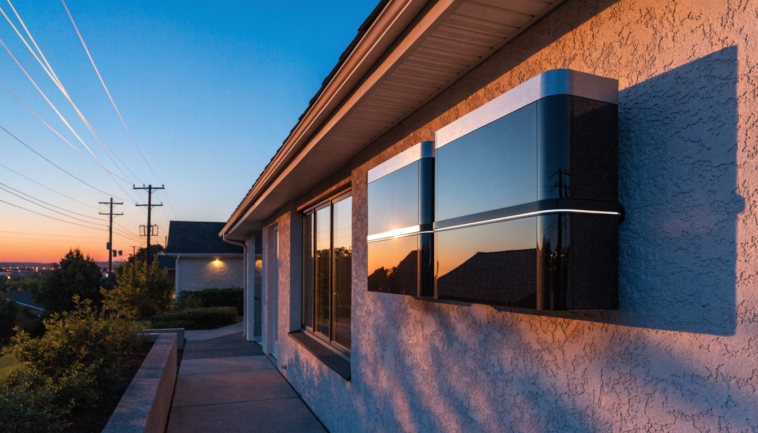
Home battery startup Base Power has raised $1 billion in new funding to scale residential energy storage installed and managed as a service. The model bundles hardware, installation, and grid participation into a monthly plan instead of a large upfront purchase. It is one of the clearest signs that distributed storage is being financed like infrastructure rather than sold like an appliance.
Base Power, a distributed energy storage company that installs home batteries to help stabilize the power grid, has raised $1 billion in Series D funding at a post-money valuation of $13 billion, according to reporting from TechCrunch and Mercom Capital. The round was led by Ribbit, Addition, Valor Equity Partners, and JPMorganChase’s Strategic Investment Group.

What Base Power Actually Builds
Base Power installs residential batteries, marketed as Base Core, that store electricity and can be drawn on by utilities during periods of high demand, effectively turning a network of home batteries into a distributed backup power plant. The company’s newest Base Core unit has a capacity of either 39.2 kWh or 78.4 kWh depending on configuration, and according to TechCrunch, the company has been installing roughly 100 systems a day as it scales manufacturing at its Austin, Texas facility.
Why Investors Are Betting Big on Grid Storage
Additional participants in the round included Altimeter, D1 Capital Partners, Sands Capital, Coatue, Layer Global, and Energy Impact Partners, according to Mercom Capital. Base Power has now raised more than $2.5 billion in total capital, and its residential battery fleet has surpassed 500 MWh in combined capacity. The company has also expanded beyond its home state of Texas into Illinois and struck partnerships with utilities including El Paso Electric, Austin Energy, and CoServ, covering more than 200 megawatts of grid capacity.
The size of this round reflects a wider investment trend in 2026: capital increasingly flowing toward what investors call the picks and shovels of the AI boom. Because AI data centers consume enormous amounts of electricity, both short-term solutions like distributed battery storage and longer-term ones like compact nuclear reactors are attracting billion-dollar rounds in the same week, a sign that investors see grid capacity itself as one of the defining bottlenecks of the AI era.
Why It Matters for Entrepreneurs Watching the Energy Sector
Base Power’s rapid fundraising, three separate billion-dollar-plus raises within roughly a year, according to earlier reporting, shows how quickly capital can concentrate around a business model once investors see a credible path to solving an infrastructure problem. For founders and business owners outside the US watching this trend, the lesson is less about batteries specifically and more about how AI’s physical infrastructure needs, power, cooling, and grid capacity, are becoming investable categories in their own right, not just software built on top of AI models.
What Comes Next
Base Power says the new funding will go toward bringing Base Core to more homes, expanding into additional states, and hiring more staff. With utilities increasingly interested in distributed storage as a way to manage peak demand without building new power plants, the company’s next challenge will be proving it can scale installations as fast as it has scaled its fundraising.
FAQ
Why is home storage attracting infrastructure sized funding?
Thousands of connected home batteries can be operated as a single virtual power plant, earning revenue from the grid. That recurring income stream is what makes a billion dollar raise defensible.
Is the subscription model better than buying a battery outright?
It lowers the entry barrier and shifts maintenance risk to the provider, at the cost of paying more over the full life of the system. The right choice depends on how long you expect to stay in the property.
Does this matter in markets with unreliable grids?
Very much so. Reliable power at home is a precondition for remote work and for the kind of income paths described in our guide to online earning in Pakistan, where outages remain a daily constraint.
Last updated: August 2026.