Alveena Ahmad
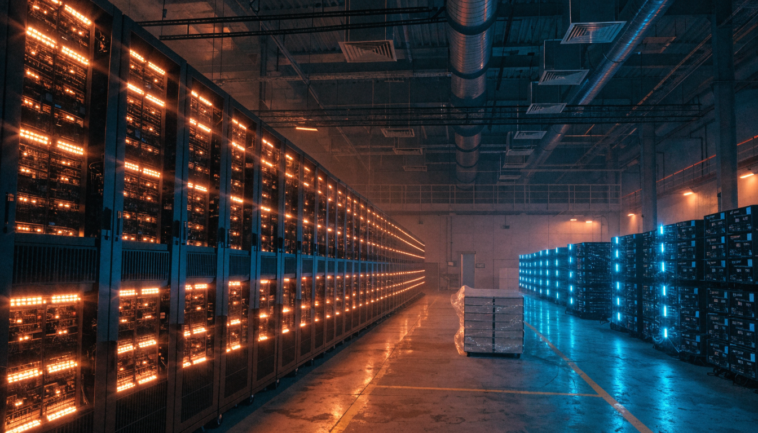
Bitcoin mining company Riot Platforms has signed a $9.1 billion, 20 year computing agreement with Anthropic, according to Bloomberg and CNBC, marking one of the clearest signs yet that bitcoin miners are pivoting toward AI infrastructure. Riot disclosed the deal on August 11, 2026, describing its counterparty only as a “leading frontier AI lab,” though multiple outlets confirmed the partner is Anthropic.
The Terms of the Deal
Under the agreement, Riot’s Rockdale, Texas campus will supply 191 megawatts of IT capacity to Anthropic, with the lease running through June 2048. Riot plans to bring the capacity online in stages, reaching 96 megawatts by December 2027 before completing the full 191 megawatt buildout by June 2028. Two five year extension options could push the total value of the contract as high as $16.1 billion. Riot’s stock jumped in premarket trading after the announcement as investors reacted to the company’s expanding role in AI compute.

Bitcoin Miners Chasing AI Compute
Riot’s move follows a broader industry shift, as bitcoin mining companies with access to cheap, plentiful power increasingly find it more profitable to lease that capacity to AI labs than to keep mining. Power rich data center sites built for mining are, in many cases, well suited to the intensive electricity demands of AI training and inference, giving miners a new and steadier source of revenue as bitcoin mining economics grow more competitive. Anthropic has been striking a series of large computing deals in recent months as it works to secure enough capacity to keep up with surging demand for Claude, including reported acquisition talks with AI startup Decart AI.
Why It Matters
Deals like this show how the AI boom is reshaping industries far outside software, turning power infrastructure and real estate into some of the most sought after assets in tech. For business owners and entrepreneurs watching the AI space, the scale of these long term commitments, running two decades or more, signals that major labs expect AI demand to keep growing for years, not just through the current hype cycle. It also points to where new jobs and regional investment may show up next, as more power intensive data center campuses get built out to feed the compute needs of a handful of frontier AI companies.