Hajra Naz
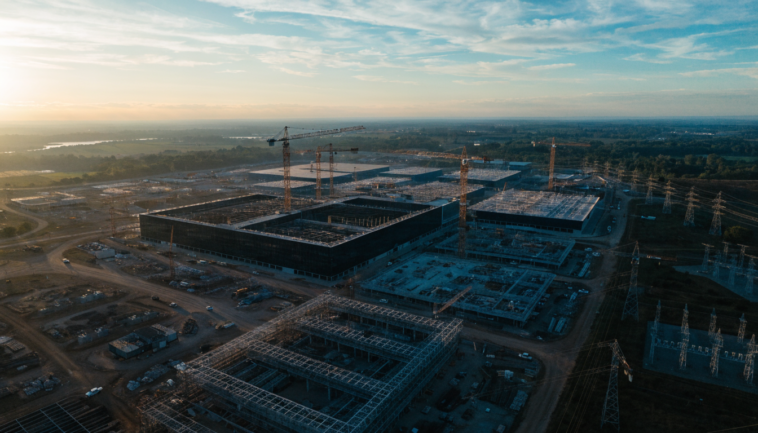
The largest US technology companies have now committed close to $1.5 trillion in future purchases tied to AI infrastructure, covering data centres, chips, and long term cloud capacity. These are contractual obligations rather than money already spent, which is why the figure is rising faster than reported capital expenditure. For business owners and freelancers, the practical signal is that demand for AI adjacent skills is being locked in years ahead of delivery.
Alphabet, Microsoft, Amazon, Nvidia, Oracle and Meta have accumulated close to $1.5 trillion in purchase commitments tied largely to computing infrastructure, chips, data centre capacity and energy, according to a Financial Times analysis published in August 2026. Those obligations sit separately from roughly another $1.5 trillion in lease commitments identified by Goldman Sachs. Alphabet alone reported purchase commitments rising sharply between the first and second quarters as it locked in long term technical infrastructure and energy agreements.

The figures matter because they are considerably larger than the capital expenditure numbers that usually anchor coverage of the AI buildout.
Why Purchase Commitments Are Different From Capex
Capital expenditure tells you what a company spent in a given period. Purchase commitments tell you what it has contractually agreed to spend in future periods. They are future cash obligations, and unlike debt they do not appear on the balance sheet in the way most people are used to reading.
What these companies are doing is locking in GPUs, servers, electricity, construction, networking and data centre capacity years ahead of knowing how profitable future AI demand will actually be. That is a rational hedge against shortages. Anyone who tried to buy accelerator capacity in the last two years understands why you would want supply secured in advance.
The cost of that hedge is flexibility. Long dated contracts are much harder to unwind than a capex plan you simply choose not to execute next year. If AI revenue arrives more slowly than projected, these obligations do not shrink to match. The full breakdown of the Financial Times analysis is worth reading if you follow the sector closely.
The Business Model Is Starting to Look Industrial
For most of their history, the large technology platforms had a software economics profile: high gross margins, low marginal costs, and the ability to scale revenue without scaling physical inputs. That is not what these commitments describe.
Massive upfront outlays, long lived contracts, heavy fixed costs and a requirement that future revenue eventually justify the build. That is the economics of steel, airlines and utilities. It is a genuinely different risk profile from the one investors priced these companies on for two decades.
You can see the same pattern rippling outward. Applied Materials reported fiscal third quarter revenue of $9.12 billion, up 25 percent year over year, and said it intends to roughly double semiconductor system output by 2028. China’s SMIC pushed its utilisation rate to 93.7 percent in the second quarter and is raising prices on sought after capacity. The demand is real and it is tightening supply across the chain.
What Business Owners Should Take From This
Three practical points.
Read the obligations, not just the headline spending. If you invest in or analyse these companies, annual capex is now an incomplete picture. Leases, supply agreements and other contractual commitments carry a large share of the real exposure. The same discipline applies to your own business: a signed multi year contract is a liability whether or not it shows up where you normally look.
Cheap AI is being subsidised by someone’s balance sheet. The falling model prices that make AI tooling affordable right now are underwritten by enormous fixed cost commitments. That is good for buyers today. It is worth remembering that pricing this aggressive is not guaranteed to persist indefinitely.
Do not over-commit to match someone else’s scale. The lesson from watching hyperscalers lock in a decade of capacity is not that you should do the same. It is the opposite. Smaller operators win on the ability to change direction quickly. Long contracts that remove that flexibility should earn their place.
None of this is a prediction that the AI buildout fails. Demand may well justify every dollar committed. But the honest framing is that the industry has made an extremely large, largely irreversible bet on a demand curve that has not fully arrived yet, and the scale of that bet is now visible in the disclosures.
FAQ
Why do purchase commitments matter more than reported capex?
Commitments are binding promises to buy capacity in future years, so they reveal planned demand long before it appears in an earnings statement. Reported capital expenditure only shows what has already been built and paid for.
Does this AI buildout create opportunities outside the United States?
Yes. Every dollar of data centre construction pulls in adjacent remote work such as documentation, support, data annotation, cloud administration, and technical content, which is one reason Gen Z and millennials are choosing freelancing over full time jobs in AI heavy markets.
What should a small business take from these numbers?
Unit costs for AI capacity are falling even as total spending climbs, so tools that were unaffordable two years ago are now within reach of a one person business. Budget for AI as an operating cost, not a one off experiment.
Last updated: August 2026.