Hajra Naz
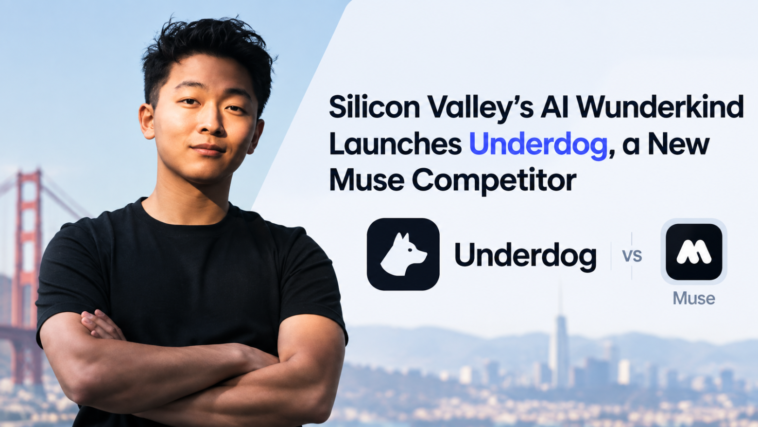
When self-taught coder Sigil Wen was 17, he moved to Silicon Valley. He lived in an AI hacker house with famed AI researcher Andrej Karpathy at the time.
While living there, he hacked and coded alongside other notable figures. Many of these people would later become some of the biggest names in AI. That included Perplexity founder Aravind Srinivas. It also included OpenAI researcher Noam Brown.

Wen tested early versions of AI tools that would later become widely known. That included a chatbot shared by Anthropic co-founder Ben Mann, which would eventually become Claude. It included an image generator from David Holz, which would become Midjourney. He also encountered early versions of what became OpenAI’s GPT-3 and the image generator Stable Diffusion.
Prominent investor and entrepreneur Naval Ravikant hired Wen for Airchat. That was Ravikant’s now-defunct rival to the Clubhouse social network.
Read More: Can Meta’s Muse Overcome Its Growing Trust Issues?
For fun, Wen figured out how to get GPT-2 running on his Apple Watch. “It was a magical time,” Wen said.
Now a Thiel Fellow, Wen has taken on a new project. The Thiel Fellowship, backed by investor Peter Thiel, invites young founders to pursue projects instead of attending college. On Monday, Wen launched an invite-only beta. The product is called Underdog.
It’s one of the most private AI assistants Silicon Valley has offered so far. The model runs entirely on-device. This means user data stays on devices people already own. Currently, that includes Macs and Windows PCs. Versions for Linux, iPhone, and Android are coming soon.
Underdog runs on Husky, an inference engine Wen built himself. Husky is designed to run AI models quickly using a user’s own hardware. According to Wen, it moves less data between a computer’s main chip and its graphics chip. This gives it an edge over rival on-device engines.
Underdog includes additional security features too. That includes encrypting the keys to email and other accounts. This applies specifically to accounts users authorize Underdog to access.
Still, Underdog relies on much smaller models than today’s state-of-the-art options. Those larger models typically run in massive data centers. Underdog currently uses a 27-billion-parameter reasoning model. This model was fine-tuned from Qwen3.8-27B.
Wen argues this model compares favorably to Claude Opus 4.6 in certain benchmarks. That represented top performance roughly six months ago. According to Wen, this means the model can handle everyday assistant tasks well. That includes shopping research or answering math homework questions.
Read More: Claude Opus 5 Just Launched: Here’s Why Everyone Is Talking About It
“You don’t need to sacrifice your privacy for the capability because they’re just as capable,” Wen says. He adds that small on-device models will keep growing more capable over time.
Perhaps the most interesting aspect of Underdog involves its early business model. The app will be free initially and never ad-supported. Since the AI runs directly on users’ machines, Underdog avoids a major cost. It doesn’t need to pay a provider for inference at scale. “I don’t have to charge you a subscription to run this because my costs are so super low,” he said.
Instead, Wen is borrowing an idea from the fintech world. Notably, Stripe co-founder Patrick Collison is one of his angel investors. Underdog will take a small percentage of payment transactions.
These transactions happen when the AI assistant uses Stripe’s secure payment system. This works similarly to an interchange fee. This way, the AI assistant never needs to mine user data for revenue. It stays aligned with users, much like a bank or credit card provider would.
This approach runs contrary to many other players in the AI assistant space. Many competitors have privacy policies allowing broader data collection. They may sell that data to advertisers or other third parties. Some use it to train additional AI models too.
Read More: Study Shows AI Assistants Driving 56% of Search Queries Worldwide
This kind of data collection could create a particularly risky trade-off for users. AI assistants often need access to intimate personal details to be genuinely useful. That includes medical conditions, financial data, and information about children.
As Wen wrote in what he calls his AI manifesto, “Why should using AI require surrendering your private information?”
He told reporters: “I honestly want to build Underdog for myself. I’m building a product that I would be proud for my future children to use.”
The startup behind Underdog is named Conway Research. Collison isn’t the company’s only notable investor. Conway is backed by Andreessen Horowitz, through partner Chris Dixon. Other backers include Khosla Ventures, Hummingbird, SV Angel, and the Anthology Fund.
That fund represents a partnership between Menlo Ventures and Anthropic. A prominent list of angel investors has also backed the company. That includes Vercel founder Guillermo Rauch, Noam Brown, and Deedy Das, among others.