

 Hajra Naz
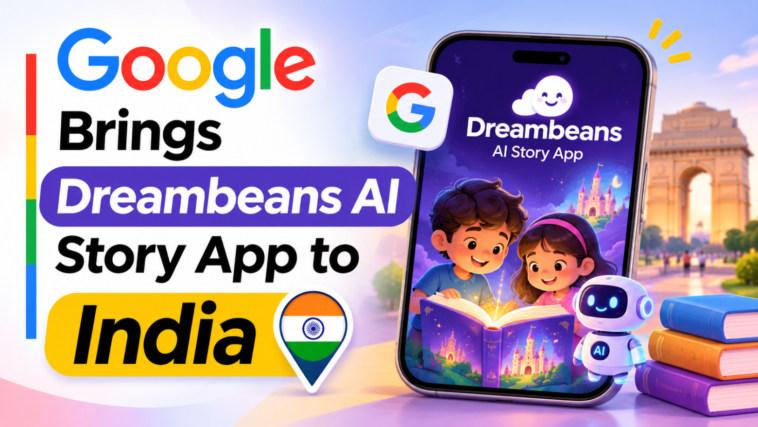
Google has launched its experimental AI app Dreambeans in India. This marks the app’s first international market outside the United States. Google aims to tap into the world’s second-largest internet market to bring personalized visual stories directly to a much broader audience. These stories draw automatically from users’ digital activities across Google’s ecosystem.
On Monday, Google officially expanded Dreambeans to Indian users across Android and iOS platforms. The app supports 13 local languages, including Hindi, Punjabi, Tamil, Telugu, and Bengali, alongside English. This regional launch arrived less than two months after Google opened app access to all eligible U.S. users aged 18 and older.

Google first introduced Dreambeans in June. The application uses contextual information from connected Google services. These services include Google Calendar, Gemini, Gmail, Google Photos, Google Search, and YouTube. Dreambeans proactively generates personalized, illustrated story cards about users’ personal interests and daily routines without requiring a manual text prompt.
The app initially relied on static AI illustrations. However, Google recently added a feature powered by its Veo video-generation model to animate images within select stories.
Read More: Google Launches Fitbit Air in India, but Its High Price May Limit Appeal
Google selected India as Dreambeans’ first global expansion market due to strong regional demand. Indian users showed high enthusiasm for accessing the app, alongside widespread everyday usage of core Google services throughout the country. India stood out specifically because of its massive user overlap across Gemini, Gmail, and Google Photos. Google product manager Gozde Oznur highlighted these points during a recent press briefing.
Dreambeans has accumulated nearly 55,000 downloads in the U.S. since its June debut, according to Sensor Tower market estimates shared with TechCrunch. Roughly 63% of those total downloads occurred in September, when Google opened access to all adult U.S. users. However, monthly downloads plummeted 84% to about 5,500 during October.
During the first 30 days after Google opened U.S. access, Dreambeans recorded an estimated 29,000 downloads. In comparison, Meta’s Muse generated 7.4 million downloads during its initial 30 days, while ChatGPT saw 2.8 million. Meanwhile, Grok Bot pulled in 362,000 downloads and Claude earned 155,000 downloads during their respective initial 30-day windows. Unlike those general-purpose assistant tools, Dreambeans focuses narrowly on generating personal stories rather than answering generic user queries.
Although Dreambeans supports several widely spoken Indian languages, users can select only one active language at a time for generated content. The app can read underlying data from Google services across multiple languages. However, it cannot currently generate story cards that combine different languages together, Oznur confirmed during the briefing.
Read More: Apple Pay Is Finally Available in India After Years of Waiting
This single-language limitation could restrict Dreambeans’ popularity in India. Millions of residents regularly switch between languages during casual conversations, frequently blending English and Hindi into a dialect known as Hinglish.
Dreambeans’ reliance on sensitive personal Google data also raises ongoing privacy questions. The application uses Google’s Personal Intelligence framework to process connected service feeds and customize its stories. These linked accounts often store sensitive personal details that some users may feel uncomfortable sharing with an automated story generator.
Users retain control over which Google services connect to Dreambeans. They can disconnect any linked service at any point, Oznur stated. Users can also wipe their stored Dreambeans activity data directly from within app settings. Furthermore, Oznur emphasized that deleting personal records from underlying Google services automatically purges that information from Dreambeans’ personalization engine.
Users can also instruct Dreambeans to avoid specific topics, such as business communications or workplace tasks. The app will adjust its story selection based on those user preferences. Oznur added that Dreambeans remains restricted to personal Gmail account holders. Enterprise accounts are excluded, and generated stories remain strictly private to the individual user.
Read More: The best mobile apps for tracking your reading and discovering new books
Dreambeans’ proactive design also brings the risk of accidentally surfacing painful memories. Oznur acknowledged that the app could theoretically generate stories featuring deceased individuals. She explained that users can direct the app to hide specific people or subjects. She compared this guardrail to Google Photos controls that let users suppress sensitive historical memories.
Oznur concluded by telling reporters that Google is exploring ways to make Dreambeans more actionable over time. The product team plans to move beyond basic recommendations, helping users execute real-world tasks directly from the app’s daily suggestions.