Hajra Naz
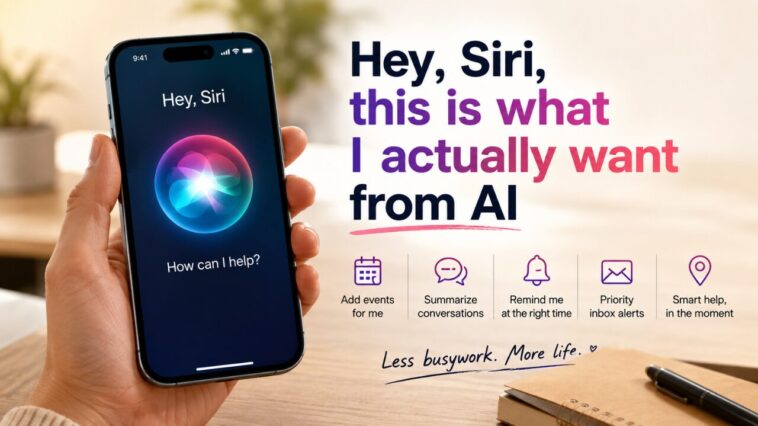
After a $250 million lawsuit and two years of delays, Apple’s Siri AI overhaul is finally rolling out across iPhones, Macs, and even Vision Pro — bringing Siri closer to the conversational AI experience users have wanted for years.
Two years passed, and a 250 million dollar lawsuit later. Apple’s Siri AI overhaul is finally heading to phones, laptops, and even mixed reality headsets. That includes Apple Vision Pro, if you are among the small group using it.

Apple shared new details at Monday’s WWDC keynote. The focus stayed on long-awaited AI upgrades built around Apple Intelligence. The pitch centers on hardware designed for deeper system-level AI features.
AI rarely convinces me to fold it into daily routines. LLMs still feel inconsistent when accuracy matters. Using AI for writing also feels ethically off. I also do not feel drawn to image generation trends like turning photos into animated styles. Still, moments exist where AI feels tempting.
Apple’s Siri demo lands in that space. It shows a phone assistant that stays active in the background. It tracks context across multiple apps and tries to organize communication happening across them.
It creates a push and pull feeling. Privacy concerns sit on one side. Convenience and relief from phone overload sit on the other side.
Read More: Apple Launches Siri AI as Tim Cook Steps Away from Apple Leadership
The ideal version of Siri looks like a personal assistant similar to Emily from The Devil Wears Prada. A second brain that predicts needs before they surface. It would detect plans inside messages and turn them into calendar events. It would flag prescriptions while passing a pharmacy. It would nudge replies when important emails sit unanswered.
Siri will not handle all of this at launch. Apple still moves toward that direction. One WWDC example showed an Apple AI engineering director asking Siri to recall a dessert his daughter mentioned earlier. Siri searched a month old message and found a reference to coconut cookies. The task sounds small, but it removes manual scrolling through long chats.
The updated Siri relies on personal context. That includes data from iMessage, Notes, Calendar, Mail, Photos, and similar Apple apps. It also uses what appears on screen. If a user sees a park photo in an app, Siri can identify or search details about it. Support for third party apps remains unclear and may depend on developer integration.
Other tools already attempt similar AI assistant behavior. Apps like Poppy and Poke push toward agent style mobile help. The tradeoff stays constant. More capability needs more personal data access, which increases risk and privacy exposure. Past incidents in the space show how fragile that balance can become.
Apple positions itself differently from many competitors. On device processing handles many AI features locally. That reduces data exposure and energy use compared to full cloud reliance. Current Apple Intelligence features like summaries and emoji generation already follow this model.
Harder tasks shift to Private Cloud Compute. Apple designed this system to process data in the cloud without giving Apple direct visibility into user content. The company has offered up to a 1 million dollar bounty for security issues in this system, with no public successful breaches reported.
A conversation with writer Calvin Kasulke added another angle. He questioned the habit of outsourcing everyday life tasks to software. He pointed out that constant delegation may weaken attention to basic human routines and memory.
Read More: Apple May Transform Siri Into a Conversational AI Chatbot, Report Finds
His view challenges the appeal of a fully automated assistant. If something matters in daily life, paying attention in the moment might carry more value than relying on recall tools later. Skills tied to memory and care could fade if automation replaces them.
He also criticized marketing ideas where AI handles family or personal choices. His point focused on responsibility. Knowing a person or a preference matters more than outsourcing that awareness.
The idea of Siri as a constant assistant raises a similar tension. A system that fills memory gaps can also reshape how memory gets used in the first place. Dependence becomes a question rather than just convenience.
There is also a fallback option. Apple allows users to turn off these AI features. Unlike some broader search integrations elsewhere, Siri AI does not need to stay active.
For now, the choice sits in place. Apple moves forward with its AI assistant vision. Users decide how much of their attention they want to hand over to it.
Frequently Asked Questions
What’s changing with the new Siri?
Apple’s AI overhaul brings a more conversational, capable version of Siri to iPhones, laptops, and Apple Vision Pro after years of delays.
Why did Siri’s AI upgrade take so long?
Apple faced significant internal delays and a $250 million lawsuit before finally shipping the overhauled, AI-powered version of Siri.
Related reading
Last updated: August 2026.