Hassan Khan
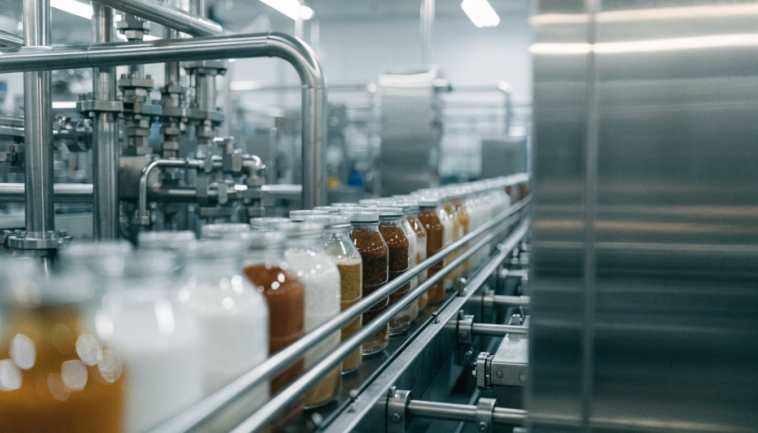
Unilever has agreed to combine its Foods business with McCormick, creating a food group worth about $65 billion with roughly $20 billion in annual revenue. The deal consolidates two large portfolios of household brands under one owner. For suppliers, marketers and job seekers, it signals more scale, tighter procurement and fresh demand for people who can service global consumer brands remotely.
Unilever has agreed to combine its Foods business with McCormick and Company, creating a food group valued at roughly $65 billion with around $20 billion in annual revenue on a fiscal 2025 basis. Under the announced terms, Unilever and its shareholders will hold approximately 65 percent of the combined company’s equity, worth about $29.1 billion, plus $15.7 billion in cash, while McCormick shareholders retain 35 percent. The transaction is expected to close in mid 2027, subject to shareholder and regulatory approval.

What the combined company will own
The merged business brings McCormick’s spice and seasoning portfolio together with Unilever brands including Knorr and Hellmann’s, alongside faster growing names such as Cholula, Maille and Frank’s RedHot. That gives the group an unusually concentrated position in flavour, condiments and cooking ingredients rather than a scattered portfolio across food categories.
Unilever set out the terms in its official announcement. McCormick has since published details of the operating model, executive team and secondary listing location for the combined company through its investor relations release. The companies expect roughly $600 million in run rate annual cost savings, net of reinvestment in growth.
The strategic logic on each side
For Unilever, this is a focus decision. Separating Foods lets the remaining business concentrate on beauty, wellbeing and personal care, categories the company believes can grow faster and carry higher margins than packaged food. Rather than spinning Foods off as a standalone listing, Unilever is trading it for cash plus majority ownership of a larger, more specialised operator.
For McCormick, the appeal is scale. A company known primarily for spices becomes a global flavour platform with far more shelf presence, more negotiating power with retailers and a broader base to spread fixed costs across. The cost synergy target is meaningful but not extraordinary for a deal this size, which suggests the case rests more on growth and reach than on cutting.
Why “shrink to grow” keeps showing up
Large consumer groups have spent several years unwinding the conglomerate model that built them. The reasoning is consistent: investors increasingly prefer businesses with a clear identity and comparable peers, and diversified portfolios tend to trade at a discount to the sum of their parts. Selling or merging away a slower division is a way to close that gap without fixing anything operationally.
Whether it works depends on execution. Deals of this scale routinely take longer to integrate than announced, and a mid 2027 close means two more years of uncertainty for staff, suppliers and retail partners before the combined company actually starts operating as one.
What business owners can take from it
The transferable idea is not about food. It is that focus is a strategy, and a profitable division can still be the wrong division to own. Unilever is not selling Foods because it loses money. It is selling because the capital and management attention tied up there earn more elsewhere.
Small businesses face the same question in miniature. A service line that pays the bills but consumes most of your time can be the reason you never build the higher margin offer sitting next to it. Reviewing your portfolio by return on attention, not just by revenue, is the version of this decision most operators never make deliberately.
All figures here come from the companies’ own announcements. The transaction remains subject to shareholder and regulatory approval, and terms can change before close.
Frequently asked questions
Why are Unilever and McCormick merging?
Scale. Combining the two portfolios gives the new group stronger negotiating power with retailers, a broader shelf presence and room to cut duplicated costs across supply chain and marketing.
Does a merger this size create opportunities for freelancers?
Yes, indirectly. Large consumer groups outsource a growing share of design, packaging localisation, content and performance marketing work, which is exactly why skills-first hiring keeps expanding the pool of remote contracts open to people outside Europe and North America.
What should Pakistani professionals watch here?
Watch the agency and BPO layer. Global brand consolidation usually pushes work down to specialist vendors, and Pakistani teams that can prove capability compete well on that layer.
Related reading
Last updated: August 2026.