Hajra Naz
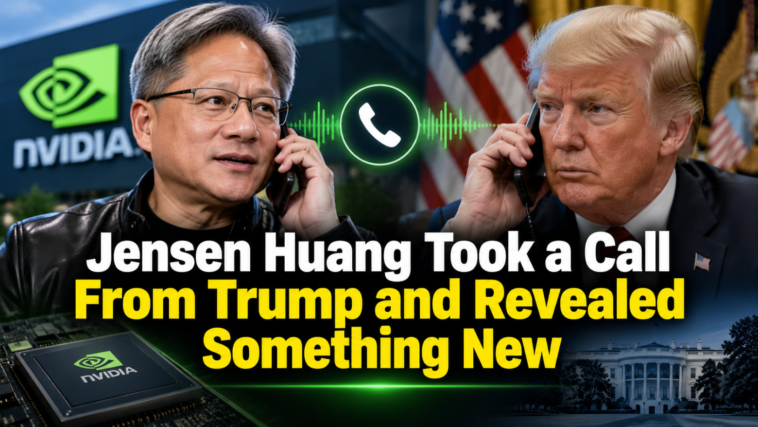
Jensen Huang made headlines Monday at the All-In conference in L.A. This annual event has become a magnet for major tech and political figures in recent years, often serving as a venue for candid, unscripted moments. President Trump called him live, on stage, during the event, adding to that reputation.
But there was something else worth noting about his appearance. Huang, dressed in his now-signature alligator leather jacket—a look that has become something of a personal trademark at recent public appearances—was handed a foldable phone to answer the call.

Once he got Trump on speaker, the conversation shifted to AI safety, a topic that has grown increasingly contentious across the tech industry in recent months. The two seemed to align on one point. Mounting fears about AI amount to what Trump called a “hoax.” Trump argued that the real winners of this AI panic are China and “political people.”
He also said the technology is too significant to slow down. He called it “bigger than the internet.” During this exchange, Huang responded, “Did you hear that? Thousands of people are clapping,” speaking directly to Trump, seemingly playing to the live audience in the room.
This kind of dismissive framing around AI risk stands in contrast to warnings coming from elsewhere in the industry. Researchers at rival labs, along with some of Nvidia’s own AI industry peers, have recently raised concerns about the pace of AI development and the potential for serious, even catastrophic, downside risks if safety work doesn’t keep up with capability gains.
Huang’s on-stage comments, by contrast, leaned firmly toward optimism and urgency to keep building.
Whether Huang genuinely shares that same view remains unclear. It’s also possible he simply isn’t in a position to say otherwise publicly. Nvidia‘s business model depends heavily on AI labs purchasing more chips, and any suggestion that the industry should slow down carries real financial implications for the company.
Because of that, downplaying existential risk may be his only real option, at least if he cares about his company’s share price. That stock remains up 33% over the past year, a period that has seen Nvidia become one of the most closely watched companies on Wall Street amid the broader AI infrastructure boom.
Still, it fell a few percentage points today, a reminder that even strong long-term gains haven’t made the stock immune to short-term volatility as the debate over AI’s risks and rewards continues to play out in public.