Hajra Naz

Mirage, the AI video company formerly known as Captions, made a major announcement on August 12. The company launched what it calls the world’s first AI news network. The broadcast streams live on X, through Mirage’s @TryMirage account. The format is striking. AI-generated news anchors deliver stories in real time. There’s no human presenter on screen at all. This marks the most ambitious use of synthetic media in live news broadcasting to date.
This launch builds directly on years of prior development. Mirage was founded back in 2021. Its founders, Gaurav Misra and Dwight Churchill, are both former Snap Inc. engineers. Early on, they recognized something important. Short-form video creation needed to become dramatically easier. AI automation was the path they chose to solve that problem.

The company has grown significantly since then. Mirage raised $75 million in March 2026. That funding supports continued development of its video generation models. With that round included, total funding now sits at roughly $175 million.
Mirage already runs an enterprise platform called Mirage Studio. That platform generates AI actors and marketing videos for brands. This new news network extends that same synthetic media technology into live journalism.
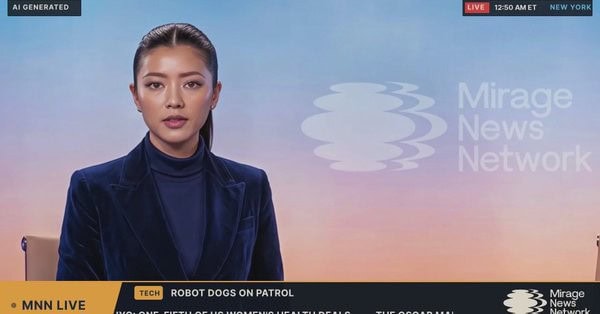
Mirage isn’t the first company to attempt AI-generated news anchors. However, it may be the first to actually ship a live product at real scale. Channel 1, a startup based in Los Angeles, announced similar plans back in December 2023. The company released a showcase reel at the time. That reel generated significant attention online. But Channel 1 never achieved consistent live broadcasting at the scale it originally promised.
Other countries have experimented with this concept too. Kuwait’s state news agency introduced an AI-generated presenter named “Fedha” in 2023. That same year, India’s Aaj Tak launched its own AI anchor, called “Sana.” China has been experimenting with this technology even longer. State media outlet Xinhua debuted a virtual anchor back in 2018. In each of these cases, though, the AI anchors served as experiments or supplements. They worked alongside human-led broadcasts, rather than replacing them entirely.

Mirage’s choice to launch on X, instead of a traditional broadcast platform or standalone app, fits a larger trend. X has been pushing aggressively into live video throughout 2026. In July, the platform launched a new live streaming command center. It also expanded payouts for creators around the same time.
Together, these moves signal something clear. Live video has become central to X’s monetization strategy under Elon Musk’s leadership. By streaming natively on X, Mirage gains immediate access to a massive global audience. Viewers don’t need to download a separate app. They don’t need to visit an independent website, either.

The broader implications for journalism remain deeply contested. That’s true regardless of how polished the broadcast looks on screen today. AI-generated anchors eliminate several major costs. That includes human talent. It includes studio infrastructure. It includes makeup departments and teleprompter operators. It also removes the scheduling logistics that typically constrain traditional news production.
A synthetic anchor offers unique advantages too. It can broadcast 24 hours a day. It can work in any language. It never needs breaks, vacations, or salary negotiations. That cost efficiency is exactly what makes this concept attractive to investors. At the same time, it’s exactly what makes it alarming to working journalists.
There’s a deeper question underlying all of this. Will audiences actually trust news delivered by a face that doesn’t exist? Will they trust stories read by an anchor that didn’t investigate them? Will they accept expressions that aren’t genuinely felt? Mirage’s launch begins answering that question in real time, starting today.
The channel is currently streaming live and can be watched directly through the broadcast link.