Alveena Ahmad
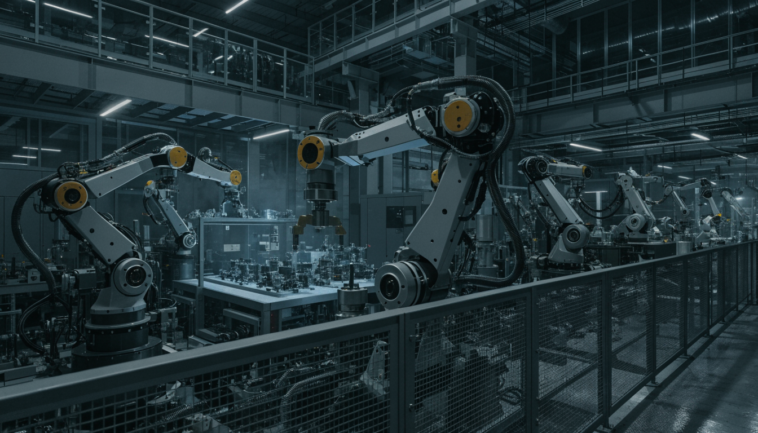
Hadrian, a US company that builds and operates automated factories for the defense and aerospace industries, has raised $1.37 billion in a Series D funding round, valuing the company at $7.87 billion, according to reporting from TechCrunch and Axios. The round marks one of the largest venture financings in the defense technology sector this year.
Who Backed the Round
The financing was co-led by WCM Investment Management, Washington Harbour Partners, Valor Equity Partners, 137 Ventures, and Baillie Gifford. JPMorganChase’s Strategic Investment Group joined as an anchor co-lead through the firm’s Security and Resiliency Initiative, which targets industries considered important to US national and economic security. Bloomberg reported that the round also drew participation from 1789 Capital, Morgan Stanley Wealth Management, and funds managed by Apollo.

What Hadrian Does
Hadrian describes itself as offering “factories-as-a-service” for aerospace and defense manufacturers, combining skilled human workers with AI, automation, and robotics through its proprietary software platform, Opus. The company manufactures precision parts used across the defense supply chain, a niche that has drawn growing investor interest as governments and primes look to modernize manufacturing capacity.
A Fast Climb in Valuation
According to Dealroom and Axios, Hadrian’s valuation has jumped from roughly $1.8 billion in January to $7.87 billion with this round, a climb that reflects how much Wall Street and Silicon Valley investors now see domestic defense manufacturing capacity as a strategic technology bet in its own right, not just a defense-sector play.
Why It Matters
Hadrian said it plans to use the new capital to expand factory capacity, scale workforce training programs, and continue investing in automation and AI-driven manufacturing tools. For technology and business readers, the round is a reminder that some of the largest capital flows in the current market are moving toward physical, automation-heavy manufacturing rather than purely software-based AI products, a shift worth tracking for anyone assessing where the next wave of tech jobs and contracts may emerge.