Hajra Naz
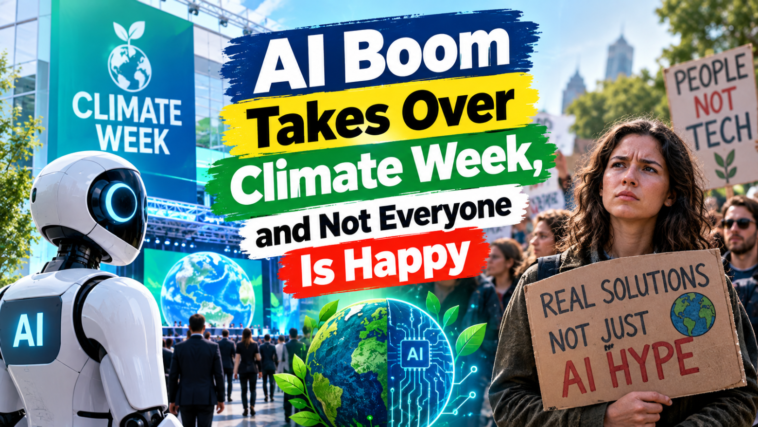
It was the best of times; it was the worst of times. That old Dickens line really does capture this year’s New York Climate Week.
Much of the climate tech community is riding the AI wave right now. That mirrors the broader U.S. economy in many ways. Some people have real reservations, though. That includes concerns about the sheer quantity of natural gas power plants being built. These plants specifically power AI data centers.

Still, many climate tech startups are energy-focused, or at least energy-adjacent. Because of this, the AI buildout has been embraced as an opportunity. It’s helping companies get through what’s often called the “valley of death.”
This singular AI focus carries a real risk, though. Some promising climate sectors could end up overlooked entirely.
This trend has been building over the past year. Climate tech companies have struggled with financing recently. That’s partly due to canceled federal grants. Investor hesitancy has played a role too. Companies that could adjust their pitch to match the AI mania often did exactly that.
Read More: AI and Climate Change: Real Solutions or Just Marketing Hype?
This pivot has genuinely helped many climate tech startups land fresh funding. Total venture deal value has risen for four consecutive quarters now. It crested the $14 billion mark in the first quarter of this year. That’s according to the most recent data from PitchBook. This represents the best fundraising environment for climate tech in recent years.
Most of this deal value comes from sectors boosted directly by data center construction. That includes the built environment. It includes grid infrastructure too. Dispatchable energy, which can be turned on or off as needed, is part of this trend as well.
Given all this, it’s been an opportunity few companies wanted to pass up.
One exchange during a panel at New York Climate Week captured this moment perfectly. Two founders were asked a direct question. Would they prefer the AI buildout to proceed at its current pace? Or would they rather see a more climate-responsible speed instead?
Both answered without hesitation. Faster was better, they said. Unsurprisingly, both of their startups operated in the energy sector.
Still, not everyone agrees with this framing.
Several founders shared a different perspective. They felt the data center boom was distracting attention from other promising areas of climate tech. That includes segments meeting their targets without relying on AI mania at all.
“Corporates are still interested in climate,” one founder explained. The difference today involves visibility, though. Large companies don’t want to publicize their climate efforts openly anymore. Much of this stems from fear of drawing the Trump administration’s attention.
There were also signs that AI enthusiasm was wearing thin for some. Consider the situation from three years ago. Money for scaling was hard to find back then, even for startups showing promising results. Now, the dynamic has flipped entirely.
Read More: Bill Gates Sparks Debate Over Climate Adaptation Strategy
Customers are eagerly pushing their way into product demos. Several people were asked a simple question: “Where was this money three years ago?” The response was often more than a few knowing eye rolls.
This is simply the world these founders live in now, many acknowledged. The smartest entrepreneurs are finding ways to meet customers exactly where they currently are.
Ultimately, a clear undercurrent ran through New York Climate Week this year. The data center party won’t last forever, most agreed. Still, it might last long enough to help startups build genuinely durable businesses. Once that happens, these companies can refocus. They’ll return to the carbon-cutting mission that originally inspired their founding.