Hajra Naz
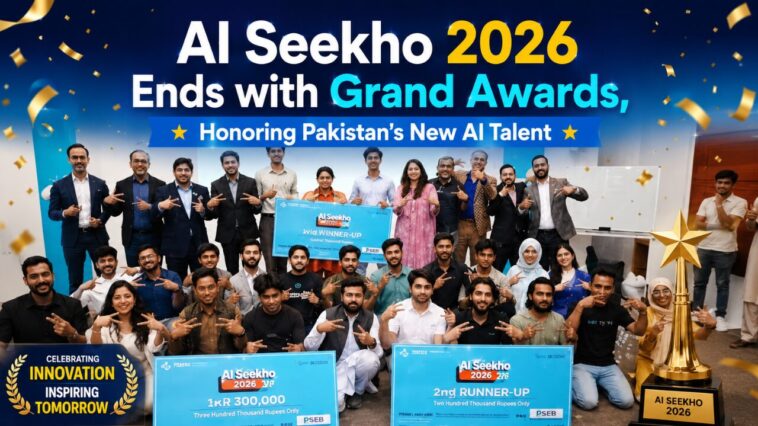
AI Seekho 2026, a Pakistan-based AI skills initiative run with Telenor Pakistan, Google, the Ministry of IT, and Innovista, wrapped up with an awards ceremony in Islamabad honoring the country’s emerging AI talent.
Telenor Pakistan worked with Google, the Ministry of IT and Telecommunications (MoITT), and Innovista to wrap up AI Seekho 2026 at its headquarters in Islamabad. The closing event carried the feel of a packed tech gathering, with students, developers, and professionals filling the space after weeks of online and regional activity across the country.

The program had grown into something larger than a competition. It became a meeting point for people trying to build real AI solutions while still learning how to use the tools behind them.
Government and Industry Leaders Share the Stage
Federal Minister for IT and Telecommunications Shaza Fatima Khawaja attended the ceremony and spoke with participants and winners. She was joined by Awais Vohra from Telenor Pakistan, Saad Hamid from Google, and Hisham Sarwar from Innovista, along with other industry voices and mentors.
There was a clear focus on recognition. Winning teams stood on stage for their work on AI-based solutions designed around real problems, not classroom exercises.
Read More: AI Seekho 2026 offers Pakistani youth a chance to win Rs2.5 million through Vibe Coding
Participation That Spanned Thousands of Builders
The numbers showed how widely the program reached.
AI Seekho 2026 opened with more than 10,000 registrations in its online challenge phase. Many of them were working developers, not just students, which shifted the tone of the competition toward practical experience.
More than 7,000 participants stayed active through the program. They formed over 2,600 teams and submitted more than 600 project ideas across different rounds.
The work ranged from simple prototypes to more structured applications built using Google’s latest AI tools. Some focused on productivity problems, others explored creative and interactive use cases.
After regional rounds and evaluations, six teams reached the national final stage, competing for a prize pool of PKR 2.5 million.
Winners Announced After a Competitive Final Round
The final results reflected a close contest between strong teams.
Struggler Karachi secured first place after presenting a solution that stood out during evaluation. Nurture Islamabad took second position. Vibronix Lahore followed in third.
Each team showed a different approach to building with AI, from idea design to execution. Judges highlighted how closely tied the projects were to real-world use cases rather than abstract concepts.
Government View on Skills and Future Readiness
During her address, Shaza Fatima Khawaja congratulated all participants and winners. She linked the program to Pakistan’s broader National AI Policy and the need for a steady pipeline of skilled talent.
She spoke about access as a central point, especially giving young people across different regions a chance to work with emerging technologies instead of only observing them from the outside.
Read More: Pakistan Approves National AI Policy 2025 to Empower Youth and Transform the Nation
Telenor Pakistan on Building Practical Digital Skills
Awais Vohra from Telenor Pakistan focused on the response from participants. He described the level of engagement as a strong signal that interest in AI skills is rising across Pakistan.
He also pointed to the consistency shown by teams throughout the program. Many participants moved from early ideas to working prototypes within a short time frame, which he linked to growing confidence in digital tools.
Google on Turning Ideas into Working AI Solutions
Saad Hamid from Google spoke about how access to modern AI tools changed the pace of development for participants.
He explained that once developers get exposure to the right platforms, the gap between idea and working product starts to shrink. The program gave many participants their first structured experience of that process.
Innovista on Access and Inclusion
Hisham Sarwar from Innovista focused on the wider impact beyond competition results.
He described AI Seekho as a space where participants from different backgrounds could test ideas without needing formal industry entry points. For many, it was the first time working on structured AI projects in a guided environment.
Building Skills Beyond Coding
The initiative, supported by Telenor Pakistan, MoITT, Google, and Innovista, focused on more than technical training.
Participants also worked on product thinking, basic design decisions, problem-solving, and presenting ideas clearly. These skills shaped how teams moved from concept to final submission.
A Growing Direction for Pakistan’s AI Ecosystem
AI Seekho 2026 ended with strong momentum around AI learning in Pakistan. The turnout, the number of submissions, and the range of ideas all pointed toward a growing base of young builders experimenting with new tools.
Under the theme #VibeKaregaPakistan, the program left behind more than winners. It created a workspace where new talent tested ideas, learned quickly, and moved closer to real product development in AI.
Frequently Asked Questions
What is AI Seekho 2026?
AI Seekho 2026 is a Pakistan-based initiative — run with Telenor Pakistan, Google, the Ministry of IT and Telecommunications, and Innovista — designed to build AI skills and recognize emerging Pakistani AI talent.
Who organized AI Seekho 2026?
It was a joint effort between Telenor Pakistan, Google, MoITT, and Innovista, closing with a grand awards ceremony at Telenor’s Islamabad headquarters.
Related reading
Last updated: August 2026.