

 Hajra Naz
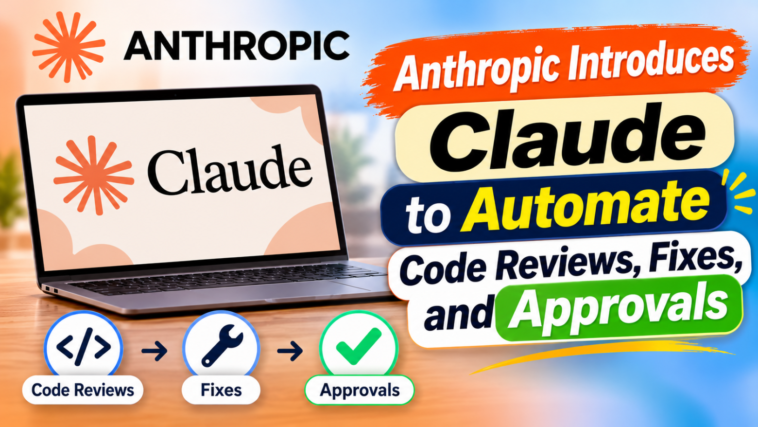
Anthropic is evolving away from simply writing code and is now determining when it is fit for release. The newly public AI firm revealed on Monday a new range of ‘agents’ which can be used to review, amend and approve code.
Whilst there are currently AI tools which can perform rudimentary code analysis, Claude Ship does so much more. It identifies and amends code problems and then employs a specific agent to automatically approve code amendments in line with bespoke business rules.


| Claude Ship Component | Status | Primary Role |
| Code Review | Generally Available | Scans pull requests to spot bugs and code issues. |
| PR Steward | Beta | Fixes failing CI checks, merge conflicts, and review feedback |
| Claude Approvals | Beta | Automatically approves pull requests using natural-language repo policies |

Clearing the AI Code Bottleneck
Large amounts of code are produced by modern AI agents, and there are often big delays in the PR approval process, as this then has to be reviewed manually by humans. To help with this, Claude Ship allows AI to approve standard PRs.
Whilst most teams prefer individual human approval for code changes, this is easily achievable if staff manually enter all code. However, many staff now also use agents to aid development. As a result, within the Claude Code team, Claude is largely responsible for producing code, and so too has Anthropic decided to automate the processes that occur following PRs.
Read More:
How the Three Agents Work Together
Claude Ship is launching in beta for early adopters to manage pull requests and decide what is safe to merge. It combines three distinct tools:
Code Review: Already generally available, this tool inspects incoming changes for flaws.
PR Steward (Beta): Fixes failing CI checks, resolves merge conflicts, and addresses Code Review notes. After every push, it leaves a comment detailing its changes and how to roll them back.
Claude Approvals (Beta): Enforces an approval policy stored right inside the code repository. Teams write these rules in plain, natural language, pulling signals from code review findings or Anthropic’s classifiers.
Read More: Anthropic Launches Claude Meetings to Convert Workplace Discussions Into Actionable Plans
Guardrails and Availability
As the new agents are still in ‘beta’, Anthropic suggests that teams first operate Claude Approvals in observation mode. Teams can also choose to limit expenditure and apply Claude Approvals to one GitHub repo.
Whilst using the Claude Ship functionality, developers continue to manage their process. Teams can choose the location of the service and how detailed the analysis should be (quick, standard, or deep). They can also determine which significant updates need manual approval.
At present, Claude Ship is being introduced for Claude Team and Enterprise customers for GitHub repos.