Hajra Naz
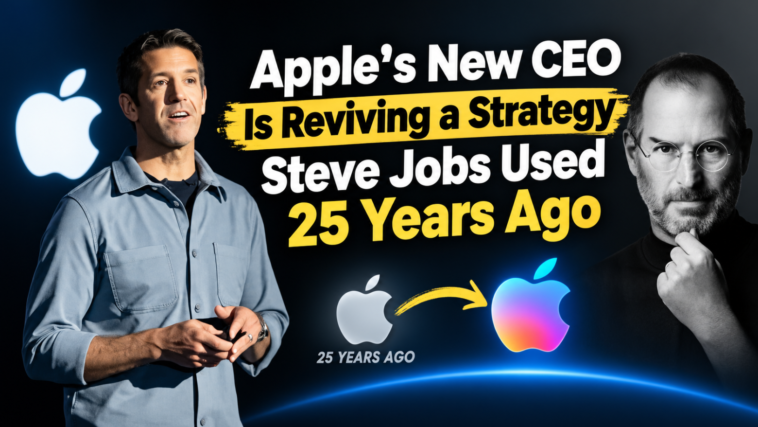
Apple CEO John Ternus wants people to know one thing clearly. The iPhone isn’t going anywhere.
Ternus put his full support behind the device on Wednesday. This happened during his first keynote as CEO. He placed the iPhone firmly at the center of Apple’s product strategy. That strategy focuses specifically on the AI era.

“There’s no product in the world better designed to be your intelligent personal hub than the iPhone,” he said.
This approach contrasts sharply with the strategy of former CEO Tim Cook. Cook repeatedly tried to convince Wall Street of something different. He argued that Apple was more than just the iPhone.
Ternus’s pitch also serves as a direct rebuttal. Several pundits have recently cast doubt on the iPhone’s future. “The smartphone’s days are numbered,” read one headline. Another article warned that “the Tim Cook era is coming to a close with an existential challenge for Apple: figuring out what comes after the iPhone.”
Still, this isn’t purely about hardware specifications. Ternus has placed the iPhone at the center of his broader vision. That’s his “intelligent personal assistant” strategy. This vision could shape the company for years to come. Notably, Steve Jobs did something similar back in 2001. That happened with the Mac, less than 10 months before he announced the iPod.
At that time, many observers believed the PC’s days were numbered too. During a Macworld New York keynote, Jobs pushed back directly. He called out bearish quotes from industry analysts. That included Walt Mossberg and leaders from Compaq and Gateway.
“This is what everyone else is telling us. That our PC is waning, if not the hole being dug,” Jobs said at the time. He pointed at a tombstone for the “Beloved PC” displayed behind him. “We don’t think the PC is dying at all. We don’t think the PC is moving away from the center at all. We think it’s evolving, just like it has since it was invented.”
“We think the PC is on the threshold of entering its third great age,” Jobs added. This prediction stemmed from a growing wave of digital devices at the time. That included camcorders, digital cameras, and DVD players.
The Mac would form the center of what Jobs called a “digital hub.” This concept would connect these disparate devices. In Jobs’s words, it would “add value” to all of them.
Later that year, Jobs revealed the iPod during a presentation. This device seemed designed to answer a specific question. “Why do you still need a PC?” The iPod turned out to be an enormous hit. It drove Apple’s profits quarter after quarter. It ultimately helped lead to the development of the iPhone.
Today, the iPhone approaches its 20th anniversary. Ternus now faces a version of the same question Jobs tackled back in 2001. It’s unclear whether Ternus is quietly developing an iPod-like product. Such a device could secure the iPhone’s position as Apple’s hub for years to come. Still, he’s firmly pushing back against the idea that the iPhone is past its prime.
Read More: The Biggest Things We Expect From Apple’s Upcoming Launch
“If you were designing the ideal version of this hub from scratch, how would you do it?” Ternus asked. He then listed the key ingredients. That includes a powerful processor. It includes high-resolution cameras. It also includes persistent networking and on-device AI.
It helps that the iPhone remains one of the most powerful personal computing devices available. This gives it a real edge during the compute-hungry AI era. Its portability and adaptability make it something significant for many people.
For them, it’s the only computing device they truly need. Even among people who own laptops and iPads, the iPhone often stands out. It’s frequently the one device people can’t live without. Plenty of people leave home without their laptops. Almost no one leaves home without their phone.
This combination of power and portability has given Apple a genuinely privileged position in the AI world. Other companies have tried unseating the iPhone with various wearable devices. None of these attempts have succeeded so far.
Instead of sidelining the iPhone for the next flashy product, Ternus is leaning into it instead. In a way, he’s bringing Apple around to something many people already believe. The iPhone remains genuinely great. Perhaps there’s no need to replace it with something else. At least, not yet.